Table of Contents
PRP Help With Hair Loss
Hair thinning can be frustrating, particularly when your hairline starts receding or your scalp becomes more visible over time. One of the most common causes of progressive hair thinning is androgenetic alopecia, also known as male or female pattern hair loss. If you are noticing these changes, you may be wondering: Can PRP help with hair loss caused by androgenetic alopecia?
The answer is yes, platelet-rich plasma (PRP) therapy may help improve hair density in some people with androgenetic alopecia. However, the results vary from person to person, and PRP is not a permanent cure for genetic hair loss. Clinical research shows promising results, but differences in treatment protocols and study quality mean that expectations should remain realistic.
At Dermedico Clinic, understanding the cause and pattern of hair loss is an important first step towards choosing an appropriate treatment plan. Here is what you should know about PRP therapy, its potential benefits, limitations and suitability for pattern hair loss.
What Is Androgenetic Alopecia?
Androgenetic alopecia is a common form of hair loss that affects both men and women. It is influenced by genetics and the way hair follicles respond to androgens, including dihydrotestosterone (DHT).
Over time, susceptible hair follicles gradually become smaller. This process, known as follicular miniaturisation, causes hair strands to become finer and shorter. Eventually, the scalp may become more visible as hair density decreases.
Common signs of androgenetic alopecia
- A receding hairline or thinning around the temples in men.
- Gradual thinning around the crown.
- A widening parting or reduced hair density in women.
- Hair strands becoming finer over time.
- Progressive thinning that follows a recognisable pattern.
Not all hair loss is caused by androgenetic alopecia. Iron deficiency, thyroid disorders, nutritional deficiencies, certain medications and other scalp conditions can also contribute to shedding. A dermatologist can help distinguish between these causes before treatment begins.
Can PRP Help With Hair Loss Caused by Androgenetic Alopecia?
PRP therapy is a treatment option that may improve hair density and support hair growth in selected patients with androgenetic alopecia.
A 2024 systematic review published in the Journal of Cosmetic Dermatology evaluated nine studies involving 291 participants with male pattern hair loss. Six studies reported a statistically significant improvement in hair density with PRP compared with control groups. However, the authors also highlighted limitations in study quality and differences between treatment protocols.
These findings suggest that PRP can be helpful for some patients, but it does not guarantee visible regrowth for everyone.
How Does PRP Therapy Work for Hair Loss?
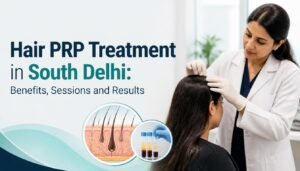
Platelet-rich plasma is prepared using a small sample of the patient’s own blood. The sample is processed in a centrifuge to concentrate platelets in a portion of the plasma.
Platelets contain growth factors and signalling molecules involved in tissue repair and cellular activity. When appropriately prepared PRP is injected into selected areas of the scalp, it may help support the activity of hair follicles.
The treatment generally involves the following steps:
1. Scalp and hair assessment
A dermatologist examines your scalp, assesses the pattern of thinning and considers possible underlying causes of hair loss.
2. Blood collection
A small amount of blood is collected from your arm using standard clinical precautions.
3. PRP preparation
The blood sample is processed to separate and concentrate the platelet-rich component.
4. Scalp injections
The prepared PRP is injected into selected areas of the scalp using an appropriate technique.
5. Follow-up and progress assessment
Your dermatologist reviews your response and determines whether additional sessions or other treatments are appropriate.
The exact protocol can vary depending on the patient’s condition, the preparation method and the treating clinician’s assessment.
What Are the Potential Benefits of PRP for Androgenetic Alopecia?
PRP may offer several potential benefits for people experiencing pattern hair loss.
1. Improved hair density: Some clinical studies have reported increased hair density following a course of PRP treatments.
2. Support for existing hair follicles: PRP may help improve the appearance of thinning hair where viable follicles remain.
3. A treatment using your own blood: PRP is prepared from your own blood, although this does not eliminate the possibility of side effects or complications.
4. A minimally invasive procedure: PRP involves injections rather than surgery and usually requires less recovery time than surgical hair restoration.
5. Potential use alongside other treatments: A dermatologist may consider PRP alongside established hair-loss treatments when clinically appropriate.
It is important to remember that these are potential benefits, not guaranteed outcomes. PRP cannot reliably restore hair in areas where follicles have been permanently lost.
How Many PRP Sessions Are Needed for Hair Loss?
The number of sessions depends on the severity of hair thinning, the treatment protocol and your response.
An Indian dermatology consensus statement has recommended an initial course of three to five sessions, generally spaced about one month apart. However, this is not a universal schedule for every patient.
Your dermatologist may recommend a different approach based on your diagnosis and progress. Maintenance sessions may also be considered, since androgenetic alopecia is a progressive condition.
Before beginning treatment, ask your dermatologist about the proposed schedule, follow-up assessments and expected maintenance requirements.
When Can You Expect Results From PRP Hair Treatment?
PRP does not produce instant hair growth. Hair follicles follow natural growth cycles, so any improvement takes time to become noticeable.
Some patients may begin to notice changes in hair shedding or thickness over the following months. A meaningful assessment of hair density often requires several months of follow-up.
Results depend on several factors, including:
- The stage and severity of androgenetic alopecia.
- The number of active hair follicles in the affected area.
- The PRP preparation and treatment protocol.
- Individual response and consistency with follow-up.
- Whether other appropriate hair-loss treatments are being used.
Standardised photographs and scalp assessments can help your dermatologist compare progress over time.
Is PRP Better Than Minoxidil for Androgenetic Alopecia?
PRP and minoxidil work differently, and one is not automatically better for everyone.
Minoxidil is an established treatment option for pattern hair loss. PRP is a procedure that may be considered as an additional or alternative component of an individualised treatment plan.
A 2024 systematic review examining PRP combined with topical minoxidil reported better hair-density outcomes with the combination than with minoxidil alone in the included trials. However, several studies had a high risk of bias, and further high-quality research is needed.
Your dermatologist may recommend minoxidil, PRP, another appropriate treatment or a combination, depending on your medical history and the pattern of hair loss. Do not stop or change a prescribed treatment without medical advice.
Are There Any Side Effects of PRP for Hair Loss?
PRP is generally considered a well-tolerated procedure when performed by a qualified clinician using appropriate infection-control measures. Nevertheless, side effects can occur.
Possible side effects include:
- Temporary discomfort or tenderness at injection sites.
- Redness or swelling of the scalp.
- Small bruises or pinpoint bleeding.
- Temporary headache or tightness.
- A small risk of infection or other injection-related complications.
People with certain blood disorders, platelet abnormalities, active scalp infections or other medical conditions may need additional assessment before treatment. Tell your dermatologist about your medications and medical history, including any medicines that affect blood clotting.
Who Is a Suitable Candidate for PRP Hair Treatment?
PRP may be considered for adults with diagnosed androgenetic alopecia, particularly when hair follicles are still present in areas of thinning.
It may be less effective when hair loss is advanced and the affected areas have little or no remaining follicular activity.
PRP is not a universal treatment for every type of hair loss. Sudden or patchy hair loss, significant scalp inflammation, or unusually heavy shedding may require a different investigation and treatment approach.
A consultation with a qualified dermatologist can help determine whether PRP is suitable for your condition.
Can PRP Permanently Cure Genetic Hair Loss?
No. PRP should not be described as a permanent cure for androgenetic alopecia.
Genetic pattern hair loss can continue to progress because the underlying follicular sensitivity remains. Although PRP may improve hair density in some patients, the improvement may not last indefinitely, and maintenance treatment may be needed.
Long-term management often involves monitoring hair changes and considering evidence-based medical treatments where appropriate.
PRP Hair Treatment at Dermedico Clinic, South Delhi
If you are experiencing gradual hair thinning or a receding hairline, a professional assessment can help identify the cause and determine suitable treatment options.
Dermedico Clinic, located in Defence Colony, New Delhi, offers hair PRP among its listed services. The clinic’s dermatologist can assess your hair-loss pattern, discuss the potential benefits and limitations of treatment, and help you understand whether PRP may be appropriate for your needs.
Interested in exploring PRP for hair loss? Visit the Dermedico Clinic website to learn about the clinic and its services, or use the clinic’s appointment options to arrange a consultation.
Frequently Asked Questions
1. Does PRP really work for androgenetic alopecia?
PRP may improve hair density in some people with androgenetic alopecia. Clinical studies are promising, but results vary and the overall evidence has limitations.
2. Can PRP regrow hair on a completely bald scalp?
PRP is unlikely to restore hair in areas where follicles have been permanently lost. A dermatologist can assess the extent of follicular miniaturisation and discuss realistic treatment options.
3. How long do PRP results last?
Results vary. Since androgenetic alopecia can continue to progress, improvements may require ongoing monitoring and maintenance treatment.
4. Is PRP suitable for both men and women?
PRP may be considered for both men and women with diagnosed androgenetic alopecia. Suitability depends on the individual’s condition and medical history.
5. Can I combine PRP with minoxidil?
A dermatologist may recommend combining PRP with minoxidil when appropriate. Research suggests a possible additional benefit, but treatment should be personalised.
6. Is PRP hair treatment painful?
Patients may experience discomfort during scalp injections. The degree of discomfort varies, and your clinician can explain available measures to improve comfort.
7. How do I know if my hair loss is genetic?
A gradual receding hairline, crown thinning or widening parting may suggest androgenetic alopecia. A dermatologist can assess your scalp and investigate other possible causes.
Final Thoughts
PRP may be a useful option for selected patients experiencing hair loss caused by androgenetic alopecia, especially when treatment begins while viable hair follicles remain. However, outcomes are not guaranteed, and PRP should be considered as part of an individualised hair-loss management plan rather than a permanent cure.
If you are experiencing persistent hair thinning, seek a dermatologist’s advice before choosing a treatment. An accurate diagnosis can help you make an informed decision about PRP and other available options.
Medical disclaimer: This article is for educational purposes only and does not replace an individual consultation, diagnosis or treatment advice from a qualified healthcare professional.