Table of Contents
Laser Hair Removal Help With Facial Hair
Unwanted facial hair can be frustrating, particularly when it appears on the chin, upper lip, jawline or cheeks due to hormonal changes. Many women experience thicker or darker facial hair during conditions such as polycystic ovary syndrome (PCOS), menopause or other hormonal imbalances. Regular threading, waxing and shaving may offer temporary relief, but the hair often returns.
This raises an important question: Can laser hair removal help with facial hair caused by hormonal changes?
Yes. Laser hair removal can significantly reduce unwanted facial hair by targeting the pigment in hair follicles. However, hormonal changes can continue to stimulate new hair growth, which means that multiple sessions and occasional maintenance treatments may be necessary.
Understanding the cause of facial hair growth and choosing the right treatment plan can help you achieve more manageable, longer-lasting results.
Why Do Women Experience Hormonal Facial Hair Growth?
Facial hair growth in women can occur for several reasons, including genetics, ageing and changes in hormone levels. When coarse, dark hair develops in areas such as the chin, upper lip, chest or jawline, it may be a condition known as hirsutism.
Androgens are hormones naturally produced by women and men. When androgen levels rise, or hair follicles become more sensitive to these hormones, fine hair can develop into thicker, darker hair.
Common factors associated with increased facial hair growth include:
- PCOS: Polycystic ovary syndrome is a common hormonal condition associated with excess androgen activity. It may also cause irregular periods, acne and scalp hair thinning.
- Menopause: Hormonal changes with age can alter the balance between different hormones and make facial hair more noticeable.
- Certain medications: Some medicines can influence hair growth.
- Other hormonal conditions: Less commonly, endocrine disorders can cause excessive hair growth.
Not every woman with facial hair has a hormonal condition. However, sudden or rapidly increasing coarse facial hair, particularly when accompanied by irregular periods or other hormonal symptoms, deserves medical evaluation.
How Does Laser Hair Removal Work for Hormonal Facial Hair?
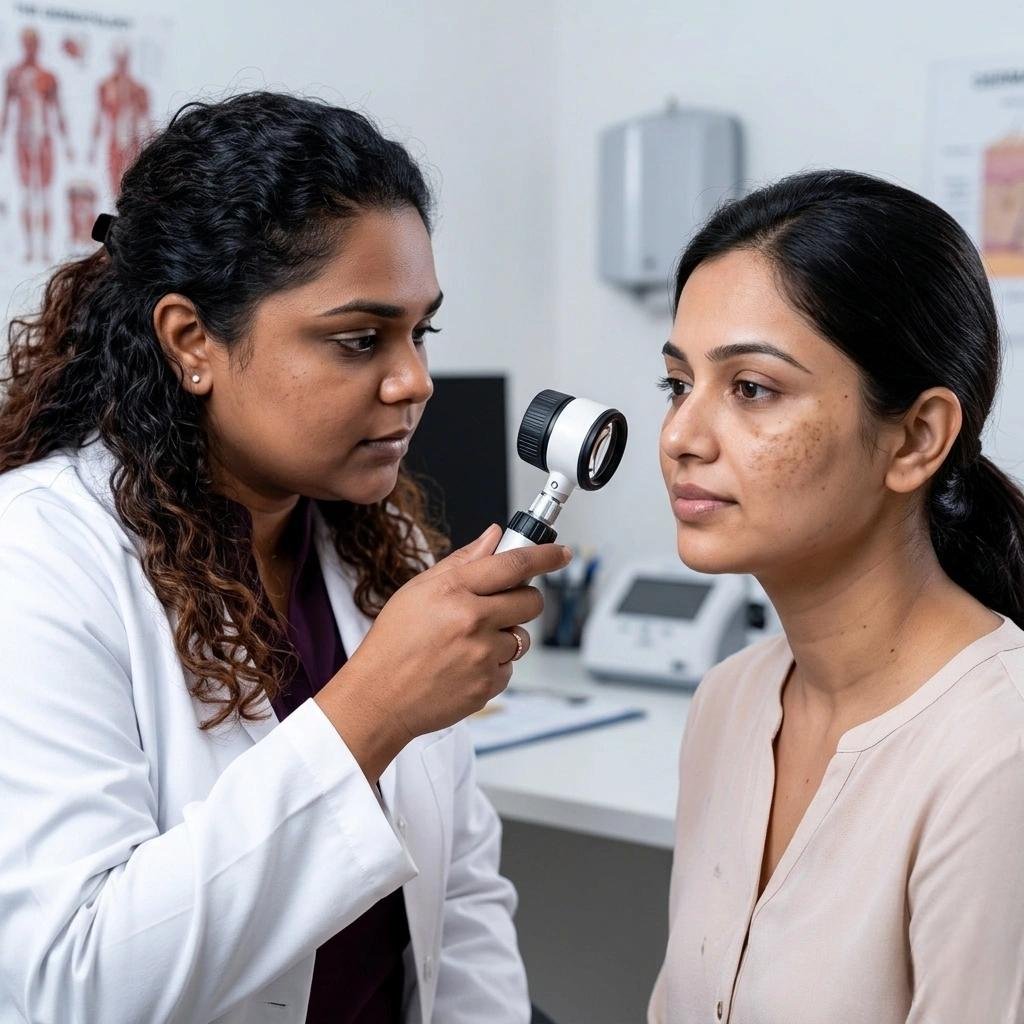
Laser hair removal uses concentrated light energy that is absorbed by pigment in the hair. The energy heats the hair follicle and reduces its ability to produce hair.
When performed with an appropriate device and treatment settings, laser hair reduction can help manage unwanted hair on areas such as:
- Upper lip
- Chin
- Jawline
- Sideburns
- Selected areas of the cheeks
- Neck
The treatment works best on pigmented hair, particularly dark hair. Blonde, white and grey hair generally responds less effectively because it contains less of the pigment targeted by the laser.
Hair grows in different cycles, and not all follicles respond equally during one session. Therefore, a series of treatments is usually required.
Laser hair removal targets existing hair follicles; it does not correct the hormonal imbalance that may be causing excess hair growth. This distinction is particularly important for women with PCOS or other ongoing hormonal conditions.
Is Laser Hair Removal Effective for PCOS-Related Facial Hair?
Laser hair reduction can be an effective option for women experiencing unwanted facial hair associated with PCOS. It can reduce the amount of visible hair, make regrowth less noticeable and reduce the need for frequent temporary hair removal.
The international evidence-based PCOS guideline recommends considering laser and light-based hair reduction for facial hirsutism. It also notes that women with PCOS may require more treatment sessions than women whose facial hair is not associated with an ongoing hormonal condition.
Results vary according to hair colour, hair thickness, skin tone, the device used and the individual’s hormonal profile.
Women with PCOS should understand that laser treatment and hormonal management serve different purposes. Laser treatment addresses unwanted hair, while a qualified doctor can assess whether medical treatment for the underlying hormonal condition is appropriate.
Can Hormonal Facial Hair Grow Back After Laser Treatment?
Yes, new facial hair can develop after laser hair removal, especially when hormonal stimulation continues.
Although treated hair may become finer and less noticeable, untreated or newly stimulated follicles can produce additional growth over time. This is why facial hair associated with PCOS or other hormonal conditions may require more sessions and periodic maintenance.
Several factors can influence regrowth:
- Hormonal activity: Ongoing androgen-related stimulation can encourage new coarse hair growth.
- Treatment consistency: Completing the recommended sessions helps address follicles during suitable growth phases.
- Hair characteristics: Dark, coarse hair generally responds better than very fine or light-coloured hair.
- Individual response: Different people experience different levels and durations of hair reduction.
- Maintenance care: Follow-up sessions may be useful if noticeable regrowth occurs.
Laser hair removal should be viewed as a long-term hair reduction method rather than a guaranteed permanent cure for hormonally driven facial hair.
How Many Laser Hair Removal Sessions Are Needed?
There is no single session count that works for everyone. Many people require several sessions, commonly six or more, but hormonal facial hair may need additional treatment.
The interval between sessions depends on the treatment area, hair growth cycle, the device used and the clinician’s assessment.
During your consultation, a qualified provider should assess the distribution of facial hair, skin tone, hair thickness, previous hair removal methods and any history of hormonal conditions.
Instead of promising a fixed number of sessions, a personalised treatment plan should set realistic expectations and explain when maintenance may be needed.
Is Laser Hair Removal Safe for Indian Skin?
Laser hair removal can be performed on Indian skin tones, but choosing suitable equipment and treatment settings is essential.
Skin with more melanin requires careful assessment because inappropriate settings may increase the risk of burns, blistering or pigmentation changes. A trained, experienced professional should select the treatment approach according to your skin and hair characteristics.
Before starting treatment, discuss:
- Your skin tone and any history of pigmentation
- Recent tanning or significant sun exposure
- Current skincare products and medications
- Previous reactions to laser procedures
- Any active skin irritation or infection
- Whether a test spot is appropriate
Temporary redness, swelling or sensitivity can occur after treatment. Follow the clinic’s aftercare advice, including sun protection and guidance on skincare products.
Laser Hair Removal vs Threading, Waxing and Shaving
Threading, waxing and shaving can remove visible hair, but their results are temporary. Laser hair reduction works differently by targeting hair follicles to reduce future growth.
Threading: Useful for removing individual facial hairs, but regrowth is expected.
Waxing: Removes hair from the root, but may cause irritation or ingrown hairs in some people.
Shaving: Quick and convenient, although results last only a short time. Shaving does not make hair grow back thicker.
Laser hair removal: Requires a course of treatments but can provide longer-lasting hair reduction. Hormonal facial hair may need ongoing maintenance.
The most appropriate option depends on your skin, hair type, preferences and medical history.
When Should You Consult a Doctor About Facial Hair?
Consider medical evaluation if you develop new, coarse facial hair or notice a significant increase in hair growth. A consultation is particularly important if facial hair occurs alongside irregular menstrual periods, persistent acne, scalp hair thinning or other signs of hormonal changes.
Seek prompt medical assessment if thick facial or body hair develops suddenly or rapidly, particularly if you also notice a deeper voice or other marked physical changes.
A clinician may recommend an assessment or blood tests depending on your symptoms. Do not assume that all excess facial hair is caused by PCOS, and avoid starting hormonal medicines without appropriate medical advice.
Where Can You Explore Laser Hair Removal in South Delhi?
If unwanted facial hair is affecting your confidence or making daily grooming difficult, a professional consultation can help you understand which treatment options may be suitable.
Dermedico Clinic, located in Defence Colony, New Delhi, offers aesthetic and laser-related treatment services. If you are exploring laser hair reduction in Defence Colony, South Delhi or around Lajpat Nagar, contact the clinic to confirm current facial hair treatment availability, consultation arrangements and the technology used.
An individual assessment is important before beginning treatment, particularly when hair growth may be related to hormonal changes.
Ready to discuss your concerns? Visit the Dermedico Clinic website to learn more about the clinic and enquire about a suitable consultation.
Frequently Asked Questions
1. Can laser hair removal permanently stop hormonal facial hair?
Laser hair removal can provide long-term hair reduction, but it cannot guarantee that hormonal facial hair will never return. New growth may occur when hormones continue to stimulate hair follicles.
2. Is laser hair removal good for PCOS facial hair?
Yes. It can reduce unwanted coarse facial hair in women with PCOS. However, additional sessions or maintenance treatments may be necessary, and medical management of PCOS may also be appropriate.
3. Does laser hair removal balance hormones?
No. Laser treatment targets hair follicles and does not balance hormones or treat the underlying cause of excessive hair growth.
4. How many sessions are needed for chin and upper-lip hair?
Several sessions are generally needed. The exact number depends on hair thickness, skin tone, growth cycles, hormonal factors and individual response.
5. Is laser hair removal safe for Indian skin?
It can be suitable when an experienced professional selects an appropriate device, settings and precautions for the individual’s skin tone. A consultation is important before treatment.
6. Can I shave between laser hair removal sessions?
Shaving is commonly permitted between sessions, while waxing and plucking are generally discouraged because they remove the hair targeted by the laser. Follow your provider’s specific instructions.
7. Can hormonal facial hair return after treatment?
Yes. Previously treated hair may be reduced, but new or untreated follicles can produce hair as hormonal stimulation continues. Maintenance sessions may help manage regrowth.
8. Should I get my hormones checked before laser hair removal?
Not everyone needs hormone testing. However, new or increasing coarse facial hair, particularly with irregular periods or other hormonal symptoms, should be assessed by a qualified doctor.
Final Thoughts
Laser hair removal can be a useful option for women dealing with unwanted facial hair caused or aggravated by hormonal changes. It can reduce visible hair and make routine grooming easier, including for some women with PCOS.
The key is to understand that laser treatment reduces hair rather than correcting hormonal causes. A personalised plan, realistic expectations, appropriate treatment settings and medical evaluation when indicated can help you make an informed decision.
If you are considering facial hair reduction in South Delhi, consult a qualified professional to discuss your concerns, treatment options and expected results.