
Table of Contents
Pigmentation Be Caused by Irritation
Have you noticed dark spots, uneven skin tone, or brown patches appearing after introducing a new skincare product? You may assume that your skin is simply adjusting to the product. However, in some cases, skin irritation caused by skincare products can trigger pigmentation, particularly in people who are prone to developing dark marks after inflammation.
Certain exfoliating acids, retinoids, fragranced products, harsh cleansers, and unsuitable skin-lightening products may irritate the skin when used incorrectly or when they are not suitable for your skin type. The resulting inflammation can stimulate excess melanin production, leaving behind darker areas even after the irritation settles.
This process is known as post-inflammatory hyperpigmentation (PIH). It can affect all skin tones and may be particularly noticeable or persistent in people with medium to darker skin tones.
So, can skincare products really cause pigmentation, and what should you do if your skin develops dark spots after using them? Let’s understand the causes, warning signs, prevention methods, and available treatment options.
Can Skincare Products Cause Pigmentation?
Yes, skincare products can contribute to pigmentation if they cause skin irritation or inflammation. According to the American Academy of Dermatology (AAD), irritating skin and hair care products are among the potential triggers of dark spots, particularly in people with darker skin tones.
When your skin becomes irritated, the inflammatory response may stimulate melanocytes, the cells responsible for producing melanin. Excess melanin can accumulate in the affected area, leaving brown, dark brown, or greyish marks after the initial redness, itching, or burning has improved.
This does not mean every active skincare ingredient causes pigmentation. Many ingredients can be beneficial when selected and used appropriately. The risk increases when a product is too strong, used too frequently, combined with other irritating ingredients, or unsuitable for your skin.
If you are experiencing persistent dark spots or uneven skin tone, identifying the underlying cause is an important first step before choosing a pigmentation treatment.
How Does Skin Irritation Lead to Dark Spots?
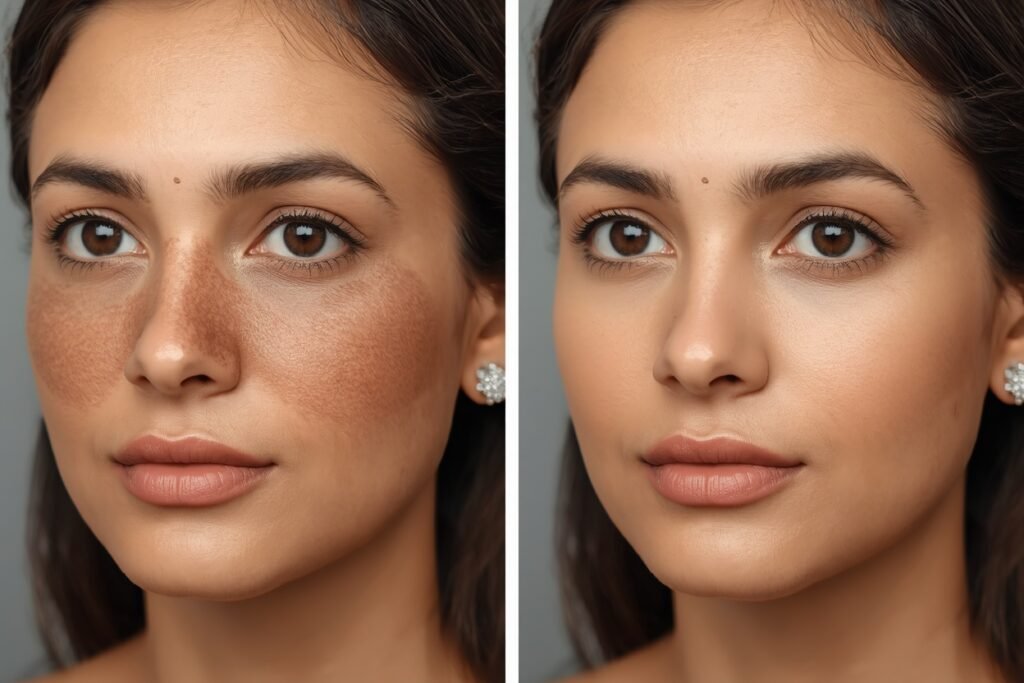
Pigmentation caused by irritation generally develops through a series of changes in the skin.
1. The Skin Becomes Irritated
A product may disrupt the skin barrier or trigger an inflammatory reaction. You might notice burning, stinging, itching, dryness, redness, peeling, or unusual sensitivity.
Irritation may occur immediately or develop gradually after repeated exposure.
2. Inflammation Triggers Pigment Production
When the skin becomes inflamed, it may produce additional melanin as part of its response. The degree of pigment production varies from person to person and depends on factors such as skin tone, the severity of inflammation, and the underlying skin condition.
3. Dark Marks Appear
As the inflammation settles, the affected skin may remain darker than the surrounding area. These marks are called post-inflammatory hyperpigmentation.
They can appear on the cheeks, forehead, chin, upper lip, or other areas exposed to the irritating product.
4. Pigmentation Takes Time to Fade
Even after you stop using the product that caused the irritation, the pigmentation may remain for weeks or months. Some marks take longer to improve, particularly when the pigment is deeper or inflammation continues.
Avoiding the original trigger and protecting your skin from further irritation can help prevent additional dark marks from developing.
Which Skincare Products May Trigger Pigmentation?
Several types of skincare products can contribute to irritation when used incorrectly or when they are unsuitable for an individual’s skin.
1. Exfoliating Acids
Ingredients such as glycolic acid, salicylic acid, and lactic acid can help address selected skin concerns. However, excessive exfoliation or using a concentration that is too strong may cause irritation, dryness, and peeling.
Using multiple exfoliating products in the same routine may further increase the risk of inflammation.
2. Retinol and Other Retinoids
Retinol and prescription retinoids are used for concerns such as acne, signs of ageing, and certain forms of pigmentation. However, they can cause dryness, irritation, and peeling, especially when introduced too quickly or used too frequently.
If irritation becomes significant, continuing the same routine without adjusting it may worsen inflammation and increase the risk of post-inflammatory pigmentation.
3. Strong Skin-Lightening Products
Some skin-lightening ingredients may be appropriate for specific pigmentation conditions under professional guidance. However, unverified fairness creams, bleaching products, or improperly used prescription creams can cause irritation or other adverse effects.
Avoid products with unclear ingredients, and do not use prescription-strength treatments without medical advice.
4. Fragranced Skincare Products
Fragrances and certain preservatives can trigger irritation or allergic contact dermatitis in susceptible individuals. Allergic contact dermatitis is an immune reaction and is different from simple irritation, although both can cause inflammation and sometimes leave pigmentation behind.
People with sensitive skin may benefit from choosing suitable fragrance-free products.
5. Harsh Cleansers and Facial Scrubs
Cleansers that strip the skin of its natural oils, abrasive scrubs, and aggressive cleansing techniques may damage the skin barrier.
Repeated rubbing and inflammation can make existing dark marks more noticeable or contribute to new pigmentation.
Important: The presence of an ingredient on this list does not automatically mean that it is harmful. Concentration, frequency, formulation, skin sensitivity, and the way products are combined all matter.
What Are the Warning Signs That Your Skincare Routine Is Causing Pigmentation?
You may suspect that a skincare product is contributing to pigmentation if you notice:
- Burning or stinging that persists after application.
- New itching, redness, dryness, or peeling.
- Dark patches developing where the product is applied.
- Brown marks appearing after a rash or irritation settles.
- Increasing sensitivity after adding several active ingredients.
- Existing pigmentation becoming more noticeable following aggressive exfoliation.
The timing of these symptoms can provide useful clues, but it does not confirm the cause. Some pigmentation conditions develop independently of skincare, including melasma, hormonal pigmentation, and sun-related discoloration.
If the pigmentation is persistent, spreading, or accompanied by significant inflammation, a dermatologist can help identify the underlying problem.
How to Prevent Pigmentation Caused by Skincare Products
A gentle, consistent skincare routine can reduce the risk of irritation and help protect the skin barrier.
1. Introduce New Products Gradually
Avoid adding several active ingredients at once. Introduce new products one at a time so that you can identify potential reactions.
Follow the product instructions and avoid increasing the frequency simply because you want faster results.
2. Avoid Over-Exfoliation
Exfoliating more frequently does not necessarily produce better results. If your skin becomes persistently dry, irritated, or flaky, review your routine and seek professional advice if symptoms continue.
Avoid combining strong exfoliants and retinoids without an appropriate plan.
3. Choose Products Suitable for Your Skin
Consider your skin type, sensitivity, existing conditions, and current treatment routine when selecting products.
Fragrance-free formulations may be helpful for some people who react to fragrance. However, even products labelled for sensitive skin can occasionally cause reactions.
4. Support Your Skin Barrier
Use a gentle cleanser and a moisturiser that your skin tolerates. Avoid harsh scrubbing, excessive washing, and unverified home remedies.
If a product causes a clear reaction, stop using it and seek advice if symptoms are persistent or severe.
5. Apply Sunscreen Consistently
Sun exposure can darken existing pigmentation and contribute to further discoloration.
Use a broad-spectrum sunscreen with SPF 30 or higher, apply it as directed, and reapply when appropriate. Hats, shade, and other sun-protective measures can provide additional protection.
For some people with melasma or visible-light-sensitive pigmentation, a tinted sunscreen containing iron oxides may offer additional visible-light protection.
6. Avoid Unsupervised Skin-Lightening Treatments
Do not use strong bleaching agents, prescription creams, or aggressive peels without appropriate medical guidance. Treating pigmentation too aggressively can sometimes worsen the inflammation that triggered it.
What Should You Do If Your Skin Develops Dark Spots After Using a Product?
If you notice new pigmentation after using a skincare product, focus first on reducing irritation rather than immediately adding another pigmentation treatment.
Step 1: Stop the suspected trigger. If a product appears to be causing irritation, stop using it. If it is a prescribed medicine, contact the prescribing clinician before changing the treatment.
Step 2: Keep your routine simple. Use a gentle cleanser, a well-tolerated moisturiser, and suitable sun protection. Temporarily avoid non-essential exfoliants and other products that sting or irritate the skin.
Step 3: Avoid scrubbing or picking. Physical friction can prolong inflammation and may increase the risk of additional dark marks.
Step 4: Monitor your skin. Note when the reaction started, which products you used, and whether the symptoms are improving. Photographs taken under similar lighting may help you track changes.
Step 5: Consult a dermatologist when needed. Seek professional advice if pigmentation persists, repeatedly returns, spreads, or develops alongside significant itching, swelling, pain, or a persistent rash.
Severe facial swelling, breathing difficulty, or swelling of the lips or tongue requires emergency medical attention.
How Is Pigmentation Caused by Skincare Irritation Treated?
Treatment depends on whether the main problem is ongoing inflammation, post-inflammatory hyperpigmentation, another pigmentation disorder, or a combination of conditions.
Treat the Underlying Irritation
The first priority is to identify and manage the cause of inflammation. Depending on the reaction, a clinician may recommend suitable moisturisers, avoidance of the trigger, or medication for a specific inflammatory skin condition.
Do not self-treat a facial reaction with strong steroid creams or other prescription products.
Consider Dermatologist-Recommended Pigmentation Treatments
Once the skin is stable, a dermatologist may consider suitable topical treatments to improve post-inflammatory hyperpigmentation.
Depending on the diagnosis, options may include selected pigment-regulating ingredients, prescription treatments, or other targeted therapies. The appropriate choice depends on skin sensitivity, the depth and cause of pigmentation, and previous reactions.
Are Chemical Peels or Laser Treatments Suitable?
Chemical peels and laser-based procedures may be useful for selected pigmentation concerns, but they are not appropriate for everyone. Procedures can cause additional irritation or inflammation and may worsen pigmentation in susceptible individuals.
A qualified dermatologist should assess your skin before recommending a procedure, particularly if you have a history of developing dark marks after irritation.
How Long Does It Take for Pigmentation to Fade?
There is no single timeline. Some superficial marks gradually fade over several weeks or months, while deeper or recurrent pigmentation can take longer.
Preventing further inflammation and protecting the skin from sunlight can support improvement, but results vary according to the underlying cause and treatment plan.
When Should You Seek Pigmentation Treatment in South Delhi?
Consider consulting a dermatologist if your pigmentation is persistent, becomes darker, keeps returning, or does not improve after you remove the suspected trigger.
A professional assessment is particularly helpful if you have sensitive skin, recurrent facial rashes, melasma, post-acne marks, or a history of pigmentation following cosmetic treatments.
For people seeking pigmentation treatment in Defence Colony, Lajpat Nagar, or elsewhere in South Delhi, Dermedico Clinic can be a starting point for discussing skin concerns and understanding which treatment options may be suitable.
The right approach is to identify the cause of pigmentation first rather than assuming that every dark patch requires the same cream, peel, or laser procedure.
Frequently Asked Questions
1. Can skincare products cause permanent pigmentation?
Skincare-related irritation can cause post-inflammatory hyperpigmentation, which often improves over time. However, fading may take months, and some marks can persist. The outcome depends on the severity of inflammation, pigment depth, skin tone, and whether the trigger continues.
2. Can vitamin C serum cause pigmentation?
Vitamin C is commonly used to support a more even-looking skin tone, but some formulations can irritate sensitive skin. If a serum causes persistent burning, redness, or a rash, stop using it and seek advice if symptoms continue. Irritation, rather than vitamin C automatically causing pigmentation, is the concern.
3. Can retinol cause dark spots?
Retinol can cause irritation, dryness, and peeling, particularly when introduced too quickly. In people prone to post-inflammatory hyperpigmentation, the resulting inflammation may contribute to dark marks. Appropriate product selection and gradual introduction can reduce the risk.
4. Can niacinamide cause pigmentation?
Niacinamide is generally well tolerated, but any skincare formulation may cause a reaction in some individuals. If you notice irritation after using a niacinamide product, discontinue it and review the ingredients with a dermatologist if the reaction persists.
5. How can I tell whether my pigmentation is caused by irritation?
Pigmentation that develops after burning, itching, redness, peeling, or a rash may be related to inflammation. However, timing alone cannot establish the diagnosis. A dermatologist can help distinguish post-inflammatory hyperpigmentation from melasma and other causes of dark patches.
6. Does sunscreen help prevent pigmentation from getting worse?
Yes. Sun protection helps limit UV-related darkening and is an important part of managing many pigmentation conditions. Broad-spectrum SPF 30 or higher, appropriate reapplication, shade, and protective clothing can help.
7. Is pigmentation caused by skincare products more common in Indian skin?
Post-inflammatory hyperpigmentation can affect all skin tones but may be more noticeable and persistent in medium-to-dark skin. This makes careful product selection and avoiding unnecessary inflammation particularly important for people who are prone to dark marks.
8. Should I use a pigmentation cream immediately after irritation?
Not necessarily. Strong active ingredients may worsen already irritated skin. It is usually better to address the irritation first and seek professional guidance before starting a targeted pigmentation treatment.
9. Can facial scrubs cause pigmentation?
Aggressive or frequent scrubbing can irritate the skin and may contribute to inflammation-related dark marks. Gentle cleansing is generally preferable, especially if your skin is sensitive or already inflamed.
10. When should I see a dermatologist for dark spots?
Seek advice if pigmentation is spreading, persistent, recurrent, unexplained, or accompanied by a continuing rash. Prompt assessment is also advisable before trying strong bleaching products, chemical peels, or laser treatment.
Final Thoughts
Can pigmentation be caused by irritation from skincare products? Yes. When a skincare product causes inflammation, the skin may produce excess pigment and develop dark marks known as post-inflammatory hyperpigmentation.
The best first step is to identify the trigger, reduce further irritation, maintain a gentle skincare routine, and use appropriate sun protection. Avoid treating irritated skin aggressively or adding multiple active ingredients in an attempt to remove dark spots quickly.
If your pigmentation persists or you are unsure what is causing it, consult a qualified dermatologist for an individual assessment and treatment plan.
Looking for guidance on pigmentation treatment in South Delhi? Contact Dermedico Clinic to discuss your skin concerns and the options that may be suitable for your skin.
Medical Disclaimer
This article is intended for general educational purposes and is not a substitute for professional medical advice, diagnosis, or treatment. Individual results and treatment requirements vary. Consult a qualified dermatologist for persistent pigmentation or a suspected skincare reaction.