Table of Contents
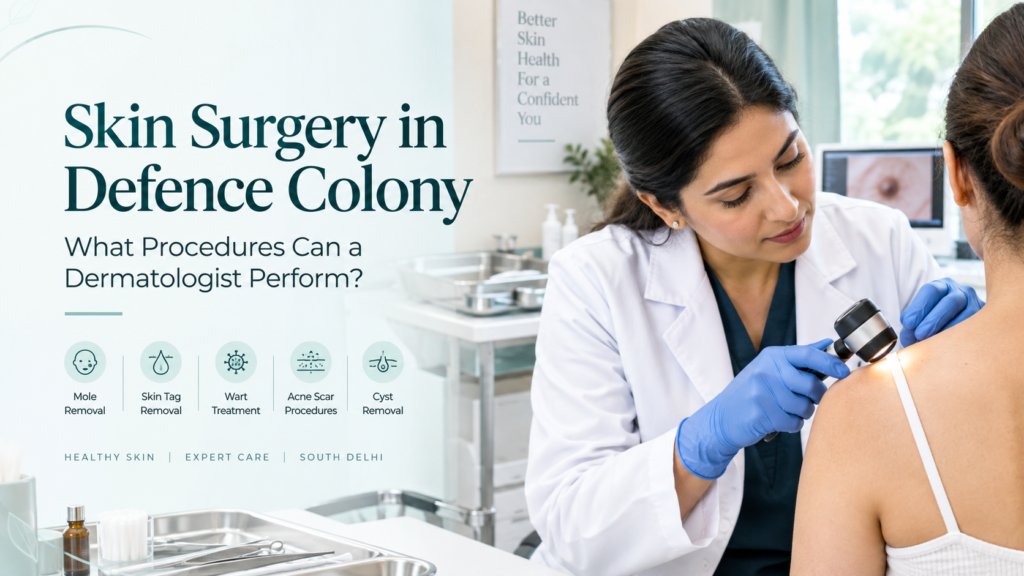
Skin Surgery in Defence Colony
Skin problems do not always require creams, medications or cosmetic treatments. Sometimes, a medical procedure is necessary to remove unwanted skin growths, treat persistent skin conditions, improve scars or address other dermatological concerns. This is where skin surgery performed by a qualified dermatologist can help.
If you are searching for skin surgery in Defence Colony, understanding the different procedures available can help you make an informed decision about your skin health.
At Dermedico Clinic, Defence Colony, New Delhi, dermatological procedures are performed under the supervision of Dr. Pallavi Chandna Rohatgi, MD Dermatology, Venereology and Leprosy. The clinic offers dermatological, dermatosurgical, laser and cosmetic skin treatments tailored to individual patient concerns.
In this blog, we explore what skin surgery involves, the procedures a dermatologist can perform, who may benefit from them and what to consider before undergoing treatment.
What Is Skin Surgery?
Skin surgery, also known as dermatologic surgery or dermatosurgery, involves medical procedures performed to diagnose, treat or remove conditions affecting the skin, hair and nails.
Unlike general cosmetic procedures, dermatological surgery focuses on addressing specific skin concerns while prioritising skin health, functionality and appearance.
Depending on the condition, a dermatologist may recommend a minor surgical procedure, a minimally invasive treatment or a specialised technique involving medical instruments, lasers or other technologies.
Common reasons for skin surgery include:
- Removal of skin tags, warts and certain benign skin growths
- Treatment of moles that require medical evaluation
- Removal or biopsy of suspicious skin lesions
- Management of acne scars
- Treatment of certain cysts
- Correction of selected cosmetic skin concerns
- Management of specific nail disorders
Not every skin condition requires surgery. A dermatologist first evaluates the condition to determine whether medication, observation or a procedural treatment is more appropriate.
What Procedures Can a Dermatologist Perform?
Dermatologists receive specialised training in diagnosing and treating a wide range of skin conditions. Depending on their qualifications, experience and the patient’s medical needs, they may perform several types of dermatological procedures.
1. Mole Removal
Moles are common skin growths that can develop anywhere on the body. Most moles are harmless, but some may require examination if they change in appearance, size, colour or shape.
A dermatologist may recommend mole removal when:
- A mole is repeatedly irritated by clothing or shaving
- The growth causes discomfort
- Its appearance raises medical concerns
- A biopsy is required for diagnosis
- The patient has a cosmetic concern that can be appropriately addressed
The removal technique depends on the mole’s characteristics and medical assessment. Some lesions require surgical excision, while others may be suitable for different techniques.
Important: A changing or suspicious mole should be medically evaluated before cosmetic removal. Removing a lesion without appropriate assessment could delay diagnosis.
2. Skin Tag Removal
Skin tags are small, soft, benign growths that commonly appear around the neck, underarms, eyelids and other areas where skin folds occur.
Although generally harmless, they can become uncomfortable due to friction, jewellery or clothing.
A dermatologist may recommend removal using techniques such as:
- Electrocautery
- Snip excision
- Cryotherapy in selected cases
The appropriate method depends on the size, location and number of skin tags.
Learn more about electrocautery treatment at Dermedico Clinic.
3. Wart Removal
Warts are skin growths caused by certain strains of human papillomavirus (HPV). They may appear on the hands, feet, face or other parts of the body.
Depending on their type, location and severity, dermatologists may recommend:
- Cryotherapy (freezing treatment)
- Electrocautery
- Medical treatments
- Other specialised removal techniques
Warts may sometimes return after treatment, making professional diagnosis and follow-up important.
Read more about warts and their management from DermNet NZ.
4. Cyst Removal
Skin cysts are enclosed structures beneath the skin that may contain fluid, keratin or other material. Epidermoid cysts are among the commonly encountered types.
Some cysts remain small and painless, while others may become inflamed, infected or uncomfortable.
A dermatologist may recommend a procedure when a cyst:
- Increases in size
- Becomes painful or inflamed
- Repeatedly develops infections
- Interferes with daily activities
- Requires medical diagnosis
Depending on the condition, surgical removal may be considered. Inflamed cysts may need treatment before definitive removal.
It is important not to squeeze or attempt to remove a cyst at home, as this can increase irritation, infection and scarring.
5. Acne Scar Treatment and Subcision
Acne scars can develop when inflammation damages the skin during the healing process. Different scar types require different treatment approaches.
A dermatologist may recommend procedures such as:
- Subcision for selected depressed scars
- Microneedling
- Dermaroller treatment
- Chemical peels
- Laser-based skin resurfacing
- Combination treatments for different scar types
Subcision is a minimally invasive technique in which a specialised needle is used to release fibrous bands beneath certain depressed acne scars.
The choice of treatment depends on whether the scars are rolling, boxcar, ice-pick or another type.
Explore Derma Genesis treatment at Dermedico Clinic for information about advanced skin rejuvenation options.
6. Electrocautery for Selected Skin Growths
Electrocautery is a dermatological procedure that uses controlled electrical energy to treat or remove selected skin lesions.
Depending on the diagnosis, it may be used for certain:
- Skin tags
- Warts
- Seborrhoeic keratoses
- Small benign growths
- Other suitable superficial skin lesions
The procedure requires careful evaluation, as not every mole, growth or skin lesion should be treated using electrocautery.
A qualified dermatologist determines whether the technique is suitable and discusses possible risks, including temporary redness, pigment changes and scarring.
7. Skin Biopsy
A skin biopsy involves collecting a small sample of skin tissue for laboratory examination.
It may be recommended when a dermatologist needs to investigate:
- Persistent or unusual rashes
- Suspicious moles or lesions
- Possible inflammatory skin disorders
- Certain infections
- Other unexplained skin changes
Different biopsy techniques may be used depending on the size, location and nature of the lesion.
A biopsy is an important diagnostic procedure because it helps establish an accurate diagnosis before treatment is planned.
8. Nail Procedures
Dermatologists also evaluate and treat conditions affecting the nails.
Selected nail procedures may be recommended for concerns such as:
- Ingrown toenails
- Certain nail infections
- Painful nail abnormalities
- Nail-related skin disorders
The procedure depends on the underlying condition. Not every nail problem requires surgery, and proper diagnosis is important before treatment.
9. Laser-Based Dermatological Procedures
Laser technology has become an important part of modern dermatology. Depending on the device and indication, laser procedures may be used for selected pigmentation concerns, unwanted hair, scars, skin rejuvenation and certain vascular or other skin conditions.
A dermatologist evaluates the skin type, condition, medical history and treatment goals before recommending laser therapy.
Explore laser hair reduction at Dermedico Clinic to learn more about available laser-based treatments.
Is Skin Surgery Painful?
The level of discomfort depends on the procedure, the treatment area and individual sensitivity.
Many minor dermatological procedures are performed using local anaesthesia to minimise discomfort. Patients may experience mild tenderness, swelling or temporary redness after treatment.
Your dermatologist will explain what to expect before, during and after the procedure.
Who May Need Skin Surgery?
Skin surgery may be considered for individuals experiencing specific dermatological concerns that cannot be adequately managed through medication or observation alone.
You may benefit from a consultation if you have:
- A persistent or uncomfortable skin growth
- A mole that has changed in appearance
- Recurrent skin tags or warts
- A painful or growing cyst
- Acne scars affecting skin texture
- A suspicious skin lesion requiring evaluation
- A nail condition causing persistent discomfort
The decision to undergo a procedure should always be based on a professional medical assessment rather than self-diagnosis.
What Are the Benefits of Consulting a Dermatologist for Skin Surgery?
Choosing a qualified dermatologist is important because skin conditions can look similar but have different underlying causes.
Some key benefits of professional dermatological evaluation include:
Accurate diagnosis: A dermatologist identifies the nature of the skin concern before recommending treatment.
Appropriate procedure selection: Different conditions require different techniques. Selecting the right procedure helps avoid unnecessary treatment.
Medical supervision: Professional care helps manage potential complications and monitor healing.
Personalised treatment: Factors such as skin type, medical history, lesion location and scarring tendency are considered.
Follow-up care: Post-procedure instructions and follow-up visits help assess healing and identify concerns early.
What to Expect Before and After Skin Surgery
Understanding the treatment process can help patients feel more comfortable and prepared.
Before the procedure
Your dermatologist may:
- Examine the affected skin area
- Review your medical history and medications
- Determine whether additional tests or a biopsy are required
- Explain the procedure and alternatives
- Discuss possible risks, recovery and expected outcomes
- Provide instructions for preparing for treatment
After the procedure
Post-treatment instructions vary depending on the technique used. General recommendations may include:
- Keeping the treated area clean
- Following wound-care instructions
- Avoiding unnecessary friction or irritation
- Using prescribed medication or dressings as advised
- Protecting healing skin from excessive sun exposure
- Attending recommended follow-up appointments
Contact your treating dermatologist if you experience increasing pain, spreading redness, persistent bleeding, fever or other unexpected symptoms.
How to Choose a Skin Surgery Clinic in Defence Colony?
If you are looking for skin surgery in Defence Colony, consider the following factors before choosing a clinic:
- Qualified dermatologist: Verify the doctor’s medical qualifications and dermatology training.
- Relevant experience: Look for experience with the particular skin condition or procedure you need.
- Proper diagnosis: The clinic should evaluate the condition before recommending treatment.
- Safety and hygiene: Procedures should be performed using appropriate infection-control practices.
- Transparent consultation: Understand the treatment, expected results, possible risks and costs.
- Aftercare support: Follow-up guidance is an important part of dermatological treatment.
Skin Surgery in Defence Colony at Dermedico Clinic
Dermedico Clinic provides dermatological consultation and selected skin procedures in Defence Colony, New Delhi.
The clinic is led by Dr. Pallavi Chandna Rohatgi, MD Dermatology, Venereology and Leprosy, who has experience in clinical dermatology, dermatosurgery, laser treatments and cosmetic dermatology.
Patients can consult the dermatologist for evaluation of skin growths, acne-related concerns, pigmentation, laser-based treatments and other dermatological conditions.
Why Consult Dermedico Clinic?
- Dermatologist-led consultation
- Individualised treatment recommendations
- Clinical dermatology and dermatosurgery expertise
- Selected laser and cosmetic dermatology procedures
- Convenient location in Defence Colony, South Delhi
If you are experiencing a skin concern or considering a dermatological procedure, a consultation can help you understand the available options and determine the most appropriate next step.
Book a consultation: Contact Dermedico Clinic
Location: D-95, Defence Colony, New Delhi – 110024
Consultant: Dr. Pallavi Chandna Rohatgi, MD Dermatology
Frequently Asked Questions (FAQs)
1. What procedures can a dermatologist perform?
Dermatologists may perform mole removal, skin biopsies, skin tag removal, wart treatment, cyst removal, acne scar procedures, electrocautery, selected nail procedures and laser-based treatments, depending on their qualifications and the patient’s condition.
2. Is skin surgery available in Defence Colony, Delhi?
Dermatological consultation and selected skin procedures are available at Dermedico Clinic, D-95, Defence Colony, New Delhi. Patients should consult the clinic to confirm whether a particular procedure is available and appropriate.
3. Can a dermatologist remove moles and skin tags?
Yes. Dermatologists can evaluate and remove suitable moles and skin tags using appropriate techniques. Suspicious moles must be medically assessed before removal.
4. Is skin surgery safe?
Skin surgery is generally considered safe when appropriately indicated and performed by a qualified medical professional. However, every procedure carries potential risks, including infection, bleeding, scarring and pigment changes.
5. How long does recovery from skin surgery take?
Recovery varies according to the procedure, location, size of the treated area and individual healing. Some minor procedures heal within days, while others may require several weeks of recovery and follow-up.
6. Can acne scars be treated with skin surgery?
Certain acne scars may benefit from procedures such as subcision, microneedling, dermaroller treatments or laser-based procedures. Treatment depends on the type and severity of the scars.
7. When should I consult a dermatologist for a mole?
Consult a dermatologist if a mole changes size, shape or colour, develops irregular borders, bleeds, becomes itchy or looks different from your other moles.
8. Where can I consult a dermatologist for skin surgery near Defence Colony?
You can contact Dermedico Clinic at D-95, Defence Colony, New Delhi, to enquire about a dermatological consultation and suitable skin procedures.
Conclusion
Skin surgery is an important part of modern dermatology, helping address selected skin growths, cysts, warts, acne scars, nail conditions and other medical concerns.
The most appropriate procedure depends on an accurate diagnosis, individual skin characteristics and professional medical advice. Consulting a qualified dermatologist before undergoing treatment helps ensure that the procedure is medically appropriate and that patients understand its benefits, limitations and potential risks.
If you are searching for skin surgery in Defence Colony, Dermedico Clinic offers dermatologist-led consultation and personalised guidance for a range of dermatological concerns.
Take the first step towards healthier skin by scheduling a consultation with a qualified dermatologist.