


Table of Contents
Laser Hair Removal Treat Coarse
Unwanted facial hair can be frustrating, especially when it is thick, dark, coarse or grows back quickly after shaving, threading or waxing. Many women experience unwanted hair growth on their upper lip, chin, jawline, cheeks and neck. While traditional hair removal methods offer temporary results, they often require frequent maintenance and can sometimes cause skin irritation, ingrown hairs and pigmentation.
This leads to an important question: Can laser hair removal treat coarse and thick facial hair effectively?
The answer is yes. Laser hair removal can be an effective option for reducing thick and coarse facial hair, particularly when the hair contains sufficient dark pigment. However, the results depend on several factors, including hair colour, skin tone, hormonal health, laser technology and the treatment settings used.
At Dermedico Clinic, Defence Colony, South Delhi, understanding your skin and hair type is an important part of choosing an appropriate laser hair reduction treatment.
How Does Laser Hair Removal Work on Thick Facial Hair?
Laser hair removal works by directing concentrated light energy towards the pigment (melanin) present in the hair follicle. The pigment absorbs the light, which converts into heat and damages the follicle responsible for hair growth.
This process helps slow down future hair growth and gradually reduces hair density and thickness.
Coarse and thick facial hair often contains more pigment than fine, light-coloured hair. This can make it a suitable target for laser hair reduction.
However, laser treatment is most effective when hair is in its active growth phase. Since all hair follicles do not grow at the same time, multiple sessions are necessary to achieve noticeable and longer-lasting reduction.
Is Laser Hair Removal Effective for Coarse Chin, Upper Lip and Jawline Hair?

Yes, laser hair removal can help reduce coarse hair in several facial areas.
Here are some common areas where treatment may be considered:
1. Chin Hair
Thick chin hair is a common concern among women. It may appear as isolated coarse strands or more widespread hair growth.
Laser hair reduction can gradually decrease the number of active hair follicles and make regrowth finer and less noticeable.
2. Upper Lip Hair
Dark and coarse upper lip hair can be difficult to manage with frequent threading or waxing. Laser treatment can help reduce unwanted hair growth over multiple sessions.
3. Jawline Hair
Some women experience thick hair along the jawline, particularly when hormonal changes influence hair growth. Laser treatment may help improve hair density and reduce the frequency of hair removal.
4. Cheek and Sideburn Hair
Coarse hair around the cheeks and sideburns can also be treated in suitable candidates. However, very fine facial hair requires careful assessment because laser treatment is not equally effective for every hair type.
Why Is Coarse Facial Hair Sometimes Easier to Treat With Lasers?
Laser technology targets melanin in the hair follicle. Coarse, dark hair generally contains more pigment, allowing it to absorb laser energy effectively.
This is why dark and thick hair often responds better than:
- Fine peach fuzz.
- White or grey hair.
- Very light blonde hair.
- Red or minimally pigmented hair.
One important distinction is that laser hair removal works best for reducing pigmented hair, not necessarily every type of unwanted facial hair.
A dermatologist should evaluate the hair before recommending treatment, especially when the facial hair is very fine or spread across a large area.
How Many Laser Hair Removal Sessions Are Needed for Thick Facial Hair?
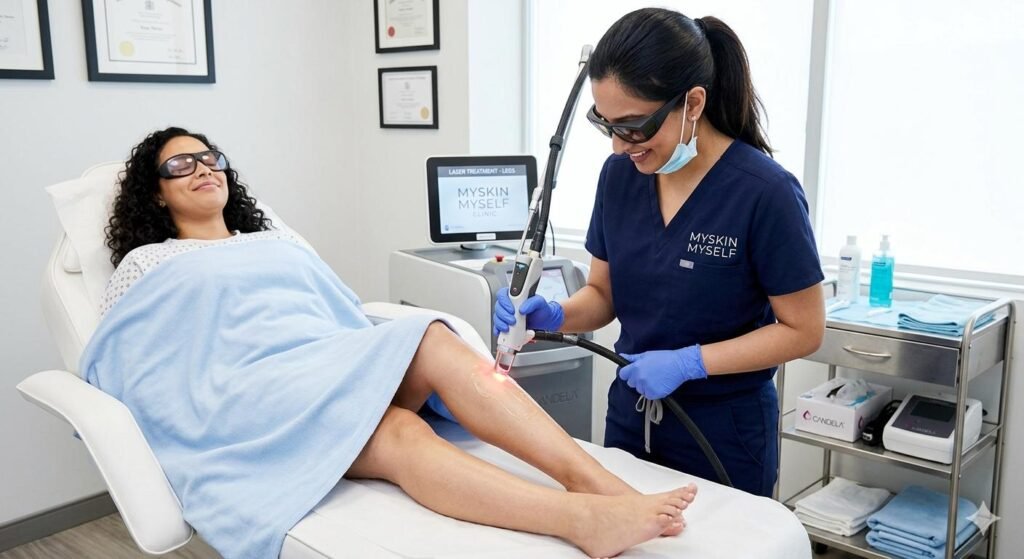
Laser hair reduction is not a one-session treatment. Multiple sessions are usually required because hair follicles go through different growth cycles.
The number of sessions depends on:
- Thickness and density of facial hair.
- Hair colour and pigmentation.
- Individual hair growth cycle.
- Skin tone and laser selection.
- Hormonal factors.
- Individual response to treatment.
Many patients require a series of sessions, often around 6–8 or more, with intervals determined by their dermatologist.
Facial hair associated with hormonal conditions may require additional sessions and periodic maintenance treatments.
It is important to understand that laser treatment offers long-term hair reduction rather than a guarantee of complete and permanent removal of every hair.
Is Laser Hair Removal Safe for Indian Skin?
This is one of the most common concerns among people considering laser hair removal in India.
Indian skin tones can contain higher levels of melanin, which means the laser must be selected and adjusted carefully to minimise the risk of skin irritation, burns and pigmentation changes.
Different laser technologies may be suitable for different skin and hair combinations. Long-pulsed Nd lasers are commonly considered for darker skin tones because their wavelength allows deeper penetration with relatively less absorption by the surrounding epidermal melanin.
However, the safest choice depends on an individual’s skin type, hair characteristics and medical assessment.
Before starting treatment, a qualified dermatologist should assess your skin, discuss possible side effects and determine appropriate laser settings.
Can Hormonal Imbalance Cause Thick Facial Hair to Return?
Yes. Hormonal changes can play an important role in unwanted facial hair growth.
In such cases, laser hair removal can reduce existing hair, but it does not treat the underlying hormonal cause.
If new coarse facial hair continues to appear, a dermatologist may recommend an appropriate medical evaluation and, where necessary, hormonal management alongside laser treatment.
Treating both the existing hair and the underlying cause can help improve long-term results.
What Should You Avoid Before and After Laser Facial Hair Removal?
Following the correct preparation and aftercare instructions can help minimise irritation and support better treatment outcomes.
Before Treatment
- Avoid waxing, threading and plucking for the period recommended by your dermatologist.
- Avoid excessive sun exposure and tanning.
- Inform your dermatologist about medications and skincare products you use.
- Discuss any history of pigmentation, skin sensitivity or previous laser treatments.
- Follow the clinic’s shaving instructions.
After Treatment
- Apply sunscreen as recommended by your dermatologist.
- Avoid excessive sun exposure.
- Use gentle skincare products until the skin settles.
- Avoid harsh exfoliation and irritating active ingredients for the recommended period.
- Do not wax or pluck treated hair between sessions.
- Contact your dermatologist if you experience unusual blistering, persistent pain or significant skin irritation.
Mild redness, swelling or temporary sensitivity can occur after treatment. More significant side effects require medical attention.
When Should You Consult a Dermatologist for Thick Facial Hair?
Occasional unwanted facial hair is common. However, sudden or excessive growth of coarse, dark hair deserves medical evaluation.
Consider consulting a dermatologist if you experience:
- Rapid development of thick chin or upper lip hair.
- Increasing facial hair density.
- Irregular menstrual cycles along with unwanted hair growth.
- Persistent acne or scalp hair thinning alongside facial hair.
- Facial hair that returns quickly despite repeated removal treatments.
A dermatologist can assess whether the growth is primarily cosmetic or may be associated with an underlying hormonal condition.
Why Consider Dermedico Clinic for Laser Hair Reduction in South Delhi?
Choosing the right clinic is an important step when considering laser hair reduction, particularly for sensitive facial areas.
Dermedico Clinic is located in Defence Colony, South Delhi, and is associated with Dr. Pallavi Chandna Rohatgi, an MD dermatologist, cosmetologist and laser surgeon with experience in dermatology and laser procedures.
The clinic offers laser hair reduction services and dermatological consultations to help patients understand their skin and hair concerns before choosing an appropriate treatment.
Whether you are concerned about coarse chin hair, upper lip hair or unwanted jawline hair, a professional assessment can help determine whether laser hair reduction is suitable for you.
Patients from Defence Colony, Lajpat Nagar and other parts of South Delhi can contact the clinic to enquire about a consultation.
Frequently Asked Questions (FAQs)
1. Can laser hair removal permanently remove thick facial hair?
Laser hair removal provides long-term hair reduction by damaging hair follicles. Some treated hairs may not regrow, while others can return finer or lighter. Maintenance sessions may be needed.
2. Is laser hair removal better than waxing for coarse facial hair?
Laser hair removal offers longer-lasting hair reduction compared with waxing, which only removes hair temporarily. However, the most appropriate option depends on your skin, hair type and treatment goals.
3. Does laser hair removal make thick facial hair thinner?
Yes. Successful treatment can reduce hair density and make regrowth finer and less noticeable over multiple sessions.
4. Can women with PCOS undergo laser hair removal?
Yes. Women with PCOS can undergo laser hair reduction after a medical assessment. However, hormonal factors may lead to continued hair growth and the need for additional or maintenance sessions.
5. Is laser hair removal painful on the chin and upper lip?
Patients may experience mild discomfort, often described as a snapping or tingling sensation. The level of discomfort depends on individual sensitivity, laser settings and the treatment area.
6. Can laser hair removal cause pigmentation on Indian skin?
Temporary darkening or lightening of the skin can occur. Incorrect laser settings, tanning and inadequate precautions can increase the risk. Choosing an experienced dermatologist and appropriate laser technology is important.
7. How long does it take to see results from laser facial hair removal?
Some patients notice reduced hair growth after their initial sessions, but visible improvement generally develops gradually over a complete treatment course.
8. Can laser hair removal treat thick hair on the neck and jawline?
Yes. These areas can be treated in suitable candidates after evaluating hair density, pigmentation, skin tone and the reason behind the hair growth.
Final Thoughts
Coarse and thick facial hair does not have to be managed through repeated shaving, threading or waxing alone. Laser hair removal can provide a longer-lasting reduction in unwanted hair, particularly when the hair is dark and sufficiently coarse.
However, successful treatment depends on choosing suitable laser technology, following the correct treatment schedule and addressing possible hormonal factors.
If you are considering laser hair removal for coarse facial hair in South Delhi, a consultation with a qualified dermatologist at Dermedico Clinic can help you understand your treatment options and make an informed decision.
Book a consultation with Dermedico Clinic to discuss whether laser hair reduction is suitable for your facial hair concerns.


