
Table of Contents
Botox Help
Frequent headaches can affect almost every part of daily life, from concentrating at work to enjoying time with family. While occasional headaches may improve with rest, hydration or medication, recurring headaches and migraines can become difficult to manage.
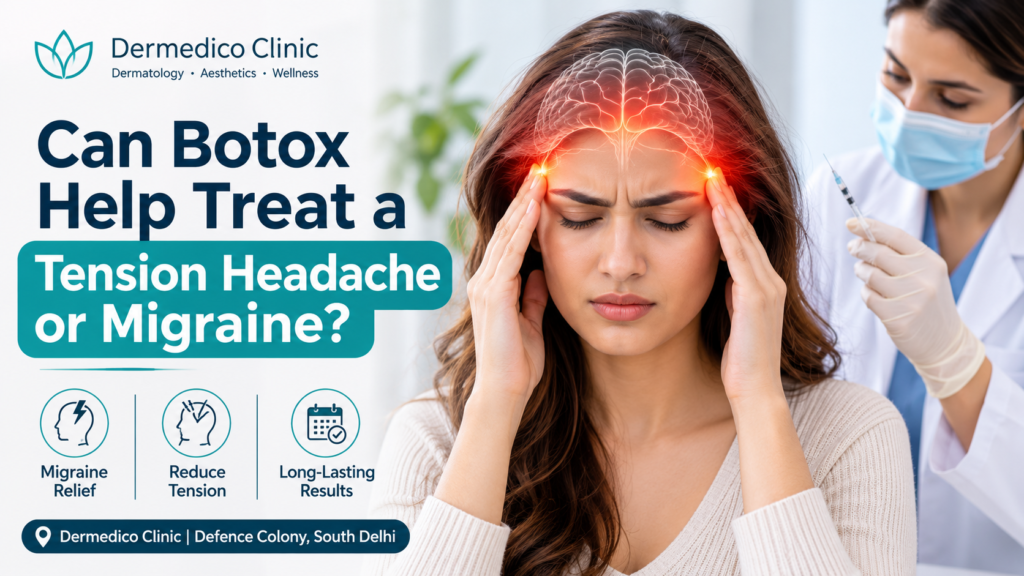
One treatment that has gained attention for its potential role in headache prevention is Botox. Although it is widely recognised for reducing facial wrinkles, Botox also has an established medical application in preventing chronic migraine in adults.
But can Botox actually help treat tension headaches? Does it work for every type of migraine? And who might benefit from this treatment?
Let’s explore how Botox works, what medical research says, its potential benefits and limitations, and when you should consider consulting a qualified medical professional.
What Is Botox and How Does It Work?
Botox is a purified form of botulinum toxin type A. It works by temporarily blocking certain nerve signals responsible for muscle contractions.
In cosmetic dermatology, Botox is commonly used to relax selected facial muscles and reduce the appearance of dynamic wrinkles, such as forehead lines and crow’s feet.
However, its medical applications extend beyond cosmetic treatments.
For people with chronic migraine, botulinum toxin injections may help reduce the frequency of headaches by affecting pain-related signalling pathways. Researchers believe that Botox can interfere with the release of certain neurotransmitters and pain-related chemicals involved in migraine attacks.
It is important to understand that Botox for chronic migraine follows a specific medical injection protocol. It is different from the cosmetic Botox injections used for facial rejuvenation.
Can Botox Help Treat Migraines?
Yes, Botox can help prevent chronic migraines in eligible adults.
Botox received FDA approval in 2010 for the preventive treatment of chronic migraine in adults.
Chronic migraine is generally defined as:
- Experiencing headaches on 15 or more days per month.
- Having headaches that last four hours or longer on headache days.
- Experiencing migraine features on at least eight headache days per month.
- Having this pattern for more than three months.
Botox is not intended to provide immediate relief from an ongoing migraine attack. Instead, it is used as a preventive treatment to reduce how frequently headaches occur.
The treatment may be particularly worth discussing with a healthcare professional when conventional preventive medications have not provided sufficient relief or have caused unwanted side effects.
Important: Botox is not established as a preventive treatment for episodic migraine, and treatment suitability must be assessed individually.
Can Botox Treat Tension Headaches?
This is where an important distinction needs to be made.
Tension-type headaches and migraines are different conditions, even though some symptoms may overlap.
Tension-type headaches commonly cause:
- A dull, pressing or tightening sensation around the head.
- Pain on both sides of the head.
- Pressure around the forehead or temples.
- Tenderness in the scalp, neck or shoulder muscles.
- Mild to moderate pain that is not usually aggravated by routine physical activity.
Some people experience tension headaches because of stress, poor posture, sleep disturbances or prolonged muscle tension.
Although Botox relaxes selected muscles, there is currently insufficient evidence to recommend it as a routine treatment for chronic tension-type headaches.
Clinical guidelines have not established Botox as an effective standard treatment for this condition.
Therefore, someone experiencing frequent tension headaches should undergo a proper medical evaluation rather than assuming that Botox will resolve the problem.
How Does Botox Help Prevent Chronic Migraines?
The exact mechanism is still being studied, but researchers believe Botox works through several pain-related pathways.
Here are some of the proposed ways it may help:
1. Reduces Pain-Related Nerve Signalling
Botox may interfere with the release of certain chemicals involved in transmitting pain signals.
This can help reduce the activation of pain pathways associated with chronic migraine.
2. Helps Reduce Migraine Frequency
For suitable patients, regular Botox treatment may decrease the number of headache days experienced each month.
The goal is to make migraine attacks less frequent and improve overall quality of life.
3. May Reduce Headache-Related Discomfort
Some patients experience improvements in headache severity and migraine-related disability following treatment.
However, individual responses vary, and not everyone experiences the same level of improvement.
What Happens During Botox Treatment for Chronic Migraine?
Botox treatment for chronic migraine involves a specific injection protocol performed by a suitably trained healthcare professional.
The process generally includes:
Step 1: Medical Assessment
The doctor reviews your headache history, symptoms, frequency of migraine attacks, previous treatments and medical background.
Step 2: Identifying Injection Areas
The approved chronic migraine protocol involves multiple injection sites across specific areas of the head and neck.
Step 3: Administering the Injections
Botox is administered into selected muscles using small injections. The standard adult protocol typically involves 155 units across 31 injection sites, with additional sites considered by the treating specialist when appropriate.
Step 4: Follow-Up and Monitoring
Patients are generally assessed over subsequent treatment cycles to determine whether headache frequency and severity have improved.
Treatment is typically repeated every 12 weeks when clinically appropriate.
How Long Does Botox Take to Work for Migraines?
Botox does not work like a conventional painkiller that provides immediate relief.
Some patients may notice improvements within the first few weeks, while others may require multiple treatment sessions before experiencing meaningful benefits.
Doctors commonly evaluate the response over two or three treatment cycles.
Keeping a headache diary can help track:
- Number of headache days each month.
- Duration of migraine episodes.
- Pain intensity.
- Medication use.
- Changes in daily activities and quality of life.
This information helps the treating doctor determine whether continuing treatment is appropriate.
What Are the Possible Side Effects of Botox?
Like any medical procedure, Botox treatment can cause side effects.
Some commonly reported side effects associated with chronic migraine treatment include:
- Neck pain or stiffness.
- Headache following injections.
- Temporary muscle weakness.
- Pain, swelling or bruising at injection sites.
- Drooping eyelids in some patients.
Rarely, botulinum toxin effects may spread beyond the injection area and cause more serious symptoms, including swallowing or breathing difficulties.
People with certain neuromuscular conditions, existing swallowing or breathing problems, or a history of allergic reactions to botulinum toxin require particular caution.
Who May Be a Suitable Candidate for Botox for Migraines?
Botox may be considered for adults who:
- Experience chronic migraine on 15 or more days per month.
- Have persistent migraine symptoms affecting everyday activities.
- Have not achieved adequate relief from other preventive treatments.
- Have undergone an appropriate medical assessment.
- Are suitable for botulinum toxin treatment based on their medical history.
However, Botox may not be suitable for everyone.
People experiencing occasional headaches, episodic migraines or ordinary tension-type headaches should not assume they will benefit from this treatment.
A healthcare professional should first establish the type of headache and recommend an appropriate treatment plan.
Botox for Migraines vs Cosmetic Botox: What Is the Difference?
Although both procedures use botulinum toxin, their purpose and treatment protocols are different.
| Feature | Cosmetic Botox | Migraine Botox |
|---|---|---|
| Main purpose | Reduce expression lines | Prevent chronic migraine |
| Treatment areas | Selected facial muscles | Specific head and neck injection sites |
| Treatment protocol | Based on aesthetic goals | Standardised medical protocol |
| Primary outcome | Softer facial wrinkles | Fewer headache days |
| Treatment schedule | Depends on cosmetic needs | Usually every 12 weeks |
An important point is that receiving cosmetic Botox for forehead wrinkles does not mean you are receiving the medical treatment protocol for chronic migraine.
The two procedures should not be considered interchangeable.
When Should You Consult a Doctor for Frequent Headaches?
Recurring headaches should not be ignored, particularly when they interfere with work, sleep or daily activities.
Consider seeking medical advice if:
- You experience headaches frequently throughout the month.
- Your headache pattern is changing.
- You regularly need pain-relief medication.
- Headaches interfere with your ability to perform daily activities.
- You experience nausea, sensitivity to light or other migraine-related symptoms.
Seek urgent medical attention for a sudden, extremely severe headache, a new headache accompanied by weakness, confusion, vision loss or difficulty speaking, or a headache associated with fever and a stiff neck.
An accurate diagnosis is essential before choosing any treatment.
Where Can You Explore Botox Treatment in South Delhi?
If you are considering Botox for cosmetic concerns, choosing an experienced and qualified dermatologist is an important part of making an informed decision.
At Dermedico Clinic, Defence Colony, South Delhi, patients can explore personalised cosmetic Botox treatments under the guidance of Dr. Pallavi Chandna Rohatgi, an MD-qualified dermatologist, cosmetologist and laser surgeon.
The clinic offers consultations for aesthetic concerns such as forehead lines, frown lines and other age-related facial changes.
It is important to note that cosmetic Botox services are different from the specialised neurological treatment protocol used for chronic migraine. Patients seeking migraine prevention should consult an appropriate headache specialist or neurologist.
To learn more about cosmetic Botox services, visit Dermedico Clinic’s Botox treatment information.
You can also explore the clinic’s existing Botox treatment guide.
Frequently Asked Questions (FAQs)
1. Can Botox completely cure migraines?
No. Botox is not a permanent cure for migraines. It is a preventive treatment that may reduce headache frequency and severity in adults with chronic migraine.
2. How often do you need Botox injections for migraines?
Botox treatment for chronic migraine is generally administered every 12 weeks, depending on the patient’s response and the treating doctor’s recommendation.
3. Is Botox effective for tension headaches?
Current clinical evidence does not support routine Botox treatment for tension-type headaches. Other treatments may be more appropriate depending on the cause and frequency of symptoms.
4. Does Botox help with headaches caused by stress?
Botox is not an established treatment for stress-related tension headaches. Managing stress, improving sleep habits and addressing contributing factors may help, depending on the diagnosis.
5. How many Botox injections are needed for chronic migraine?
The standard chronic migraine protocol involves 31 injection sites across specific areas of the head and neck. The exact treatment plan should be determined by a trained healthcare professional.
6. Is Botox safe for migraine prevention?
Botox is an approved preventive treatment for eligible adults with chronic migraine. However, it can cause side effects and is not suitable for everyone. A medical assessment is necessary before treatment.
7. Can cosmetic Botox injections also prevent migraines?
Not necessarily. Cosmetic Botox and chronic migraine Botox use different treatment goals and protocols. Cosmetic injections should not be considered a substitute for medically indicated migraine treatment.
Final Thoughts
Botox has an established role in preventing chronic migraine in eligible adults, offering an additional option for people who experience frequent and disabling headaches.
However, its effectiveness should not be confused with the treatment of tension-type headaches. The available clinical evidence does not support routine Botox injections for tension headaches.
Understanding your headache type, discussing your symptoms with a qualified healthcare professional and choosing an evidence-based treatment approach are essential steps towards better headache management.
If you are exploring cosmetic Botox or other dermatological treatments, Dermedico Clinic in Defence Colony, South Delhi, can help you understand the available aesthetic treatment options through a personalised consultation.
Medical Disclaimer: This article is intended for educational purposes only and should not replace professional medical advice, diagnosis or treatment. Botox for chronic migraine should only be administered by an appropriately qualified healthcare professional following a medical assessment.