Table of Contents
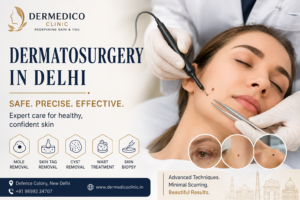
Looking for safe and effective dermatosurgery in Delhi? Dermatosurgery is a specialised branch of dermatology that combines medical skin care with minor surgical procedures to diagnose, remove, or treat a wide range of skin conditions. From unwanted moles and skin tags to cysts, warts, benign skin growths and suspicious lesions, the right procedure can improve both skin health and appearance.
At Dermedico Clinic, Defence Colony, Delhi, dermatosurgical procedures are performed as part of comprehensive dermatological care. The clinic provides personalised treatment based on the type, size, location and characteristics of the skin lesion.
If you are considering a procedure for a mole, skin tag, cyst, wart or another skin growth, a dermatologist should first examine the lesion and determine whether removal, biopsy or another treatment is appropriate.
What Is Dermatosurgery?
Dermatosurgery refers to surgical and minimally invasive procedures performed by dermatologists to diagnose or treat conditions affecting the skin, hair, nails and related tissues.
Unlike general cosmetic procedures, dermatosurgery may have both medical and cosmetic purposes. For example, a dermatologist may remove a lesion because it is repeatedly irritated, cosmetically bothersome, infected, or requires further examination.
The procedure selected depends on the diagnosis. Some lesions may be suitable for electrocautery or another minimally invasive technique, while others may require surgical excision or biopsy.
According to the American Academy of Dermatology, dermatologists can remove many moles through procedures such as surgical excision or surgical shave, depending on the lesion and clinical situation.
Which Skin Problems Can Be Treated With Dermatosurgery?
Dermatosurgery may be considered for several types of skin lesions and concerns.
Common examples include:
- Moles and unwanted nevi
- Skin tags
- Warts
- Sebaceous or epidermoid cysts
- Certain benign skin growths
- DPN (Dermatosis Papulosa Nigra)
- Syringomas
- Some superficial lesions
- Suspicious lesions requiring biopsy
- Certain scars or acne-related concerns
- Other lesions requiring dermatological assessment
At Dermedico Clinic, electrocautery is one of the available procedures and may be used for selected warts, skin tags, moles, DPN, syringoma and other suitable lesions. The appropriate procedure is decided after a clinical assessment rather than simply choosing a treatment based on appearance.
Mole Removal in Delhi
Moles are extremely common, and most are harmless. However, a mole that changes in appearance, grows, bleeds or becomes itchy should not simply be removed at home.
The American Academy of Dermatology recommends having changing or suspicious moles assessed by a dermatologist. When necessary, a dermatologist can remove the mole and have the tissue examined under a microscope.
Depending on the lesion, mole removal may involve:
- Surgical excision
- Shave removal
- Other dermatologist-selected techniques
The correct approach depends on the location, size, depth and appearance of the mole.
Never attempt to cut, burn or chemically remove a mole yourself. DIY removal can cause infection, scarring and may delay diagnosis of a potentially serious skin condition.
Skin Tag Removal
Skin tags are soft, benign growths that commonly develop around areas where skin rubs against skin or clothing. They may occur around the neck, underarms, eyelids and other body folds.
Although skin tags are usually harmless, people sometimes choose to have them removed because they:
- Catch on jewellery or clothing
- Become irritated
- Bleed after repeated friction
- Affect appearance
A dermatologist can assess the growth and select an appropriate removal technique.
Cyst Removal and Dermatosurgery
A cyst can appear as a lump underneath or within the skin. Epidermoid cysts, for example, are generally benign and may remain unchanged for a long time, although they can sometimes become inflamed or infected.
DermNet notes that complete surgical removal of an epidermoid cyst, including its capsule, can reduce the chance of recurrence.
This is why simply squeezing or repeatedly draining a cyst may not provide a long-term solution.
If a cyst is painful, inflamed, repeatedly infected, growing or cosmetically concerning, a dermatologist can assess whether medical treatment or surgical removal is appropriate.
What Is a Skin Biopsy?
Sometimes a skin lesion cannot be diagnosed confidently just by looking at it. In such cases, a dermatologist may recommend a skin biopsy.
During a biopsy, a small portion—or sometimes the entire lesion—is removed and examined under a microscope.
The American Academy of Dermatology explains that skin biopsy can help diagnose various skin conditions and is essential when skin cancer needs to be confirmed or ruled out.
A biopsy may therefore be recommended when a lesion:
- Looks unusual
- Is changing
- Bleeds or develops a persistent sore
- Has uncertain clinical features
- Needs microscopic examination for diagnosis
The decision to perform a biopsy should always be made by a qualified dermatologist following an examination.
Electrocautery in Delhi
Electrocautery is a dermatological procedure that uses controlled electrical energy to treat selected superficial skin lesions.
It may be considered for certain:
- Warts
- Skin tags
- DPN
- Syringomas
- Selected moles
- Other appropriate superficial lesions
Dermedico Clinic lists electrocautery in Delhi among its dermatological treatment options.
However, electrocautery is not appropriate for every skin growth. A dermatologist should first determine what the lesion is and whether another procedure would provide a safer or more suitable outcome.
What Happens During a Dermatosurgery Consultation?
Your consultation generally begins with a detailed examination of the skin concern.
The dermatologist may assess:
- The type of lesion
- Its size and location
- Whether it has changed over time
- Symptoms such as pain, bleeding or itching
- Whether a biopsy is necessary
- Which treatment is most appropriate
- Expected healing and possible scarring
If a procedure is recommended, your dermatologist should explain the treatment, expected recovery, potential risks and aftercare instructions.
At Dermedico Clinic, treatment plans are personalised according to the patient’s skin condition and individual requirements.
Is Dermatosurgery Safe?
Dermatosurgery is generally considered safe when appropriately selected and performed by a qualified dermatologist. However, every procedure has potential risks.
Depending on the treatment, possible complications can include:
- Temporary redness
- Swelling
- Bleeding
- Infection
- Pigment changes
- Scarring
- Recurrence of a lesion
DermNet notes that complete excision of a skin lesion necessarily produces some degree of scarring, although careful surgical technique can help minimise the cosmetic impact.
Your dermatologist should discuss procedure-specific risks before treatment.
Why Choose a Dermatologist for Skin Lesion Removal?
Removing a skin growth is not always simply a cosmetic decision.
A dermatologist can first determine what the lesion actually is and whether it needs treatment or laboratory examination.
This is particularly important for moles and changing skin lesions because some suspicious lesions may require biopsy rather than straightforward cosmetic removal. The American Academy of Dermatology recommends professional evaluation of suspicious or changing moles.
Choosing a dermatologist also allows the treatment technique to be selected according to the lesion’s characteristics and the location on the body.
Dermatosurgery vs Cosmetic Skin Treatments
Dermatosurgery should not be confused with every cosmetic dermatology treatment.
For example:
Dermatosurgery may involve procedures such as lesion removal, biopsy or treatment of selected skin growths.
Cosmetic dermatology may include treatments such as chemical peels, photofacials, fillers, Botox and other non-surgical procedures.
Dermedico Clinic offers a broader range of dermatology and aesthetic treatments, including chemical peel treatment, photofacial treatment, dermaroller treatment and electrocautery treatment.
The best treatment depends on the underlying concern.
Dermatosurgery in Delhi at Dermedico Clinic
Dermedico Clinic is located in Defence Colony, New Delhi, and provides dermatological and cosmetic treatments under the care of experienced doctors.
Dr. Pallavi Chandna Rohatgi is an MD in Dermatology, Venereology and Leprosy, dermatologist, cosmetologist and laser surgeon. According to the clinic’s profile, she has been practising dermatology along with dermatosurgery and completed senior residency at S.D.N.H., Delhi.
The clinic’s dermatology services cover a range of concerns, allowing patients to receive assessment and treatment based on their individual skin requirements.
You can learn more about the clinic through the Dermedico Clinic dermatology services page or read more about the Dermedico dermatology team.
Frequently Asked Questions About Dermatosurgery
Is dermatosurgery painful?
Many minor dermatological procedures are performed using local anaesthesia or other methods to minimise discomfort. The exact experience depends on the procedure and treated area.
How long does a dermatosurgery procedure take?
The duration varies according to the lesion and treatment technique. Some minor procedures can be completed during a short clinic visit, while more involved procedures may require additional time.
Can a mole be removed permanently?
Many moles can be removed successfully, but the appropriate technique depends on the lesion. Some lesions may require excision and microscopic examination.
Can cysts come back after removal?
Cysts can recur, particularly when the cyst wall or capsule is not completely removed. DermNet explains that complete excision of an epidermoid cyst can reduce recurrence.
Should I remove a changing mole cosmetically?
No. A changing, bleeding or suspicious mole should first be evaluated by a dermatologist. Cosmetic removal should not replace appropriate medical assessment.
Can I remove a skin tag at home?
It is better to have an unfamiliar or bothersome skin growth assessed by a dermatologist before removal. Attempting to cut or burn a growth yourself can lead to bleeding, infection and scarring.
When Should You See a Dermatologist?
Book a dermatology consultation if you notice a skin growth that:
- Is growing rapidly
- Changes colour or shape
- Bleeds repeatedly
- Becomes painful
- Starts itching persistently
- Does not heal
- Keeps becoming irritated
- Has suddenly appeared and looks unusual
Early professional assessment can help determine whether the lesion is harmless, requires removal, or needs further investigation.
Book a Dermatosurgery Consultation in Delhi
If you are searching for dermatosurgery in Delhi for a mole, skin tag, wart, cyst or another skin lesion, start with a professional dermatological assessment rather than choosing a procedure based only on online photographs or home-removal advice.
Dermedico Clinic provides dermatology and dermatosurgical care in Defence Colony, New Delhi, with treatment plans selected according to the patient’s individual condition.
Clinic: D-95, Defence Colony, New Delhi – 110024
Timings: Monday–Saturday, 10:00 AM–6:00 PM
Phone: +91 98992 34707
Book a consultation with Dermedico Clinic
Medical References & Authoritative Resources
For readers who want medically reliable information, the following resources provide additional information about skin lesions, biopsies and dermatological procedures: