Table of Contents
Nail Removal in Lajpat Nagar, Delhi – Professional Treatment for Painful & Ingrown Nails
Are you searching for nail removal in Lajpat Nagar, Delhi because of a painful, ingrown, damaged or repeatedly infected toenail?
A problematic toenail can make everyday activities uncomfortable. Walking, wearing shoes, exercising and even standing for long periods can become painful when the nail repeatedly presses into the surrounding skin.
In some cases, simple nail-care measures may be enough. However, when an ingrown or damaged nail is persistent, recurrent or causing significant pain, a dermatologist or qualified foot-care specialist may recommend a professional procedure such as partial nail removal (partial nail avulsion) or, in selected cases, complete nail removal.
At Dermedico Clinic, Defence Colony, patients from nearby areas including Lajpat Nagar can consult an experienced dermatology team for evaluation of skin and nail concerns. The clinic is located at D-95, Defence Colony, New Delhi.
What Is Nail Removal?
Nail removal, medically referred to in appropriate cases as nail avulsion, involves removing part or all of a problematic nail.
It is not something that should automatically be done for every nail problem. The correct treatment depends on the underlying cause.
For example, a painful nail may be associated with:
- An ingrown toenail
- Repeated nail trauma
- A severely thickened nail
- Nail deformity
- Recurrent inflammation around the nail
- Certain nail infections
- A nail that is repeatedly pressing into surrounding skin
For an ingrown toenail, treatment may involve removing only the section of nail that is digging into the skin rather than removing the entire nail. NHS guidance notes that a foot specialist may remove part or all of a problematic toenail depending on the condition.
Visit: dermatology treatments in Delhi
What Is an Ingrown Toenail?
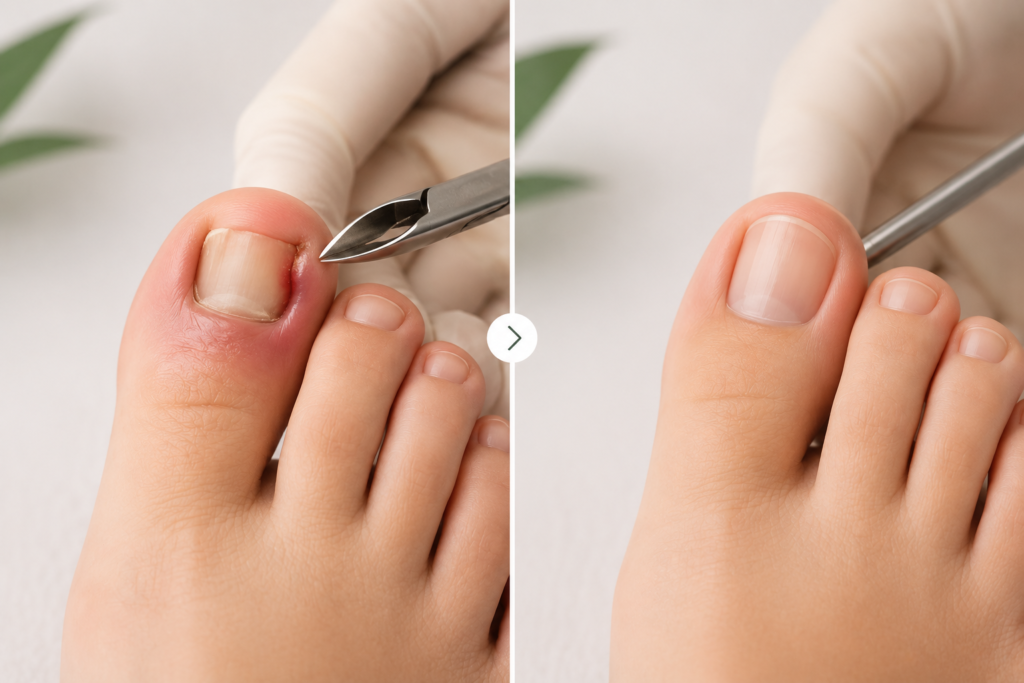
An ingrown toenail occurs when the edge or corner of the toenail grows into the surrounding skin instead of growing normally over it.
It most commonly affects the big toe.
Typical symptoms include:
- Pain around the nail
- Redness
- Swelling
- Tenderness
- Difficulty wearing shoes
- Pain while walking
- Skin irritation around the nail
- Pus or discharge when infection develops
An ingrown toenail can sometimes be managed conservatively, but persistent or severe cases may require professional treatment. The NHS recommends medical evaluation when symptoms do not improve, when there is significant swelling or pus, or when a person with diabetes develops an ingrown toenail.
When Should You Consider Professional Nail Removal?
Not every painful nail requires removal.
A dermatologist first needs to determine what is causing the nail problem.
Professional treatment may be considered when:
1. The Nail Is Repeatedly Ingrown
If the same toenail keeps growing into the surrounding skin despite appropriate nail care, a procedure may be considered.
2. Pain Is Affecting Daily Activities
Persistent pain while walking or wearing shoes is a reason to seek professional evaluation.
3. The Nail Is Severely Damaged
Trauma can cause a nail to become distorted, thickened or painful.
4. There Is Recurrent Inflammation
Repeated redness, swelling or irritation around the nail should not simply be ignored.
5. Conservative Treatment Has Not Worked
Mild cases may improve with appropriate footwear and nail-care measures. When the problem continues or repeatedly returns, a specialist can assess whether procedural treatment is appropriate.
Partial Nail Removal vs Complete Nail Removal
One of the most important things patients should understand is that nail removal does not always mean removing the entire nail.
Partial Nail Avulsion
During partial nail removal, only the problematic section of the nail is removed.
This may be appropriate when one side or a portion of the nail is growing into the surrounding skin.
The advantage is that the unaffected portion of the nail can remain in place.
Total Nail Avulsion
Total nail removal involves removing the complete nail plate.
This may be considered in selected cases involving a severely problematic or damaged nail, depending on the diagnosis.
The appropriate procedure should always be decided after an examination rather than based solely on symptoms or online information.
NHS clinical information describes both partial and total nail avulsion as possible approaches for problematic ingrown toenails, with local anaesthetic commonly used for nail surgery.
How Is Nail Removal Performed?
When nail surgery is clinically appropriate, the area is generally examined first and the procedure is explained to the patient.
Depending on the procedure, the usual process may include:
Step 1 – Clinical examination
The dermatologist examines the nail, surrounding skin and severity of the problem.
Step 2 – Treatment planning
The doctor determines whether conservative treatment, partial nail removal or another approach is more appropriate.
Step 3 – Local anaesthesia
For nail surgery, local anaesthesia may be used to numb the affected area.
Step 4 – Removal of the problematic nail section
The affected portion, or in selected cases the complete nail, is removed using an appropriate sterile technique.
Step 5 – Aftercare
The patient receives instructions regarding wound care, dressing, footwear and follow-up.
The exact technique and aftercare depend on the individual diagnosis and procedure.
Is Nail Removal Painful?
Patients are often concerned about pain.
When a nail-removal procedure is performed under local anaesthesia, the affected area is numbed before the procedure. This helps minimise discomfort during the procedure. Some soreness or discomfort can occur after the anaesthetic wears off.
The level of discomfort and recovery period can vary depending on:
- Whether part or all of the nail was removed
- Severity of the original problem
- Presence of infection
- Individual healing
- The specific procedure performed
Guy’s and St Thomas’ NHS Foundation Trust notes that mild pain or soreness can occur after the anaesthetic wears off following nail surgery.
Nail Removal Recovery: What Should You Expect?
Recovery varies from person to person.
Your dermatologist may advise you to:
- Keep the treated area clean
- Follow dressing instructions carefully
- Keep the wound protected as advised
- Avoid unnecessary pressure on the affected toe
- Wear comfortable, loose-fitting footwear
- Attend follow-up appointments if recommended
- Avoid picking or disturbing the healing area
Do not assume that every nail-removal procedure has the same recovery time. Healing depends on the type of procedure and your individual condition.
Can an Ingrown Toenail Be Treated Without Nail Removal?
Yes.
For mild cases, professional or home-care measures may sometimes be sufficient.
The NHS recommends measures such as keeping the foot clean and dry, wearing comfortable footwear and avoiding picking or cutting into the affected nail.
The American Academy of Dermatology also advises against digging out an ingrown toenail, particularly when it is sore or infected, and recommends seeing a dermatologist for appropriate treatment.
This is why an examination is important before deciding on nail removal.
Why Do Ingrown Toenails Happen?
Several factors can contribute to ingrown toenails.
Common factors include:
- Cutting toenails too short
- Cutting down the sides of the nail
- Wearing shoes that are too tight
- Trauma to the toe
- Naturally curved nails
- Repeated pressure on the toes
- Certain nail infections
- Excessive sweating
The NHS recommends cutting toenails straight across rather than cutting down the edges and wearing shoes that fit properly to help reduce the risk of ingrown toenails.
How to Prevent Ingrown Toenails
Prevention starts with basic nail care.
Cut Toenails Straight Across
Avoid aggressively rounding the corners of toenails.
Don’t Cut Nails Too Short
Leaving adequate nail length can help reduce pressure on surrounding skin.
Choose Comfortable Footwear
Shoes should provide enough space around the toes.
Keep Feet Clean and Dry
Good foot hygiene can help reduce the risk of some infections and irritation.
Don’t Dig Under the Nail
Trying to cut out an ingrown nail yourself can worsen irritation or injury.
The American Academy of Dermatology recommends trimming toenails straight across and avoiding attempts to dig out an ingrown toenail.
Nail Removal Near Lajpat Nagar, Delhi
If you live in Lajpat Nagar, Defence Colony, South Extension, Greater Kailash, Jangpura or nearby South Delhi areas, you may be looking for a dermatologist who can evaluate a painful or problematic nail.
Dermedico Clinic is located at D-95, Defence Colony, New Delhi, and its website identifies Lajpat Nagar among the nearby areas it serves.
Before booking a nail-removal procedure, it is important to confirm that the clinic currently provides the specific nail procedure you require.
CTA:
Book a Dermatology Consultation at Dermedico Clinic
Why Choose a Dermatologist Instead of Removing the Nail Yourself?
Trying to cut or pull out a painful nail at home can cause additional trauma.
A dermatologist can first determine whether the problem is actually an ingrown nail or whether another condition is responsible.
This distinction matters because nail changes can sometimes be associated with infection, trauma or other medical conditions. The American Academy of Dermatology recommends dermatological assessment when nails change in colour, texture or shape.
Professional assessment can help determine whether you need:
- Nail-care advice
- Treatment for infection
- Conservative management
- Partial nail removal
- Complete nail removal
- Treatment for an underlying nail condition
When Should You See a Doctor for a Nail Problem?
You should consider professional medical evaluation if:
- Nail pain persists
- The skin around the nail becomes red or swollen
- There is pus or discharge
- The nail repeatedly becomes ingrown
- You cannot comfortably wear normal footwear
- The nail changes colour or shape without an obvious reason
- The nail becomes severely thickened or distorted
- You have diabetes and develop an ingrown toenail
The NHS specifically advises people with diabetes and an ingrown toenail to seek medical advice because foot problems can be more serious in this situation.
Frequently Asked Questions About Nail Removal in Lajpat Nagar
How much does nail removal cost in Lajpat Nagar, Delhi?
The cost depends on the diagnosis, whether partial or complete removal is required, the complexity of the procedure and whether additional treatment is necessary. Contact the clinic for the current consultation and procedure fee.
Is nail removal permanent?
Not necessarily. Whether the problem returns depends on the underlying condition and the specific procedure performed. In recurrent ingrown toenails, treatment of the nail root or matrix may sometimes be considered to reduce recurrence.
Can an ingrown toenail heal without surgery?
Mild cases can sometimes improve with appropriate conservative care. Persistent, severe or recurrent cases may require specialist treatment.
Does the whole toenail always need to be removed?
No. Depending on the problem, a specialist may remove only the affected portion of the nail.
How long does nail removal take?
The duration depends on the type and complexity of the procedure. Your dermatologist can provide a more accurate estimate after examining the nail.
Can I walk after nail removal?
Your ability to walk normally depends on the procedure and the treated toe. Your doctor will provide individual instructions regarding footwear, activity and wound care.
Can I remove an ingrown nail at home?
It is better not to dig into or forcibly remove an ingrown nail yourself. The American Academy of Dermatology specifically advises against digging out an ingrown toenail.
What is partial nail avulsion?
Partial nail avulsion is a procedure in which the problematic section of the nail is removed while the unaffected portion remains.
Is nail removal done under anaesthesia?
Nail surgery is commonly performed using local anaesthesia to numb the affected area.
What if my nail is infected?
An infected nail or surrounding skin requires medical assessment. Treatment depends on the cause and severity of the infection.
Trusted Medical Resources on Ingrown Toenails
For additional patient education, readers can consult trusted medical resources such as:
- NHS – Ingrown Toenail Information
- American Academy of Dermatology – Nail Care Guidance
- Mayo Clinic – Ingrown Toenail Diagnosis & Treatment
- Guy’s and St Thomas’ NHS – Nail Surgery Information
- UCLH Health – Ingrown Toenail Guide
These should be used as educational references and not as a substitute for an individual medical consultation.
Final Thoughts
If you are experiencing a painful, swollen, repeatedly ingrown or damaged toenail, professional evaluation can help determine the right treatment.
Nail removal is not automatically required for every nail problem. Depending on the diagnosis, conservative care, infection treatment, partial nail removal or complete nail removal may be considered.
For patients searching for nail removal near Lajpat Nagar, Delhi, Dermedico Clinic in Defence Colony provides access to dermatology consultation in South Delhi.
Book a consultation with Dermedico Clinic to have your nail problem properly assessed before deciding on treatment.