Table of Contents
Hair PRP Improve Hair Density
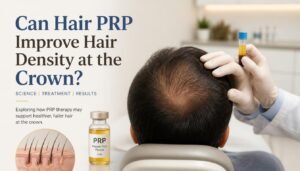
Hair thinning at the crown is a common concern among both men and women. You may notice your scalp becoming more visible at the top of your head, your hair parting getting wider, or your hair gradually losing its natural volume. These changes can affect your appearance and confidence, making you look for effective ways to restore healthier-looking hair.
One treatment that has gained attention for managing hair thinning is Platelet-Rich Plasma (PRP) therapy. This treatment uses components from your own blood to support the hair follicles and potentially improve hair density.
But can hair PRP actually improve hair density at the crown? Can it help with early-stage baldness, and how many sessions might be needed to notice a difference?
Let’s understand how PRP works, who may benefit from it, and what results you can realistically expect.
What Causes Hair Thinning at the Crown?
The crown is the circular area near the top and back of your scalp. Hair thinning in this region is particularly common in people experiencing androgenetic alopecia, also known as male or female pattern hair loss.
Several factors can contribute to reduced hair density at the crown:
- Genetic factors: Family history can increase the likelihood of pattern hair loss.
- Hormonal changes: Sensitivity to certain hormones can gradually shrink hair follicles.
- Ageing: Hair follicles may become less active as you get older.
- Nutritional deficiencies: Low iron levels, inadequate protein intake and certain nutritional deficiencies can contribute to hair shedding.
- Medical conditions: Thyroid disorders and certain scalp conditions may affect normal hair growth.
- Stress: Physical or emotional stress can trigger excessive hair shedding in some individuals.
Identifying the underlying cause is important before choosing a hair restoration treatment.
What Is Hair PRP Treatment?
Platelet-Rich Plasma (PRP) therapy is a minimally invasive treatment that uses a concentrated portion of your own blood to support hair restoration.
Platelets naturally contain growth factors involved in tissue repair and healing. PRP concentrates these platelets in plasma, which is then administered into selected areas of the scalp by a trained medical professional.
A typical hair PRP procedure involves three main steps:
1. Blood collection
A small amount of blood is collected from your arm, similar to a routine blood test.
2. Platelet separation
The collected blood is processed using a specialised centrifuge to separate platelet-rich plasma from other blood components.
3. Scalp application
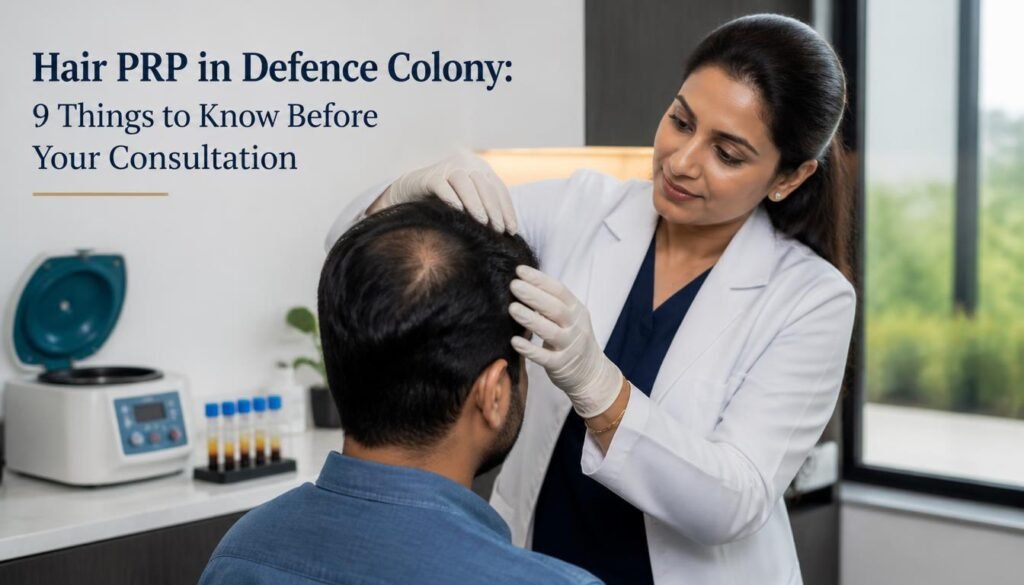
The prepared PRP is carefully injected into the areas experiencing hair thinning, such as the crown, according to the treatment plan.
The goal is to deliver concentrated platelets and their growth factors to the targeted scalp area.
Can Hair PRP Improve Hair Density at the Crown?
Yes, PRP treatment may help improve hair density at the crown, particularly in individuals experiencing early or moderate androgenetic alopecia.
The crown area often contains miniaturised hair follicles that are still producing thinner, weaker hair. In suitable patients, PRP may help support follicular activity and improve hair-related outcomes.
Research has shown promising findings. A 2024 systematic review and meta-analysis published in Anais Brasileiros de Dermatologia evaluated 14 studies involving 431 patients. The analysis reported an average difference of approximately 27.55 hairs per square centimetre in favour of PRP compared with control treatments.
For people with early crown thinning, PRP may be considered as part of a dermatologist-guided hair restoration plan.
How Does PRP Help Improve Crown Hair Density?
PRP works through biological growth factors that may support the hair growth environment.
Here are some potential benefits:
1. Supports Hair Follicle Activity
Hair follicles that have become weaker or miniaturised may still have the potential to produce hair. PRP may support their activity and contribute to improved hair growth in suitable patients.
2. May Improve Hair Thickness
Some individuals experience thinning because their existing hair strands become progressively finer. PRP may help improve certain hair characteristics, although evidence for increased hair thickness remains less consistent than for hair density.
3. May Help Reduce Hair Shedding
Some patients report reduced hair shedding following a course of PRP treatment. However, individual responses differ, and PRP does not address every underlying cause of hair loss.
4. Supports the Scalp’s Hair Growth Environment
Platelets release growth factors involved in tissue repair and cellular signalling. These factors may contribute to an environment that supports healthier follicular function.
How Many PRP Sessions Are Needed for Crown Hair Thinning?
The number of PRP sessions depends on the severity of hair thinning, the underlying diagnosis, individual response and the treatment protocol.
A commonly used approach involves:
- Initial phase: A series of treatments, often spaced approximately four weeks apart.
- Assessment phase: The dermatologist evaluates changes in shedding, hair density and thickness.
- Maintenance phase: Additional sessions may be recommended depending on the patient’s progress.
Not everyone requires the same schedule. Your dermatologist should determine the appropriate treatment frequency after examining your scalp.
When Can You Expect to See Results from Hair PRP?
Hair growth is a gradual biological process, so PRP does not provide overnight results.
Some patients may notice reduced hair shedding during the first few months. Visible improvements in hair density and thickness can take several months and depend on the individual’s condition.
Your progress may be evaluated through:
- Changes in visible scalp coverage.
- Hair density in the crown region.
- Hair strand thickness.
- Reduction in excessive shedding.
- Standardised scalp photographs.
Taking photographs before treatment and at follow-up appointments can help assess changes more objectively.
Is PRP Effective for Advanced Crown Baldness?
PRP may be more useful when hair follicles are still present but producing thinner hair.
If the crown has developed a completely smooth bald area where follicles are no longer functioning, PRP alone is unlikely to restore significant hair growth.
In advanced cases, a dermatologist may discuss other options, including medical treatment or hair transplantation, depending on the patient’s suitability.
This is why an early scalp examination is important. Starting treatment after identifying the cause of thinning may provide more options for managing hair loss.
Who Is a Suitable Candidate for Hair PRP?
PRP may be considered for individuals who:
- Have early or moderate pattern hair thinning.
- Notice reduced hair density around the crown.
- Have miniaturised hair follicles.
- Want to explore a minimally invasive hair restoration option.
- Have been evaluated by a dermatologist and found suitable for treatment.
However, PRP is not appropriate for every type of hair loss. People experiencing sudden hair shedding, active scalp infections, certain blood disorders or other medical conditions may need a different approach.
A proper medical assessment is essential before starting treatment.
Are There Any Side Effects of Hair PRP?
Since PRP is prepared using your own blood, serious complications are uncommon when the procedure is performed appropriately. However, side effects are possible.
These may include:
- Temporary scalp tenderness.
- Mild swelling.
- Redness around injection sites.
- Minor bleeding or bruising.
- Temporary discomfort during the procedure.
A qualified medical professional should assess your medical history, explain potential risks and follow appropriate infection-control practices.
PRP vs Other Hair Loss Treatments: What Is the Difference?
Different hair loss treatments work in different ways. The most appropriate option depends on the diagnosis, the stage of hair loss and individual health factors.
PRP therapy: Uses concentrated platelets from your own blood and may improve hair density in selected patients.
Minoxidil: A topical or prescribed formulation that can help stimulate hair growth and slow certain types of hair loss.
Prescription medications: Certain medications may help manage androgenetic alopecia, depending on the patient’s suitability and medical history.
Hair transplantation: A surgical option that relocates hair follicles to areas with significant hair loss.
These treatments are not interchangeable. In some cases, a dermatologist may recommend combining PRP with other evidence-based treatments.
Why Choose a Dermatologist for Hair PRP Treatment in South Delhi?
Hair thinning at the crown can have several underlying causes, which is why professional assessment matters before selecting a treatment.
At Dermedico Clinic, Defence Colony, New Delhi, patients can consult Dr. Pallavi Chandna Rohatgi, an MD Dermatologist with experience in dermatology and dermatosurgery.
A dermatologist-led assessment can help identify the pattern and possible cause of hair loss, evaluate treatment suitability and develop an individualised treatment plan.
If you are experiencing crown hair thinning or reduced hair density, you can explore the clinic’s Hair PRP Treatment information and contact Dermedico Clinic for a consultation.
Frequently Asked Questions (FAQs)
1. Can PRP regrow hair on the crown?
PRP may help improve hair density in the crown area when follicles are still present but weakened or miniaturised. It is less likely to help areas with advanced, long-standing baldness.
2. How many PRP sessions are needed for crown hair thinning?
Many treatment protocols begin with three monthly sessions, followed by maintenance treatments when appropriate. The exact number depends on individual hair loss and treatment response.
3. Does PRP make existing hair thicker?
PRP may improve hair thickness in some patients, but scientific evidence for this outcome is less consistent than evidence for increased hair density.
4. Is PRP better than minoxidil for crown hair loss?
Neither treatment is universally better. Minoxidil and PRP work differently, and the right option depends on the type and severity of hair loss. A dermatologist can help determine whether one or both may be suitable.
5. Is hair PRP treatment permanent?
No. PRP should not be considered a permanent cure for pattern hair loss. Maintenance and ongoing management may be necessary.
6. Can women undergo PRP for crown thinning?
Yes. Women with certain types of hair thinning, including female pattern hair loss, may be candidates after a proper medical evaluation.
7. Is hair PRP treatment painful?
Some discomfort may occur because PRP involves scalp injections. The level of discomfort varies between individuals, and your doctor can discuss ways to manage it.
8. When should I consult a dermatologist for crown hair thinning?
You should seek an evaluation if you notice progressive thinning, increased scalp visibility, excessive shedding or a widening hair part. Early diagnosis can help identify suitable treatment options.
Final Thoughts
Hair thinning at the crown can be frustrating, but understanding its underlying cause is the first step towards managing it effectively.
PRP therapy offers a promising option for selected individuals experiencing early or moderate pattern hair loss. It may support hair follicle activity, improve hair density and help manage thinning when follicles are still present.
However, results are not guaranteed, and PRP is not suitable for every type of hair loss. A dermatologist can assess your scalp, identify the cause and recommend an appropriate treatment plan.
Looking for hair PRP treatment in South Delhi? Visit Dermedico Clinic in Defence Colony, New Delhi, to discuss your hair concerns and explore suitable treatment options with a dermatologist.
Book your consultation and take an informed step towards healthier-looking hair.