Table of Contents
Dermatologists Treat Pigmentation
Pigmentation on the upper lip is a common skin concern that can affect people of different ages and skin types. Dark patches or uneven skin tone around the upper lip may make some people feel uncomfortable or less confident about their appearance. The good news is that several dermatological treatments can help improve upper lip pigmentation when the underlying cause is correctly identified.
But how do dermatologists treat pigmentation on the upper lip? The answer depends on factors such as the cause of pigmentation, skin type, hormonal changes, sun exposure, and the depth of excess melanin in the skin.
At Dermedico Clinic, understanding the cause of pigmentation is an important step toward choosing an appropriate treatment plan. This blog explains the common causes of upper lip pigmentation, professional treatment options, and skincare practices that may help maintain healthier-looking skin.
What Causes Pigmentation on the Upper Lip?
Upper lip pigmentation occurs when excess melanin, the natural pigment responsible for skin colour, accumulates in a particular area. Several factors can contribute to this condition.
1. Melasma
Melasma is a common pigmentation disorder that causes brown or greyish-brown patches on the face. It may affect the upper lip, cheeks, forehead, and nose. Hormonal changes, sun exposure, and genetic predisposition can contribute to its development.
2. Sun Exposure
Frequent exposure to ultraviolet (UV) radiation can stimulate melanin production. Without adequate sun protection, the upper lip may gradually become darker.
3. Hormonal Changes
Hormonal fluctuations associated with pregnancy, contraceptive use, or other hormonal changes may trigger melasma and facial pigmentation.
4. Post-Inflammatory Hyperpigmentation
Skin irritation, allergic reactions, waxing, threading, or inflammation may leave dark marks on the upper lip. This is known as post-inflammatory hyperpigmentation (PIH).
5. Repeated Hair Removal
Frequent waxing, threading, or using harsh hair-removal products may irritate sensitive skin around the mouth. Repeated irritation can contribute to pigmentation over time.
6. Certain Skincare Products
Fragrances, harsh exfoliants, and unsuitable skincare ingredients may cause irritation or allergic reactions, potentially leading to darker patches.
Identifying the underlying cause is essential because different types of pigmentation require different treatment approaches.
How Do Dermatologists Diagnose Upper Lip Pigmentation?
Before recommending treatment, a dermatologist examines the affected area and evaluates the patient’s skin history.
The consultation may include:
- Visual skin examination: Assessing the colour, distribution, and appearance of pigmentation.
- Medical history: Understanding hormonal changes, medications, previous treatments, and skin sensitivity.
- Dermoscopy: Using a specialised magnifying device to examine pigment patterns and skin structures.
- Wood’s lamp examination: In selected cases, helping assess the distribution and depth of pigmentation.
- Trigger identification: Evaluating sun exposure, cosmetic products, and hair-removal practices.
A proper diagnosis helps dermatologists distinguish melasma from other pigmentary conditions and develop an appropriate treatment strategy.
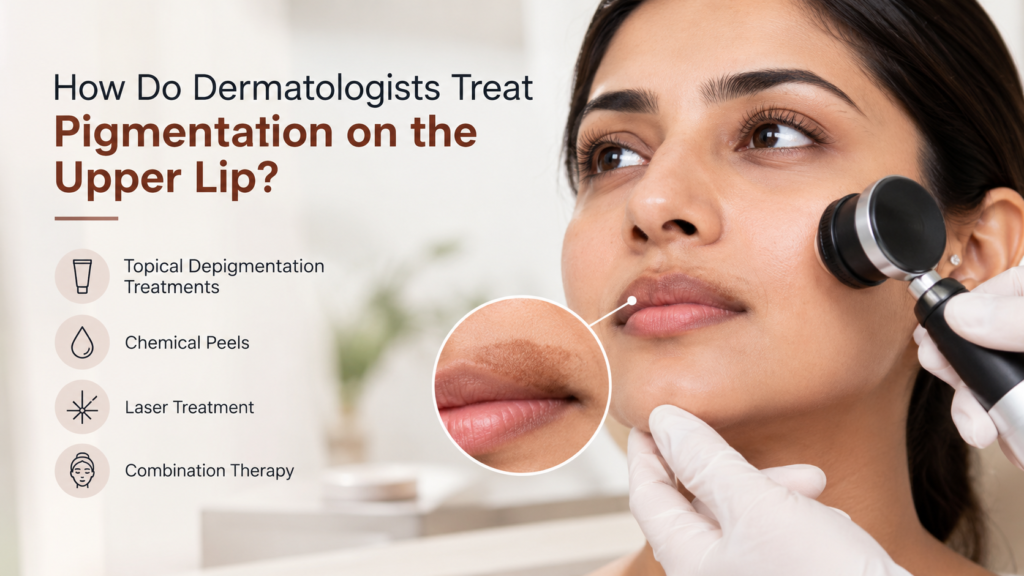
How Do Dermatologists Treat Pigmentation on the Upper Lip?
Dermatologists may recommend topical medications, chemical peels, laser procedures, or a combination of treatments depending on the severity and type of pigmentation.
1. Topical Depigmentation Treatments
Topical treatments are often the first approach for managing mild to moderate upper lip pigmentation.
A dermatologist may recommend ingredients such as:
Azelaic Acid: Helps reduce excess pigmentation and may be particularly useful when pigmentation is associated with inflammation.
Kojic Acid: Helps reduce melanin production and is commonly included in pigmentation-focused skincare formulations.
Vitamin C: An antioxidant that may help improve uneven skin tone and protect the skin against oxidative stress.
Niacinamide: May help improve skin barrier function and reduce the transfer of pigment within the skin.
Retinoids: Prescription retinoids may support skin cell turnover and improve certain forms of pigmentation when used under medical supervision.
Hydroquinone: A prescription depigmenting agent that may be recommended for specific pigmentation disorders, including melasma, for a limited duration under dermatological supervision.
The dermatologist selects the appropriate ingredient, concentration, and duration according to the patient’s skin condition. Using multiple active ingredients without professional advice can cause irritation and worsen pigmentation.
2. Chemical Peels for Upper Lip Pigmentation
Chemical peels are professional skin treatments that involve applying a carefully selected chemical solution to the skin.
Depending on the patient’s skin condition, dermatologists may consider superficial peels containing ingredients such as glycolic acid, mandelic acid, or other suitable peeling agents.
Chemical peels may help by:
- Removing accumulated dead skin cells.
- Improving skin texture and appearance.
- Supporting the gradual reduction of superficial pigmentation.
- Enhancing the effectiveness of a carefully selected skincare routine.
People with Indian skin tones require particular care because aggressive peels may cause irritation and post-inflammatory hyperpigmentation.
The type, strength, and frequency of the peel should always be determined by a qualified dermatologist.
3. Laser Treatment for Upper Lip Pigmentation
Laser treatment may be considered for selected cases of persistent pigmentation that have not responded adequately to conventional treatment.
Depending on the diagnosis, dermatologists may evaluate Q-switched Nd lasers or other suitable pigment-targeting technologies.
Laser treatment works by targeting pigment in the skin. However, not every pigmentation condition responds equally well to lasers.
For example, melasma can sometimes recur after laser treatment, and inappropriate settings may worsen pigmentation, especially in darker skin tones.
A dermatologist may recommend a test patch and conservative treatment settings before proceeding with a larger area.
4. Combination Therapy
Some pigmentation conditions may respond better to a combination of treatments rather than a single procedure.
A dermatologist may combine topical medications with carefully selected chemical peels or laser procedures when clinically appropriate.
Combination therapy aims to address multiple factors contributing to pigmentation while reducing the likelihood of irritation and recurrence.
However, the treatment plan must be personalised. Combining too many procedures or active ingredients without proper evaluation can damage the skin barrier and worsen pigmentation.
How Long Does Upper Lip Pigmentation Treatment Take?
The duration of treatment depends on the underlying cause, severity, skin type, and response to the prescribed treatment.
Mild superficial pigmentation may begin to improve over several weeks, whereas melasma and deeper pigmentation may require several months of consistent treatment.
Patients should understand that pigmentation treatments generally aim for gradual improvement rather than instant results.
Following the dermatologist’s instructions and attending follow-up appointments can help assess progress and modify the treatment plan when necessary.
Can Upper Lip Pigmentation Be Prevented?
Although pigmentation cannot always be prevented, certain skincare practices may help reduce its development and recurrence.
Follow a Daily Sunscreen Routine
Apply a broad-spectrum sunscreen with SPF 30 or higher every morning. Reapply as directed, especially when outdoors.
Tinted sunscreens containing iron oxides may provide additional protection against visible light, which can contribute to melasma in some individuals.
Avoid Excessive Skin Irritation
Avoid aggressive scrubbing, frequent exfoliation, and harsh hair-removal techniques if they cause irritation around the upper lip.
Choose Gentle Skincare Products
Use mild cleansers and moisturisers suitable for your skin type. Avoid products that cause burning, redness, itching, or persistent irritation.
Follow Professional Advice
Do not use prescription pigmentation creams, steroid-containing combination creams, or strong chemical peels without medical guidance.
Maintain Consistency
Pigmentation management often requires regular skincare and maintenance. Stopping treatment prematurely or neglecting sun protection may lead to recurrence.
When Should You Consult a Dermatologist?
Consider consulting a dermatologist if:
- Dark patches on your upper lip persist despite regular skincare.
- Pigmentation becomes darker or spreads to other facial areas.
- You experience redness, itching, burning, or irritation.
- Pigmentation develops after using a skincare or hair-removal product.
- You are considering chemical peels or laser treatment.
- Dark patches return repeatedly after treatment.
Professional evaluation can help identify the underlying cause and prevent inappropriate treatments from worsening the condition.
Frequently Asked Questions (FAQs)
1. How do dermatologists treat pigmentation on the upper lip?
Dermatologists may recommend topical depigmenting agents, chemical peels, laser treatments, or combination therapy based on the cause, depth, and severity of pigmentation.
2. What is the best treatment for dark upper lips?
There is no single best treatment for everyone. The most appropriate option depends on whether the pigmentation is caused by melasma, sun exposure, irritation, or post-inflammatory hyperpigmentation.
3. Can upper lip pigmentation be permanently removed?
Pigmentation may improve significantly with appropriate treatment, but conditions such as melasma can recur. Maintenance skincare and sun protection are important for long-term management.
4. Is laser treatment safe for upper lip pigmentation?
Laser treatment may be suitable for selected patients. However, the wrong laser settings or inappropriate treatment can worsen pigmentation. A dermatologist should assess the skin before recommending laser therapy.
5. Does sunscreen help reduce upper lip pigmentation?
Yes. Regular broad-spectrum sunscreen helps protect the skin against UV radiation, which can worsen pigmentation and interfere with treatment results.
6. Can waxing cause upper lip pigmentation?
Yes. Waxing may cause irritation or inflammation in sensitive skin. Repeated inflammation can lead to post-inflammatory hyperpigmentation.
7. How many chemical peel sessions are needed for upper lip pigmentation?
The number of sessions varies according to the type of peel, pigmentation depth, and individual response. A dermatologist determines the appropriate treatment schedule.
8. Can hormonal changes cause upper lip pigmentation?
Yes. Hormonal fluctuations can contribute to melasma, which commonly affects the upper lip and other areas of the face.
9. Are pigmentation creams safe to use daily?
Some pigmentation creams are suitable for regular use, while others require limited treatment periods. The safety and frequency of application depend on the active ingredients and should be determined by a dermatologist.
10. Why does upper lip pigmentation return after treatment?
Pigmentation may return due to sun exposure, hormonal triggers, inflammation, or the chronic nature of conditions such as melasma. Maintenance treatment and preventive skincare can help manage recurrence.
Get Expert Advice for Upper Lip Pigmentation at Dermedico Clinic
Upper lip pigmentation can have several underlying causes, and choosing the right treatment is essential for achieving gradual, sustainable improvement.
Whether you are dealing with melasma, sun-induced pigmentation, or dark patches caused by irritation, a personalised dermatological approach can help address your skin concerns safely.
At Dermedico Clinic, a professional skin assessment can help determine the cause of your pigmentation and identify suitable treatment options based on your skin type and condition.
Book a dermatological consultation to understand your upper lip pigmentation and explore treatment options tailored to your skin.
Your journey towards a more even-looking skin tone begins with the right diagnosis and expert guidance.
Disclaimer: This article is intended for informational and educational purposes only. It is not a substitute for professional medical advice, diagnosis, or treatment. Always consult a qualified dermatologist before starting any pigmentation treatment.