Table of Contents
Post-Inflammatory Hyperpigmentation
Have you noticed dark spots remaining on your skin long after a pimple, rash, insect bite, or skin irritation has healed? These marks may be a common pigmentation concern known as post-inflammatory hyperpigmentation (PIH). Although they are generally harmless, they can take time to fade and may affect your confidence.
The good news is that post-inflammatory hyperpigmentation can often be treated successfully. With the right skincare routine, consistent sun protection, and dermatologist-guided treatment, many people experience a noticeable improvement in dark spots and uneven skin tone.
However, the results depend on several factors, including your skin type, the depth of pigmentation, the original cause of inflammation, and how long the marks have been present.
In this guide, we explain what post-inflammatory hyperpigmentation is, which treatments may help, how long results can take, and how to reduce the risk of new dark spots.
What Is Post-Inflammatory Hyperpigmentation?
Post-inflammatory hyperpigmentation is a skin condition in which darker patches or spots develop after inflammation or injury. When the skin becomes inflamed, pigment-producing cells called melanocytes may produce additional melanin. This extra pigment can remain in the affected area even after the original skin problem has resolved.
PIH can affect people of all skin tones, but it is often more noticeable and persistent in people with medium to darker skin tones, including many Indian skin types.
Common triggers include:
- Acne breakouts and healed pimples
- Eczema and other inflammatory skin conditions
- Skin irritation caused by unsuitable skincare products
- Burns, cuts, or insect bites
- Excessive friction or scratching
- Certain cosmetic procedures that cause inflammation
PIH can appear as flat brown, dark brown, grey-brown, or sometimes reddish marks, depending on your skin tone and the depth of the pigment.
Unlike atrophic or raised acne scars, post-inflammatory hyperpigmentation usually changes the colour of the skin rather than its texture.
Can Post-Inflammatory Hyperpigmentation Be Treated Successfully?
Yes, post-inflammatory hyperpigmentation can often be improved significantly with appropriate treatment. Some superficial marks gradually fade on their own, while others may require targeted skincare or professional dermatological treatment.
According to the American Academy of Dermatology, superficial dark spots may take approximately 6–12 months to fade naturally, while deeper pigmentation can take considerably longer.
Treatment can help accelerate improvement, but there is no single treatment that works equally well for everyone.
The most important factors influencing success include:
- Depth of pigmentation: Pigment closer to the skin’s surface generally fades more readily than deeper pigment.
- Skin tone: Darker skin tones may be more prone to persistent pigmentation and treatment-related irritation.
- Underlying cause: Continuing acne, eczema, or irritation can lead to new dark marks.
- Sun exposure: Ultraviolet radiation and visible light can worsen existing pigmentation.
- Treatment consistency: Following an appropriate skincare routine consistently is important for improvement.
The goal is not simply to lighten existing spots. Successful management also involves controlling the original trigger and preventing further pigmentation.
What Are the Most Effective Treatments for Post-Inflammatory Hyperpigmentation?
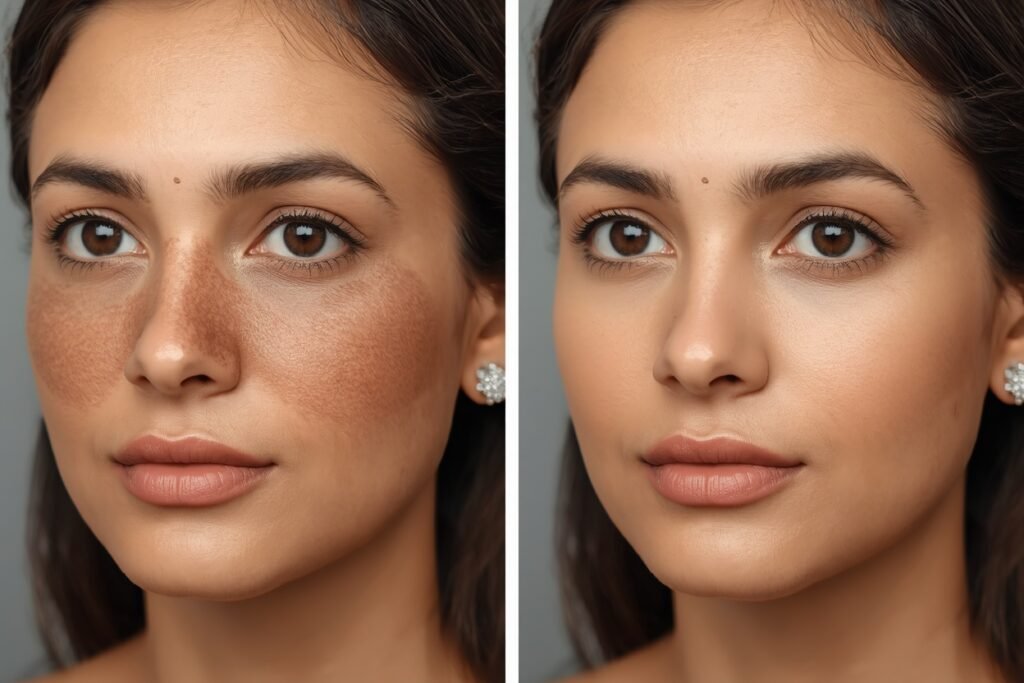
The appropriate treatment depends on the severity, location, and depth of pigmentation. A dermatologist may recommend one treatment or a combination of approaches.
1. Topical Creams and Serums
Topical treatments are often the starting point for managing post-inflammatory hyperpigmentation. Certain ingredients help regulate melanin production, encourage skin renewal, or reduce the inflammation contributing to dark marks.
Commonly considered ingredients include:
Azelaic acid: This ingredient can help improve acne-related pigmentation while also helping manage acne in suitable patients.
Retinoids: Ingredients such as tretinoin and adapalene may help treat acne and gradually improve associated pigmentation. They can also cause irritation if introduced incorrectly.
Vitamin C: This antioxidant may help improve the appearance of uneven skin tone when used in an appropriate formulation.
Niacinamide: This ingredient may help support the skin barrier and reduce the transfer of pigment to surrounding skin cells.
Hydroquinone: A recognised skin-lightening medication that may be prescribed for selected pigmentation concerns under professional supervision.
Not every ingredient is suitable for every skin type. Combining multiple strong products without guidance can irritate the skin and potentially make pigmentation worse.
2. Daily Sunscreen and Sun Protection
Sunscreen is a fundamental part of post-inflammatory hyperpigmentation treatment.
Sun exposure can darken existing marks and slow their improvement. Even when using effective pigmentation products, inadequate sun protection can limit results.
For daily protection:
- Choose a broad-spectrum sunscreen with SPF 30 or higher; SPF 50+ may be appropriate for people with persistent pigmentation and substantial sun exposure.
- Apply sunscreen generously to exposed skin.
- Reapply approximately every two hours when outdoors and after swimming or excessive sweating.
- Wear a hat and seek shade when sunlight is intense.
- Consider a tinted sunscreen containing iron oxides, which can offer additional protection against visible light.
Consistent sun protection is particularly important for Indian skin that is prone to post-inflammatory pigmentation.
3. Chemical Peels

Chemical peels may be considered when pigmentation persists despite an appropriate skincare routine.
Depending on the diagnosis and skin characteristics, a dermatologist may use selected superficial peels containing ingredients such as glycolic acid or other suitable exfoliating agents.
These treatments help remove pigmented surface cells and encourage skin renewal.
However, chemical peels are not appropriate for every type of pigmentation. Strong or poorly selected peels can cause irritation, burns, or further hyperpigmentation, particularly in darker skin tones.
A professional assessment is therefore essential before starting treatment.
4. Laser and Light-Based Treatments
Certain laser or light-based procedures may be considered for selected cases of persistent pigmentation.
The suitability of these treatments depends on the type and depth of pigmentation, skin tone, and risk of treatment-related inflammation.
Laser treatment is not automatically the best option for post-inflammatory hyperpigmentation. In some cases, the procedure itself can trigger further pigmentation.
A dermatologist should determine whether a procedure is appropriate and select suitable settings and preparation measures.
Explore Dermedico Clinic’s treatment options to learn more about the skin treatments available at the clinic.
5. Treating the Original Skin Condition
Treating the original cause is just as important as fading the dark marks.
For example, if acne continues to develop, new areas of inflammation may produce additional pigmentation. Similarly, untreated eczema or repeated irritation can prevent the skin from recovering properly.
A comprehensive treatment plan may therefore include acne management, treatment for inflammatory skin conditions, a gentle skincare routine, and targeted pigmentation products.
Addressing the trigger helps reduce the likelihood of new dark marks appearing.
How Long Does Post-Inflammatory Hyperpigmentation Take to Fade?
The time required for improvement varies from person to person.
| Type of pigmentation | General expectation |
|---|---|
| Superficial dark marks | May fade over several months |
| Persistent acne-related pigmentation | May require several months of consistent treatment |
| Deeper grey-brown pigmentation | Can take considerably longer |
| Recurrent pigmentation | May need ongoing trigger management and maintenance |
These are general expectations, not guaranteed treatment timelines. Some spots may improve earlier, while others may persist for a year or longer.
The key is to avoid aggressive treatments that promise immediate results. Irritating the skin in an attempt to remove pigmentation quickly may make the problem worse.
How Can You Prevent Post-Inflammatory Hyperpigmentation From Returning?
Prevention is an essential part of maintaining clearer, more even-looking skin.
Follow a Gentle Skincare Routine
Use a mild cleanser, a moisturiser suited to your skin, and daily sunscreen. Avoid introducing several active ingredients at once.
Avoid Picking or Squeezing Pimples
Picking acne lesions can increase inflammation and raise the risk of persistent dark marks.
Treat Acne Early
Appropriate acne treatment can reduce the number of new breakouts and minimise the development of additional pigmentation.
Avoid Unverified Skin-Lightening Products
Some unregulated products may contain undisclosed ingredients, including harmful substances or potent steroids. Avoid using bleaching agents or strong prescription creams without medical guidance.
Be Patient With Results
Pigmentation generally improves gradually. Follow your dermatologist’s instructions and avoid repeatedly changing treatments before giving an appropriate regimen enough time to work.
When Should You Consult a Dermatologist for Pigmentation?
Consider a professional assessment if your dark spots persist, continue to spread, become more noticeable, or fail to improve with gentle skincare and sun protection.
You should also seek advice before undergoing chemical peels or laser procedures, especially if your skin is sensitive or prone to pigmentation after irritation.
A dermatologist can assess the likely cause, determine whether the pigment is superficial or deeper, and recommend an individualised treatment plan.
If you are looking for pigmentation treatment in South Delhi, Defence Colony, or near Lajpat Nagar, a consultation at Dermedico Clinic can help you understand which options may be appropriate for your skin.
You can also read our related guide on choosing the right pigmentation treatment in South Delhi for further information about personalised pigmentation care.
Frequently Asked Questions
1. Can post-inflammatory hyperpigmentation disappear completely?
In many cases, PIH fades substantially and may eventually become barely noticeable. However, the outcome depends on the depth of pigment, the original cause, skin characteristics, and treatment response. Some marks may persist.
2. What is the fastest way to treat post-inflammatory hyperpigmentation?
There is no universally fastest treatment. A dermatologist may recommend appropriate topical ingredients, sun protection, and selected procedures depending on the diagnosis. Aggressive treatments can cause further pigmentation.
3. Is post-inflammatory hyperpigmentation permanent?
PIH is not necessarily permanent. Many superficial marks fade over time, although deeper pigmentation may persist for years in some cases.
4. Can sunscreen help fade dark spots?
Sunscreen helps prevent existing pigmentation from becoming darker and supports the effectiveness of other treatments. It is an important part of managing PIH.
5. Is post-inflammatory hyperpigmentation common in Indian skin?
Yes. PIH can occur in Indian skin, particularly following acne, inflammation, or irritation. Medium and darker skin tones can be more susceptible to persistent pigmentation.
6. Are chemical peels safe for post-inflammatory hyperpigmentation?
Selected superficial peels may help certain patients. However, unsuitable peels or excessive treatment strength can worsen pigmentation. A dermatologist should assess your skin before recommending a procedure.
7. Can acne marks and post-inflammatory hyperpigmentation be treated together?
Yes. A treatment plan may address active acne and existing pigmentation simultaneously, provided the selected products are appropriate for your skin and do not cause excessive irritation.
8. Should I use home remedies to remove pigmentation?
Be cautious with lemon juice, harsh scrubs, and unverified bleaching remedies. These can irritate the skin and worsen pigmentation. Evidence-based skincare and professional advice are safer options.
Final Thoughts
So, can post-inflammatory hyperpigmentation be treated successfully? Yes, many cases improve significantly with the right combination of skincare, sun protection, and dermatologist-guided treatment.
The most effective approach is to identify the underlying cause, choose suitable treatments, avoid unnecessary irritation, and remain consistent with sun protection.
If persistent dark spots or post-acne marks are affecting your skin, consider consulting a qualified dermatologist to discuss an approach tailored to your needs.
Dermedico Clinic
D-95, Defence Colony, New Delhi – 110024
Website: https://dermedicoclinic.in/
Contact: https://www.dermedicoclinic.in/contact-us/
Medical disclaimer: This article is intended for educational purposes only and is not a substitute for professional diagnosis or treatment. Individual results vary. Consult a qualified dermatologist before starting prescription products or undergoing cosmetic procedures.