Table of Contents
Hair Fall Treatment in Lajpat Nagar
Hair fall is a common concern among women of different age groups. Whether you are noticing excessive hair shedding while washing your hair, a widening hair partition, reduced hair volume or thinning around the crown, persistent hair loss can affect both your appearance and confidence.
If you are searching for hair fall treatment in Lajpat Nagar, understanding the available medical and clinical options is an important first step.
At Dermedico Clinic, Defence Colony, women can explore dermatologist-led hair care consultations and suitable hair treatment options, including Hair PRP, depending on their individual concerns.
What Causes Hair Fall in Women?
Before selecting a hair loss treatment, it is important to understand why your hair is falling.
Some of the most common causes include:
1. Hormonal Changes
Hormonal fluctuations during pregnancy, childbirth, menopause and certain medical conditions can affect the normal hair growth cycle.
Women with PCOS may also experience hair thinning due to increased androgen activity. Irregular periods, acne and increased facial hair can sometimes accompany this condition.
2. Female Pattern Hair Loss
Female pattern hair loss is a common condition that causes gradual thinning, particularly around the crown and central parting.
You may notice:
- A widening hair partition.
- Reduced hair volume.
- Thinner hair strands.
- More visible scalp around the crown.
Early diagnosis can help slow down progression and improve hair density in suitable patients.
3. Stress and Lifestyle Factors
Physical or emotional stress, inadequate sleep, sudden weight loss, severe illness and nutritional changes can trigger excessive hair shedding.
This condition is often called telogen effluvium. In many cases, hair growth gradually improves once the underlying trigger is addressed.
4. Nutritional Deficiencies
Iron deficiency, inadequate protein intake and certain vitamin deficiencies may contribute to hair shedding.
A dermatologist may recommend appropriate investigations to identify nutritional deficiencies before suggesting supplements.
5. Thyroid-Related Problems
Both an underactive and overactive thyroid can affect hair growth.
What Are the Best Hair Fall Treatment Options for Women?
There is no single treatment that works for every type of hair loss. A dermatologist first evaluates the scalp and identifies the underlying condition before recommending an appropriate treatment plan.
Here are some commonly considered options.
1. Minoxidil Treatment
Minoxidil is one of the established medical treatments for female pattern hair loss.
It is available in topical formulations and may help:
- Support hair regrowth.
- Improve hair density.
- Slow progressive thinning.
- Maintain existing hair growth.
Results generally take several months to become noticeable, and continued use is often necessary to maintain improvements.
Some women may experience temporary increased shedding or scalp irritation initially.
Minoxidil is not suitable for everyone. Women who are pregnant, breastfeeding or planning pregnancy should discuss its suitability with their doctor.
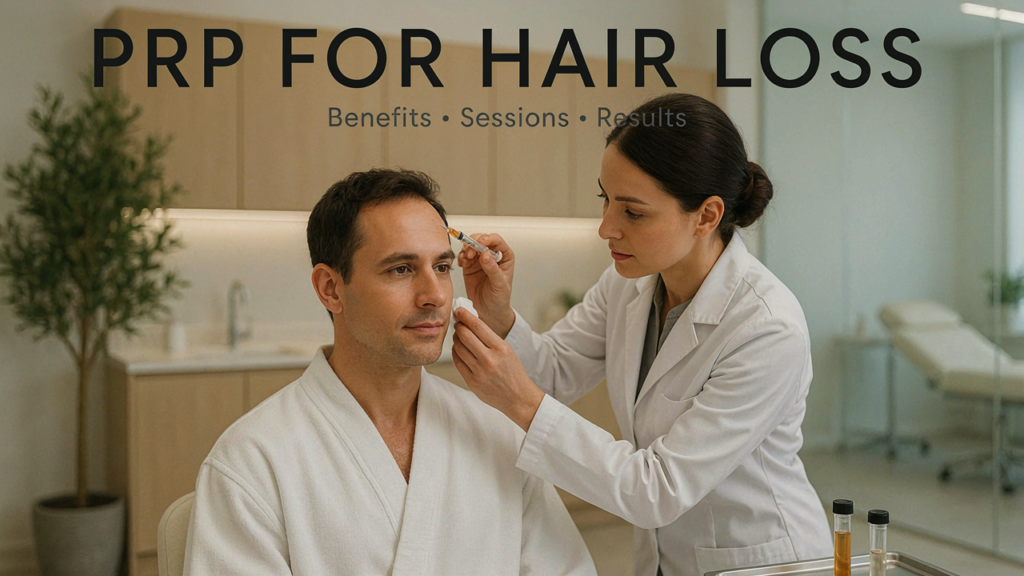
2. Hair PRP Treatment
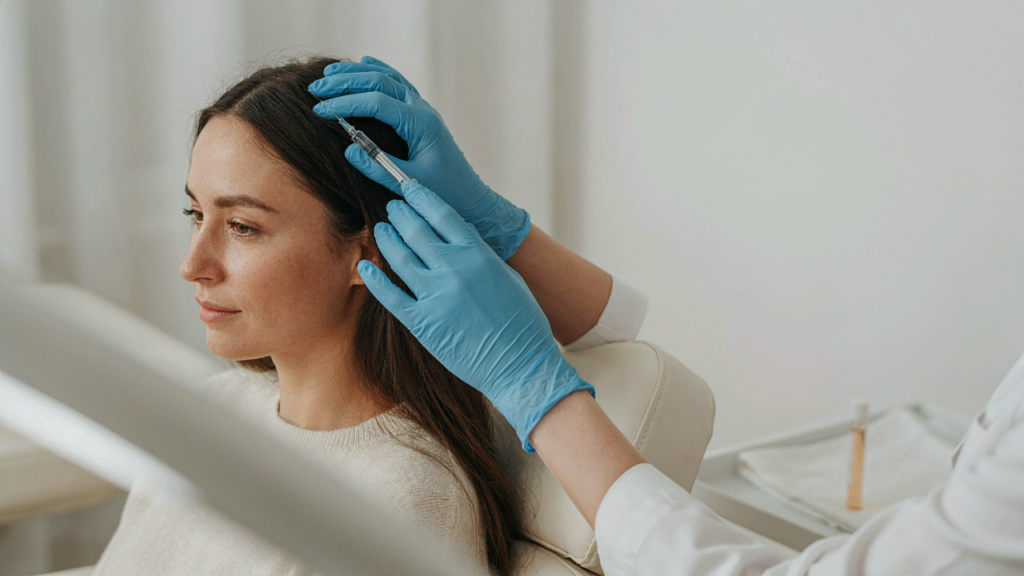
Hair PRP (Platelet-Rich Plasma) is a clinical treatment that uses a concentrated component of the patient’s own blood.
During the procedure, a small blood sample is collected and processed to separate platelet-rich plasma. The prepared plasma is then injected into selected areas of the scalp.
Platelets contain growth factors that may support the environment around hair follicles.
Hair PRP may be considered for selected women experiencing:
- Female pattern hair thinning.
- Reduced hair density.
- Early-stage androgenetic alopecia.
- Certain types of diffuse hair thinning.
What are the potential benefits of Hair PRP?
Depending on the patient’s condition, PRP may help improve hair density and thickness.
However, results vary between individuals. PRP is not a guaranteed permanent cure for hair loss, and it may not be appropriate for every cause of excessive shedding.
A dermatologist should assess the scalp and determine whether PRP is a suitable option.
Women looking for Hair PRP Treatment Near Lajpat Nagar can explore the procedure and understand what to expect before treatment.
3. Prescription-Based Hair Loss Treatments
Some women may benefit from prescription medicines depending on the diagnosis.
A dermatologist may consider treatments such as spironolactone or other medically appropriate therapies for selected cases of female pattern hair loss.
These medications require professional supervision because they may have side effects and are not suitable for everyone, particularly during pregnancy.
Self-medication should always be avoided.
4. Nutritional Correction
If investigations reveal iron deficiency, inadequate protein intake or another nutritional problem, correcting the underlying deficiency may help improve hair health.
A balanced diet can include:
- Eggs, dairy products and other protein sources.
- Green leafy vegetables.
- Pulses and legumes.
- Nuts and seeds.
- Iron-rich foods.
Supplements should only be taken when medically indicated. Taking unnecessary hair growth supplements does not guarantee better results.
5. Low-Level Laser Therapy
Low-level laser therapy uses specific light wavelengths to target the scalp.
Some studies suggest that it may help improve hair density in selected individuals with hereditary hair loss.
However, results vary, and its effectiveness depends on the condition being treated. A dermatologist can help determine whether this option is appropriate.
6. Hair Transplantation
Hair transplantation may be considered in carefully selected women with stable hair loss and adequate donor hair.
It is not suitable for every woman, especially those experiencing widespread or temporary hair shedding.
A specialist must assess the cause and pattern of hair loss before recommending a surgical procedure.
Which Hair Fall Treatment Is Suitable for You?
Choosing a treatment based only on advertisements or recommendations from friends may not address the actual cause of hair loss.
Here is a general comparison:
| Hair concern | Treatment that may be considered |
|---|---|
| Female pattern hair thinning | Topical minoxidil, selected prescription treatments |
| Early androgenetic alopecia | Medical treatment and possibly PRP |
| Stress-related hair shedding | Addressing the trigger and monitoring recovery |
| Iron deficiency | Correcting the confirmed deficiency |
| Thyroid-related hair loss | Appropriate thyroid evaluation and treatment |
| Selected cases of advanced hair loss | Specialist assessment for hair transplantation |
The final treatment decision should always follow an individual medical evaluation.
How Is Hair Fall Diagnosed Before Treatment?
If you visit a dermatologist for persistent hair loss, the assessment may include:
Scalp examination: The dermatologist examines the scalp, hair density and pattern of thinning.
Hair pull test: This helps assess whether excessive shedding is occurring.
Blood investigations: Depending on your symptoms, tests may include CBC, ferritin, thyroid function and selected vitamin or hormonal investigations.
Trichoscopy: This non-invasive technique uses magnification to examine hair follicles and scalp characteristics.
These assessments help distinguish between temporary shedding, female pattern hair loss and other scalp conditions.
Where Can Women Get Hair Fall Treatment Near Lajpat Nagar?
Women searching for hair fall treatment in Lajpat Nagar can also consider nearby Defence Colony for dermatologist-led consultations.
Dermedico Clinic is located at D-95, Defence Colony, New Delhi, near Lajpat Nagar Metro.
The clinic provides dermatology and hair-related services, including Hair PRP for selected hair loss concerns.
Dr. Pallavi Chandna Rohatgi, an MD Dermatologist, is associated with the clinic.
Before starting any treatment, a consultation can help determine:
- What is causing your hair fall.
- Whether you need medical treatment or nutritional correction.
- Whether Hair PRP is appropriate for your condition.
- What results you can realistically expect.
- Whether follow-up sessions or ongoing treatment may be required.
You can visit Dermedico Clinic to explore its services or contact the clinic to book a consultation.
How Can Women Maintain Healthy Hair After Treatment?
Medical treatment is only one part of managing hair fall. Following healthy hair care practices can also help reduce avoidable damage.
Consider these habits:
- Maintain a balanced diet with sufficient protein.
- Avoid crash diets and sudden weight loss.
- Limit excessive heat styling and chemical treatments.
- Avoid tight hairstyles that continuously pull on the roots.
- Follow your dermatologist’s treatment instructions.
- Avoid taking supplements without identifying a deficiency.
- Attend follow-up appointments to monitor progress.
Remember that healthy hair growth takes time. Consistency and the right diagnosis are more important than trying multiple treatments simultaneously.
Frequently Asked Questions About Hair Fall Treatment for Women
1. Which is the best hair fall treatment for women in Lajpat Nagar?
The best treatment depends on the cause of hair loss. Options may include minoxidil, prescription medications, nutritional correction and Hair PRP for selected patients. A dermatologist can recommend the appropriate approach after examination.
2. Can Hair PRP help women with hair thinning?
Hair PRP may improve hair density in selected women, particularly those with androgenetic alopecia. However, results vary, and it is not suitable for every type of hair loss.
3. How many PRP sessions are needed for hair growth?
The number of sessions depends on the patient’s hair condition, treatment response and the dermatologist’s protocol. There is no universal schedule for everyone.
4. Can stress cause excessive hair fall in women?
Yes. Physical and emotional stress can trigger telogen effluvium, which causes increased hair shedding. Hair growth may gradually recover once the underlying trigger is addressed.
5. Does PCOS cause hair thinning?
PCOS can contribute to scalp hair thinning in some women because of hormonal changes and increased androgen activity. Medical evaluation can help identify the underlying issue.
6. How long does hair fall treatment take to show results?
Hair growth is gradual. Some treatments may require several months before noticeable improvement. The timeline depends on the diagnosis and treatment selected.
7. Can nutritional deficiencies cause hair loss?
Yes. Iron deficiency and inadequate intake of certain nutrients may contribute to hair shedding. Appropriate investigations can help identify deficiencies.
8. When should I consult a dermatologist for hair fall?
Consult a dermatologist if hair loss is persistent, progressive, sudden, patchy or accompanied by scalp pain, redness, itching or scaling.
Final Thoughts
Hair fall in women can have several causes, from hormonal fluctuations and nutritional deficiencies to genetic hair thinning and stress-related shedding.
Fortunately, several treatment options are available today. The most important step is identifying the underlying cause before choosing a treatment.
If you are looking for hair fall treatment in Lajpat Nagar, consider a dermatologist-led approach that focuses on your scalp condition, medical history and individual hair growth needs.
At Dermedico Clinic, Defence Colony, women can explore suitable hair treatment options, including Hair PRP, following professional evaluation.
Book a consultation with Dermedico Clinic to understand your hair fall concerns and explore an appropriate treatment plan.
Medical Disclaimer: This article is for educational purposes only and does not replace professional medical advice, diagnosis or treatment. Always consult a qualified dermatologist before starting medication or clinical procedures.