Table of Contents
Hair PRP in Defence Colony
Hair loss can be frustrating, especially when you notice increased shedding, a widening hair part, thinning around the crown or a receding hairline. If you are searching for Hair PRP in Defence Colony, you may already be considering platelet-rich plasma therapy as a non-surgical option for hair thinning.
But before booking a PRP session, it is important to understand something simple: PRP is not a one-size-fits-all hair-loss treatment.
A proper consultation should begin with identifying the possible cause of your hair loss, assessing your scalp and discussing whether PRP is appropriate for your condition.
At Dermedico Clinic in Defence Colony, South Delhi, Hair PRP is offered as part of a dermatologist-guided approach to hair and scalp concerns. The clinic provides PRP treatment using the patient’s own blood-derived platelet-rich plasma.
In this guide, we explain what you should know before your consultation, what questions to ask and what realistic expectations you should have from Hair PRP treatment.
What Is Hair PRP?
PRP stands for Platelet-Rich Plasma.
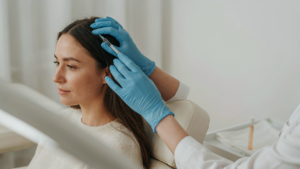
During PRP treatment, a small amount of your blood is collected and processed to concentrate platelets and associated growth factors. The prepared PRP is then injected into selected areas of the scalp.
The aim is to support the scalp environment and potentially stimulate activity around hair follicles.
The American Academy of Dermatology describes PRP as a treatment in which a patient’s blood is processed and a platelet-rich component is injected into areas affected by hair loss.
However, PRP should not be presented as a guaranteed cure for every type of hair loss.
Different forms of hair loss have different causes, which is why diagnosis and individual assessment are important before starting treatment.
Why Are People Looking for Hair PRP in Defence Colony?
Defence Colony is centrally located in South Delhi, making it convenient for patients from nearby areas such as Lajpat Nagar, South Extension, Greater Kailash, Jangpura and surrounding neighbourhoods.
Because PRP may involve a series of sessions and follow-up assessments, convenience can be useful when maintaining a treatment schedule.
Dermedico Clinic is located at D-95, Defence Colony, New Delhi, and its published PRP information also notes its proximity to Lajpat Nagar Metro.
If you are comparing treatment options, you can explore the clinic’s PRP Therapy in Delhi page for information about its PRP services.
1. Find Out What Is Causing Your Hair Loss
One of the most important questions to ask during your consultation is:
“What is causing my hair loss?”
Hair shedding does not always have the same cause.
Possible contributors can include:
- Androgenetic alopecia or pattern hair loss
- Nutritional deficiencies
- Hormonal changes
- Stress-related shedding
- Certain medical conditions
- Scalp disorders
- Medication-related hair loss
- Post-illness hair shedding
A dermatologist may assess your hair-loss pattern, scalp condition, medical history and other relevant factors before recommending treatment.
This is particularly important because PRP may be more appropriate for some types of hair loss than others.
If you are experiencing persistent or unexplained hair loss, don’t choose a treatment solely because it is popular. First understand the underlying problem.
2. Ask Whether You Are a Suitable Candidate for PRP
Not everyone with hair loss automatically needs PRP.
Your dermatologist may consider factors such as:
- Your type of hair loss
- How long you have experienced hair thinning
- Current hair density
- Scalp condition
- Hair-loss pattern
- Age and general health
- Previous treatments
- Your expectations
PRP has been studied particularly in androgenetic alopecia, also called male or female pattern hair loss.
A 2023 systematic review and meta-analysis of randomized controlled trials found that PRP was associated with increased hair density at three and six months compared with placebo. However, research protocols vary, and PRP preparation and treatment schedules are not standardized across all studies.
Another 2024 systematic review found potential benefits but also highlighted limitations in the evidence, including study heterogeneity and risk of bias.
That is why your consultation matters.
3. Ask How Many PRP Sessions You May Need
A common question patients ask is:
“How many PRP sessions will I need?”
There is no universal number that applies to every patient.
Your dermatologist may recommend a treatment schedule based on:
- Severity of hair thinning
- Diagnosis
- Treatment response
- Hair density
- Overall treatment plan
- Whether PRP is being combined with another treatment
Dermedico’s published PRP information currently describes Hair PRP as a multi-session treatment, but the appropriate schedule should be determined after individual assessment rather than simply choosing a package.
This is an important distinction.
Do not choose a fixed number of sessions only because a clinic advertises it as a package.
Instead, ask why that schedule is appropriate for your condition.
4. Understand What Happens During Hair PRP Treatment
Knowing the process can make your first consultation easier.
A typical PRP procedure involves several stages.
Blood Collection
A small amount of blood is drawn, usually from the arm, similar to a routine blood test.
PRP Preparation
The blood is processed using centrifugation to separate the desired components and concentrate the platelet-rich portion.
Scalp Preparation
The scalp is cleaned and prepared before injections.
Depending on the protocol and patient’s comfort, a topical numbing product may be used.
PRP Injection
The prepared PRP is injected into selected areas of the scalp using small needles.
After Treatment
Temporary redness, tenderness or mild swelling may occur after injections.
The American Academy of Dermatology notes that PRP generally involves little downtime, although individual experiences can vary.
Your dermatologist should explain exactly what to expect based on the protocol being used.
5. Ask What Results You Can Realistically Expect
This may be the most important question during your consultation.
PRP should not be marketed as an instant hair-regrowth solution.
Hair grows slowly, and changes in density generally require time to assess.
Clinical research has reported improvements in hair density in some patients with androgenetic alopecia, but results are not identical for everyone. A meta-analysis found increased hair density with PRP compared with control treatment, while also noting substantial variation between studies.
Therefore, be cautious of claims such as:
- Guaranteed hair regrowth
- Permanent cure for baldness
- 100% success
- Instant new hair
- Guaranteed results after one session
A responsible consultation should explain both the potential benefits and limitations of treatment.
6. Ask Whether Other Treatments May Be Needed
PRP does not necessarily have to be viewed as an isolated treatment.
Depending on your diagnosis, your dermatologist may discuss other approaches for managing hair loss.
For example, treatment may involve:
- Prescription or topical medication
- Nutritional correction where appropriate
- Scalp treatment
- Lifestyle-related recommendations
- PRP
- Other regenerative or procedural options
Research has also investigated PRP in combination with topical minoxidil. A systematic review and meta-analysis published in 2024 found possible additional benefits from combining PRP with minoxidil, but the certainty of evidence was low to very low.
This means combination treatment should be recommended based on your individual condition rather than automatically added to every PRP plan.
7. Discuss Possible Side Effects Before Treatment
PRP uses your own blood-derived material, but that does not mean the procedure is completely risk-free.
Possible temporary effects may include:
- Mild pain
- Redness
- Tenderness
- Swelling
- Bruising
- Temporary scalp sensitivity
The injection procedure itself can also cause short-term discomfort.
Published studies have generally reported a favourable safety profile, but research quality and protocols differ between studies. A systematic review and meta-analysis reported no serious adverse events related to PRP in the included studies, while also rating much of the evidence as low quality because of inconsistency and risk of bias.
Your dermatologist should discuss relevant precautions and whether PRP is suitable for you.
8. Ask Who Will Perform Your Hair PRP Treatment
The experience and clinical assessment behind the treatment are important.
Before choosing a Hair PRP clinic in Defence Colony, ask:
- Who will evaluate my hair loss?
- What are the doctor’s qualifications?
- Who will perform the injections?
- How is my hair-loss pattern being assessed?
- How will my progress be monitored?
- What happens if PRP is not appropriate for me?
At Dermedico Clinic, the clinic’s published information states that PRP services are provided under the care of Dr. Pallavi Chandna Rohatgi, MD Dermatologist.
You can also explore the clinic’s broader skin and cosmetic treatments if you want to understand the range of dermatology services available.
9. Ask How Your Progress Will Be Monitored
Good hair treatment involves more than simply completing injections.
Your dermatologist may monitor:
- Hair density
- Hair thickness
- Hair shedding
- Scalp condition
- Treatment response
- Progress photographs
Consistent documentation can make it easier to compare changes over time.
It is also important to understand that hair growth can be gradual, so judging results immediately after treatment may not provide an accurate picture.
What Should You Do Before Your Hair PRP Consultation?
Before visiting a Hair PRP clinic in Defence Colony, prepare some basic information about your hair-loss history.
Consider noting:
- When your hair loss started
- Whether shedding is sudden or gradual
- Which areas are thinning
- Whether close family members have pattern hair loss
- Previous hair-loss treatments
- Current medications
- Recent illness or major stress
- Any known nutritional or hormonal concerns
- Previous scalp procedures
You can also bring photographs showing how your hair density has changed over time.
This information can help your dermatologist understand the progression of your hair loss.
What Questions Should You Ask During Your PRP Consultation?
Take this checklist with you:
- What type of hair loss do I have?
- Am I a suitable candidate for PRP?
- Why do you recommend PRP for my condition?
- How many sessions might I need?
- How far apart should the sessions be?
- What kind of improvement is realistic?
- When should I expect to evaluate results?
- What side effects should I expect?
- Do I need any other hair-loss treatment?
- How will my progress be measured?
- What should I avoid before and after treatment?
- When should I return for follow-up?
A good consultation should give you clear answers rather than pressure you into purchasing a package.
Hair PRP in Defence Colony: What Makes a Good Treatment Plan?
When comparing Hair PRP treatment options in Defence Colony, don’t focus only on the price per session.
Instead, look at the complete treatment process.
A good treatment plan should include:
Proper diagnosis → Candidate assessment → Personalised protocol → Treatment → Follow-up → Progress evaluation
This approach is more meaningful than simply asking which clinic offers the cheapest PRP.
Research itself highlights that PRP protocols differ significantly between studies, including preparation methods and treatment schedules.
Therefore, the quality of assessment and personalised planning matters.
Is Hair PRP Painful?
PRP involves multiple small scalp injections, so some patients may experience discomfort.
A topical numbing cream may be used depending on the treatment protocol and individual tolerance.
You should ask your dermatologist what pain-management measures will be used before your procedure.
How Long Does a Hair PRP Session Take?
The exact duration can vary depending on the preparation and treatment protocol.
The process generally includes blood collection, PRP preparation and scalp injections.
Your clinic should provide an approximate appointment duration during consultation.
When Can You See Hair PRP Results?
Hair growth is gradual.
Some patients may notice changes in shedding or hair quality before seeing a visible difference in density. Research studies assessing PRP commonly evaluate outcomes over several months rather than immediately after treatment.
Therefore, it is better to evaluate progress over time rather than expecting dramatic changes immediately after one session.
Can PRP Stop Hair Loss Permanently?
PRP should not be described as a permanent cure for every form of hair loss.
For pattern hair loss, ongoing management may be required because the underlying tendency can continue.
Your dermatologist can explain whether PRP is being recommended as:
- A primary treatment
- An additional treatment
- Part of a combination approach
- A maintenance strategy
The long-term plan should depend on your diagnosis and response.
Hair PRP vs Other Hair-Loss Treatments
There is no single treatment that is automatically best for everyone.
Depending on the diagnosis, a dermatologist may consider options such as medication, PRP or other treatments.
For example, recent research comparing PRP with topical minoxidil found no significant difference in some measures of hair density, while other outcomes differed between the treatments. This reinforces the importance of individualised treatment decisions rather than assuming one treatment is universally superior.
Why Choose a Dermatologist-Guided PRP Consultation?
Hair loss is more complicated than simply having “weak hair.”
The cause, pattern and stage of hair loss can all influence treatment decisions.
A dermatologist-guided consultation can help determine:
- Whether your hair loss has been correctly identified
- Whether PRP is suitable
- Whether additional evaluation is required
- Whether another treatment may be more appropriate
- What results are realistically achievable
At Dermedico Clinic in Defence Colony, PRP is included among the clinic’s dermatology and cosmetic treatment services.
Frequently Asked Questions About Hair PRP in Defence Colony
What is Hair PRP in Defence Colony?
Hair PRP in Defence Colony refers to platelet-rich plasma treatment for selected hair-loss concerns provided by clinics in the Defence Colony area of South Delhi. PRP uses a concentrated platelet-rich component derived from the patient’s own blood and injects it into selected scalp areas.
Is PRP good for hair loss?
Research suggests PRP may improve hair density in some patients with androgenetic alopecia, but the evidence is not uniform and treatment protocols vary. A dermatologist should determine whether PRP is appropriate for your specific type of hair loss.
Who can benefit from Hair PRP?
PRP may be considered for selected patients with pattern hair loss and certain types of hair thinning. Suitability depends on the diagnosis, hair-loss stage, scalp condition and other individual factors.
How many PRP sessions are required for hair?
There is no single session number suitable for everyone. The recommended treatment schedule depends on your diagnosis, treatment response and overall plan.
Is Hair PRP safe?
PRP has generally shown a favourable safety profile in clinical studies, although temporary pain, redness, swelling or tenderness can occur. Your dermatologist should assess your suitability before treatment.
Does PRP permanently regrow hair?
No treatment should be presented as a guaranteed permanent cure for every type of hair loss. PRP may support hair density in suitable patients, but long-term management depends on the underlying cause.
How soon can I see results from PRP?
Hair growth takes time. Clinical studies commonly evaluate PRP results over several months, so patients should not expect immediate regrowth after one session.
Can PRP be combined with other hair-loss treatments?
It can be considered as part of a broader treatment plan for selected patients. Research has investigated PRP alongside treatments such as topical minoxidil, but the appropriate combination should be decided by a dermatologist.
Where can I get Hair PRP in Defence Colony?
Dermedico Clinic provides PRP-related dermatology services at D-95, Defence Colony, New Delhi. Patients should schedule a consultation to determine whether PRP is suitable for their condition.
Final Thoughts
If you are considering Hair PRP in Defence Colony, the most important step is not choosing a package—it is understanding your hair loss first.
PRP may offer benefits for appropriately selected patients, particularly those with certain forms of pattern hair loss. However, research also shows variation in treatment protocols and evidence quality, so realistic expectations are important.
Before starting treatment, ask about your diagnosis, candidacy, number of sessions, expected results, possible side effects and how your progress will be monitored.
At Dermedico Clinic, Defence Colony, a dermatologist-guided consultation can help you understand whether Hair PRP is appropriate for your hair and scalp concerns.
Book a Hair PRP consultation in Defence Colony to discuss your individual hair-loss concerns and treatment options.