Table of Contents
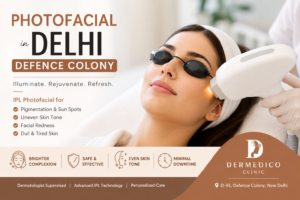
Photofacial in Delhi can help improve dullness, uneven skin tone, pigmentation, sun spots and facial redness. At Dermedico Clinic in Defence Colony, IPL photofacial treatment is performed under dermatologist supervision. The clinic is conveniently located at D-95, Defence Colony, New Delhi, serving patients across South Delhi.
What Is a Photofacial?
A photofacial, also known as an IPL photofacial, is a non-invasive light-based skin treatment that uses Intense Pulsed Light (IPL) to address selected pigmentation and vascular concerns.
Unlike a traditional salon facial, an IPL photofacial is a dermatological procedure that should be selected and performed according to an individual’s skin concerns and suitability.
IPL may be used for concerns including:
- Sun spots and sun-induced pigmentation
- Uneven skin tone
- Certain types of facial redness
- Visible superficial blood vessels
- Signs of photodamage
- Dull-looking skin
- Some pigmentation concerns
The American Academy of Dermatology notes that intense pulsed light can be used for certain forms of discoloration and facial redness, although treatment suitability depends on the individual condition.
Photofacial in Defence Colony: Why Choose a Dermatologist?
When searching for the best photofacial in Delhi Defence Colony, it is important not to choose a clinic based only on price.
IPL settings need to be selected according to factors such as:
- Skin type and tone
- Type and depth of pigmentation
- Presence of redness or vascular concerns
- Recent sun exposure
- Existing skincare or medication
- Previous cosmetic treatments
- Individual treatment goals
At Dermedico Clinic, photofacial is listed as an IPL-based treatment for pigmentation, sun spots, rosacea, redness and overall skin brightening. The clinic is headed by Dr. Pallavi Chandna Rohatgi, MD Dermatologist, who has experience in cosmetic dermatology and laser-based procedures.
What Skin Concerns Can IPL Photofacial Treat?
1. Sun Spots and Photodamage
Regular exposure to sunlight can contribute to pigmentation and visible signs of skin ageing. IPL can target certain pigment-containing areas, making it one of the light-based options dermatologists may consider for sun-related pigmentation.
The American Academy of Dermatology lists intense pulsed light among treatments that can help reduce age spots and other visible signs of sun damage.
2. Uneven Skin Tone
If your complexion appears patchy or uneven, an appropriately selected IPL treatment may help improve the appearance of certain pigmentation concerns.
However, not every form of pigmentation responds to IPL. A dermatologist should first identify the underlying cause before recommending treatment.
3. Facial Redness
IPL can also be used for certain vascular or redness-related concerns. The American Academy of Dermatology describes IPL as one of the light-based options used for persistent facial colour associated with rosacea.
4. Dull-Looking Skin
Many patients consider a photofacial for skin brightening in Delhi because they want their complexion to look more even and refreshed.
The goal should not be to dramatically change your natural skin colour. Instead, treatment aims to improve the appearance of selected pigmentation and photodamage while supporting a more even-looking complexion.
How Does an IPL Photofacial Work?
During an IPL photofacial, controlled pulses of broad-spectrum light are delivered to the skin.
The light energy can be absorbed by specific targets, including pigment or blood vessels, depending on the wavelength and treatment settings.
A typical appointment may include:
- Skin assessment and consultation
- Cleansing of the treatment area
- Protective measures for the eyes
- Selection of appropriate IPL parameters
- Delivery of controlled light pulses
- Post-treatment skincare and sun-protection advice
The exact procedure and settings can vary from person to person.
Because IPL is a medical aesthetic procedure, it should not be treated as a one-size-fits-all facial.
Is Photofacial Safe for Indian Skin?
This is one of the most important questions patients ask before booking an IPL photofacial in Delhi.
Indian skin can have higher levels of melanin, and inappropriate light-based treatment may increase the risk of pigmentation changes. Therefore, treatment parameters should be selected carefully after evaluating the individual’s skin.
A dermatologist can determine whether IPL is appropriate or whether another treatment may be more suitable.
For example, some pigmentation conditions may respond better to a combination of medical skincare, chemical peels or other procedures rather than IPL alone.
You can also explore Dermedico’s chemical peel treatment in Delhi if pigmentation or uneven skin tone is your primary concern.
Photofacial vs Chemical Peel: Which Is Better?
Both treatments can be useful for improving the appearance of uneven skin, but they work differently.
| Feature | IPL Photofacial | Chemical Peel |
|---|---|---|
| Technology | Intense Pulsed Light | Medical-grade chemical solution |
| Main targets | Pigmentation, redness, selected photodamage | Pigmentation, acne, dullness, texture |
| Downtime | Usually limited, but varies | Depends on peel strength |
| Best for | Selected pigment and vascular concerns | Selected pigmentation and surface skin concerns |
| Treatment plan | Depends on skin response | Depends on peel type and concern |
There is no single treatment that is best for everyone. A dermatologist can assess your skin and recommend the most appropriate option.
Dermedico Clinic provides medically supervised chemical peel treatment as another option for pigmentation, acne and dull skin concerns.
How Many Photofacial Sessions Are Needed?
The number of photofacial sessions varies according to the concern being treated, skin type and response to treatment.
Some patients may notice improvement after an initial session, while others may require a series of treatments.
The American Academy of Dermatology explains that light-based treatments often require multiple sessions and that results can take time to become apparent.
Your dermatologist can create a treatment schedule after examining your skin rather than recommending a fixed number of sessions for everyone.
Photofacial Results: What Can You Expect?
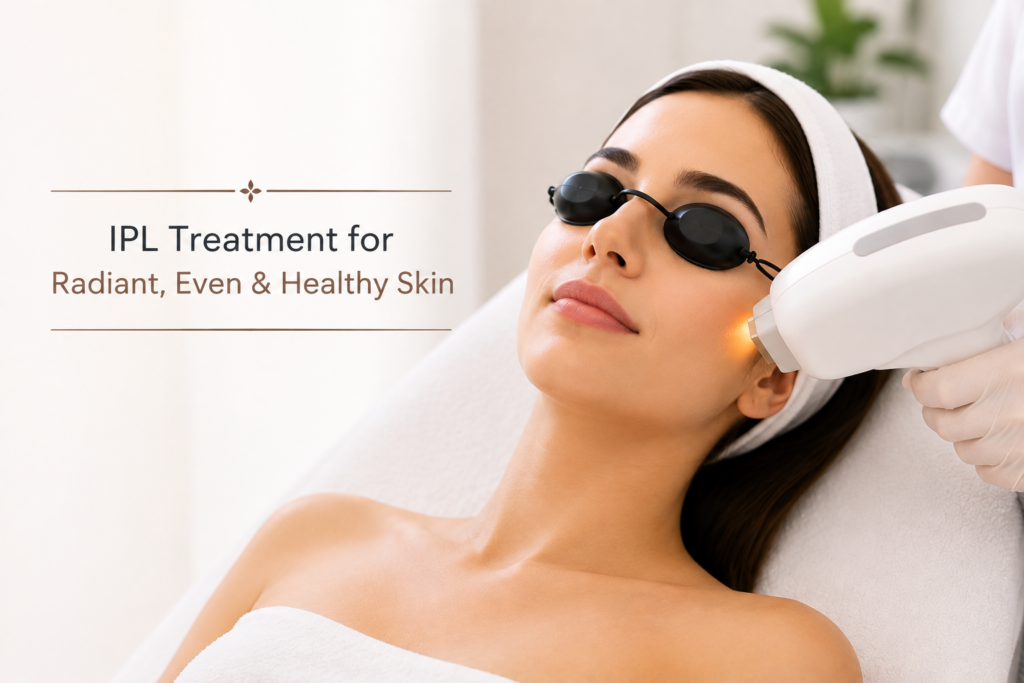
The objective of an IPL photofacial is generally to improve the appearance of:
- Uneven pigmentation
- Sun spots
- Facial redness
- Photodamage
- Uneven-looking skin tone
Results can vary significantly from one person to another.
Factors affecting results include:
- Your skin type
- Type of pigmentation
- Severity of sun damage
- Number of sessions
- Post-treatment skincare
- Sun exposure
- Individual response to treatment
It is therefore better to think of IPL as a skin-improvement treatment rather than an instant skin transformation.
Is There Any Downtime After a Photofacial?
IPL is generally considered a minimally invasive light-based treatment, but some temporary reactions can occur.
Depending on the treatment and individual skin response, you may experience:
- Mild redness
- Temporary warmth
- Mild swelling
- Temporary darkening of pigmented spots
The exact recovery experience varies.
The American Academy of Dermatology notes that redness and swelling can occur with light-based treatments, and follow-up treatments may sometimes be required.
Your dermatologist should provide personalised aftercare instructions.
Photofacial Aftercare: What Should You Do?
After an IPL photofacial, protecting your skin from sunlight is particularly important.
Your aftercare routine may include:
Use Sunscreen
Use a broad-spectrum sunscreen recommended by your dermatologist and follow the application instructions carefully.
Sun protection is especially important because continued UV exposure can contribute to further pigmentation and photodamage. The American Academy of Dermatology emphasises sun protection when treating sun-damaged skin.
Avoid Unnecessary Sun Exposure
Try to minimise direct and prolonged sun exposure after treatment, particularly during peak sunlight hours.
Follow Your Dermatologist’s Skincare Advice
Do not introduce strong active ingredients immediately after treatment unless your dermatologist advises you to do so.
Do Not Pick or Scratch the Treated Area
If pigmentation temporarily becomes darker or the skin feels sensitive, allow it to recover naturally and follow your clinic’s instructions.
Photofacial Cost in Delhi
The photofacial cost in Delhi can vary depending on:
- Treatment area
- Type of skin concern
- IPL technology used
- Number of sessions required
- Dermatologist’s assessment
- Clinic and treatment protocol
At Dermedico Clinic, the current treatment listing shows Photofacial (IPL) from ₹4,000. The final cost should be confirmed with the clinic because treatment requirements can vary from patient to patient.
This is why comparing clinics only on the lowest advertised price may not be the best approach.
Why Choose Dermedico Clinic for Photofacial in Defence Colony?
Dermedico Clinic is located at D-95, Defence Colony, New Delhi, and provides a range of dermatology and aesthetic treatments. Its treatment menu specifically lists Photofacial (IPL) for sun spots, rosacea, pigmentation, redness and skin brightening.
The clinic is headed by Dr. Pallavi Chandna Rohatgi, MD Dermatologist, with experience in cosmetic dermatology, lasers and advanced skin procedures.
Patients from nearby areas such as Lajpat Nagar, Greater Kailash, South Extension, Hauz Khas, Saket and other parts of South Delhi can access the clinic in Defence Colony.
If your concern is broader skin rejuvenation, you can also explore Dermedico’s PRP therapy in Delhi, which the clinic offers for skin rejuvenation and selected under-eye concerns.
Who May Be a Candidate for IPL Photofacial?
You may be considered for an IPL photofacial if you are concerned about selected forms of:
- Sun spots
- Uneven pigmentation
- Facial redness
- Photodamage
- Uneven skin tone
However, IPL is not suitable for every pigmentation condition or every skin type.
A consultation is particularly important if you have:
- Melasma
- Very sensitive skin
- Active skin infection
- Recent tanning or significant sun exposure
- A history of pigmentation after procedures
- Recently used certain medications
- Recently undergone another cosmetic procedure
For example, Cleveland Clinic notes that light-based procedures, including IPL, may be used for some pigmentation conditions, but certain procedures can also cause post-inflammatory pigmentation and should be performed by experienced specialists.
Frequently Asked Questions About Photofacial in Delhi
Is photofacial the same as a facial?
No. A conventional facial is primarily a cosmetic skincare procedure, while an IPL photofacial uses controlled light energy to target specific skin concerns. IPL treatment should be medically assessed for suitability.
Is IPL photofacial painful?
Most patients describe IPL sensations as brief pulses of heat or snapping during treatment, but the experience varies. Your dermatologist can discuss comfort measures during consultation.
How long does a photofacial take?
The treatment time depends on the area being treated and the treatment plan. Your clinic can provide a more accurate estimate after evaluating your skin.
Can photofacial remove pigmentation permanently?
IPL can improve the appearance of certain pigmentation, but it cannot prevent new pigmentation caused by sun exposure, hormonal factors or underlying skin conditions. Consistent sun protection remains important.
Is photofacial good for pigmentation?
It can be useful for selected pigmentation concerns, including some forms of sun-related pigmentation. However, not every type of pigmentation should be treated with IPL. A dermatologist should diagnose the pigmentation before treatment.
How quickly will I see photofacial results?
Some people may notice changes after an early session, while others require multiple treatments. Results vary depending on the skin concern and individual response.
Can I get a photofacial before an event?
It is better not to schedule a new IPL treatment immediately before an important event without discussing timing with your dermatologist. Temporary redness or other skin reactions can occur.
Book a Photofacial Consultation in Defence Colony, Delhi
If you are searching for photofacial in Delhi Defence Colony, IPL photofacial in Delhi, or a photofacial clinic near Defence Colony, Dermedico Clinic offers IPL photofacial treatment as part of its dermatology and aesthetic treatment services.
The clinic is located at:
Dermedico Clinic
D-95, Defence Colony, New Delhi – 110024
Phone: 989-9234-707
Timings: Monday–Saturday, 10:00 AM–6:00 PM
Before booking treatment, schedule a dermatologist consultation to determine whether IPL is suitable for your skin and pigmentation concern.
Final Takeaway
A photofacial in Delhi can be an effective option for improving the appearance of selected sun spots, pigmentation, facial redness and photodamage. IPL works by delivering controlled pulses of light to targeted areas of the skin, but the treatment must be customised according to the patient’s skin type and concern.
If you are considering a photofacial in Defence Colony, professional skin assessment is more important than simply choosing the cheapest treatment available.
Dermedico Clinic in Defence Colony provides IPL photofacial treatment under dermatological supervision and offers other options such as chemical peels and PRP therapy when a different or combined approach may be more appropriate.
Medical & Authority References
For additional information about IPL and light-based dermatological treatments, refer to trusted medical resources including the American Academy of Dermatology, U.S. Food & Drug Administration, National Institutes of Health, PubMed, and Mayo Clinic.
These external references are included for medical information and educational context; treatment suitability should always be determined by a qualified dermatologist.