Table of Contents
Facial Pigmentation Look Different on Different Skin Types
Facial pigmentation does not look the same on everyone. The same condition can appear light brown on one person, deep brown on another, or even grey-brown or bluish-grey depending on skin tone, the depth of pigment, the underlying cause, and how the skin responds to sunlight or inflammation.
This is particularly important when dealing with facial pigmentation, melasma, acne marks, sun spots, and post-inflammatory hyperpigmentation. People with medium-to-deep skin tones may notice pigmentation becoming more pronounced or lasting longer after acne, irritation, injury, or other inflammation.
So, why can facial pigmentation look different on different skin types? The answer lies largely in melanin, pigment distribution, skin response to inflammation, and the depth of pigmentation.
What Is Facial Pigmentation?
Facial pigmentation refers to an area of skin that appears darker, lighter, or otherwise different in colour from the surrounding skin.
Hyperpigmentation occurs when the skin produces or accumulates more melanin than usual. Melanin is the pigment responsible for much of our natural skin colour.
Facial pigmentation can occur because of several different factors, including:
- Sun and ultraviolet exposure
- Melasma
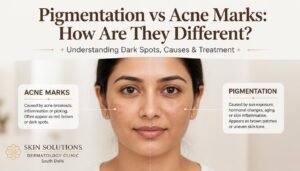
- Acne and post-acne inflammation
- Post-inflammatory hyperpigmentation
- Skin irritation
- Hormonal changes
- Certain medications
- Previous injuries or procedures
- Other dermatological conditions
Importantly, pigmentation is not one single condition. A dermatologist may need to determine the underlying cause before recommending treatment.
Why Does Pigmentation Look Different on Different Skin Types?
1. Melanin Levels Affect How Pigmentation Appears
One of the biggest differences between skin types is the amount and distribution of melanin.
People with naturally deeper skin tones generally have more melanin. When melanocytes become activated by factors such as UV exposure or inflammation, additional pigment can make an existing area of discoloration more noticeable.
This means that two people with the same inflammatory skin problem may develop visibly different pigmentation.
For example, after acne:
- One person may develop a relatively subtle mark.
- Another may develop a more noticeable brown or dark-brown mark.
- In deeper skin tones, pigmentation may remain visible for considerably longer.
Post-inflammatory hyperpigmentation is particularly common and more persistent in darker skin types.
2. Pigment Can Be Located at Different Depths
Pigmentation is not necessarily located at exactly the same depth in every person.
Melanin may be concentrated mainly in the epidermis, the outer layer of the skin, or may extend into deeper parts of the skin.
This can influence the visible colour.
Superficial pigmentation may look:
- Light brown
- Medium brown
- Dark brown
Deeper pigmentation may appear:
- Grey-brown
- Slate-like
- Bluish-grey
This is one reason why a pigmentation concern that looks like a simple brown patch may require a professional dermatological assessment before treatment is selected.
3. Melasma Can Look Different Across Skin Tones
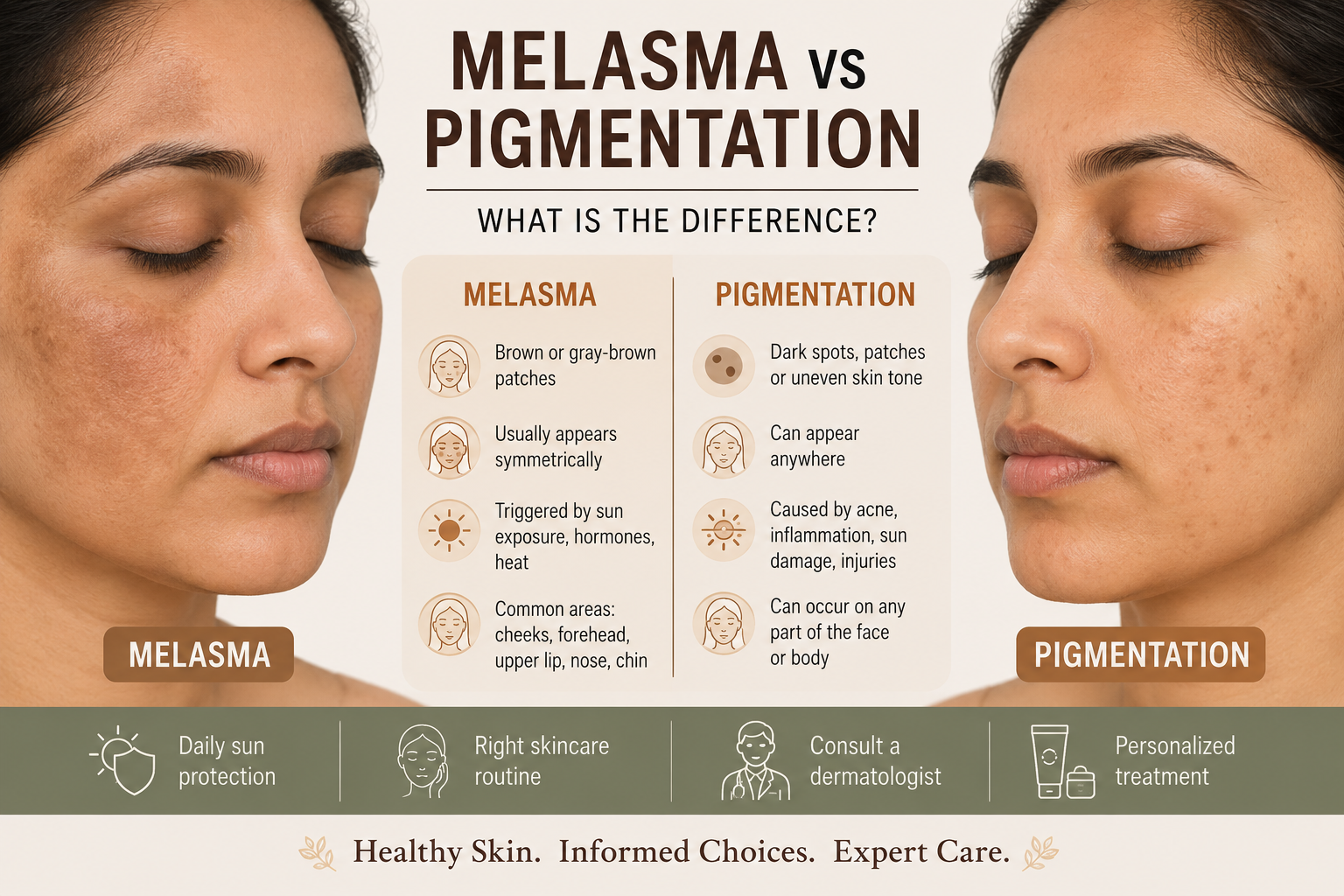
Melasma is a common cause of facial pigmentation. It usually appears as flat, irregular patches on areas such as the cheeks, forehead, nose, upper lip, or chin.
The colour is not identical in every patient.
Depending on the individual’s skin tone and the depth of pigment, melasma can appear brown, grey-brown, or bluish-grey.
Melasma is also more commonly seen in people with medium to darker skin tones, although it can affect people with lighter skin as well.
Sun exposure and visible light can contribute to increased pigmentation, which is why consistent photoprotection is an important part of managing melasma.
4. Inflammation Can Trigger More Noticeable Pigmentation
Your skin’s response to inflammation also matters.
Acne, eczema, dermatitis, irritation, burns, and other inflammatory conditions can stimulate melanocytes. Once the inflammation settles, the affected area may remain darker than the surrounding skin.
This is called post-inflammatory hyperpigmentation (PIH).
PIH can be especially noticeable in medium-to-deep skin tones and may remain visible for months or longer.
For example, someone may notice a dark mark after:
- A pimple heals
- An insect bite settles
- Skin becomes irritated by a product
- A minor burn heals
- An inflammatory skin condition improves
The original inflammation may disappear, while the pigmentation remains.
5. Sun Exposure Can Make Pigmentation More Visible
Ultraviolet radiation stimulates melanin production.
If you already have facial pigmentation, regular sun exposure may make the affected areas appear darker or interfere with improvement.
This applies across skin tones, although the visible response can vary.
For pigmentation-prone skin, daily broad-spectrum sunscreen and sensible sun protection are important. A dermatologist may also recommend additional measures depending on the type of pigmentation.
For melasma, some dermatology guidance also considers visible-light protection, including sunscreens containing iron oxides.
6. The Same Skin Condition Can Produce Different Colours
It is important not to diagnose pigmentation solely by colour.
For example, facial discoloration can appear:
| Appearance | Possible explanation |
|---|---|
| Light brown patches | Superficial pigmentation or mild sun-related changes |
| Dark brown patches | Increased melanin production or post-inflammatory pigmentation |
| Grey-brown areas | Pigment may involve deeper skin layers |
| Bluish-grey pigmentation | Deeper pigment can create a different optical appearance |
| Individual brown marks | May occur after acne or other inflammation |
| Symmetrical facial patches | Can be seen with melasma |
These are general patterns rather than a method of self-diagnosis. Different pigmentation disorders can overlap in appearance.
Does Darker Skin Always Mean More Pigmentation?
No.
Skin tone alone does not determine whether someone will develop pigmentation.
However, people with medium-to-dark skin tones can be more prone to noticeable post-inflammatory pigmentation. AAD and dermatology references also note that melasma can be particularly noticeable in darker skin tones.
Other factors matter too, including:
- Genetics
- Sun exposure
- Hormonal influences
- Acne
- Inflammation
- Skincare irritation
- Previous cosmetic procedures
- Certain medications
- The location and depth of pigment
Therefore, two people with a similar skin tone may still experience very different pigmentation patterns.
Why Is Pigmentation After Acne More Noticeable in Some Skin Types?
Acne causes inflammation, and inflammation can activate pigment-producing cells.
After the acne lesion heals, the redness or swelling may disappear, but a brown or dark mark can remain.
This is particularly relevant for people with darker skin tones because post-inflammatory hyperpigmentation tends to be more common and can be more pronounced.
This is also why repeatedly picking or squeezing acne can be problematic. Additional inflammation or injury may increase the chance of leaving a persistent mark.
Managing the underlying acne can therefore be an important part of reducing the development of new pigmentation.
Can Skincare Irritation Make Facial Pigmentation Worse?
Yes, irritation can contribute to pigmentation in some people.
Using too many active ingredients, over-exfoliating, aggressively scrubbing the skin, or using a product that causes significant irritation can trigger inflammation.
In pigmentation-prone skin, that inflammation may subsequently leave darker marks.
A practical approach is to avoid assuming that stronger skincare automatically means faster improvement.
A dermatologist can help determine whether ingredients such as azelaic acid, retinoids, vitamin C, or other pigment-targeting treatments are appropriate for an individual’s skin and condition.
Why Is Skin Type Important Before Pigmentation Treatment?
Skin type and pigmentation pattern should be considered before choosing a procedure.
Treatments such as chemical peels, lasers, IPL, microneedling, or other energy-based procedures can affect pigmentation differently depending on the patient’s skin characteristics and diagnosis.
In skin of colour, excessive epidermal injury can sometimes trigger additional pigmentation. This is one reason treatment parameters and patient selection matter.
A treatment that was suitable for one person’s pigmentation should not automatically be assumed to be suitable for another person’s skin.
How Is Facial Pigmentation Evaluated?
A dermatologist may consider several factors during an evaluation:
1. Skin tone and characteristics
The dermatologist assesses how the skin naturally responds to sunlight and inflammation.
2. Pattern of pigmentation
The location and distribution of pigmentation can provide useful clues.
3. Colour
Brown, grey-brown, blue-grey, or other appearances may suggest different pigment patterns.
4. History
A dermatologist may ask about acne, hormonal changes, sun exposure, skincare products, medications, and previous procedures.
5. Depth of pigmentation
The suspected depth of pigment can influence treatment planning.
6. Previous treatment
Previous peels, lasers, creams, or cosmetic procedures may affect the skin’s current condition.
This assessment helps avoid treating every dark patch as if it were the same condition.
What Treatments May Be Used for Facial Pigmentation?
Treatment depends on the diagnosis.
Depending on the condition, a dermatologist may consider:
- Prescription or medical-grade topical treatments
- Sun protection
- Azelaic acid or other pigment-targeting ingredients
- Chemical peels
- Laser-based treatments
- Light-based treatments
- Other dermatologist-selected procedures
- Treatment of the underlying acne or inflammatory condition
Not every patient needs a procedure.
For some people, controlling the trigger and following an appropriate topical routine may be sufficient. Others may require a combination approach.
The goal should be to treat the underlying pigmentation while minimizing unnecessary irritation or inflammation.
Why Sunscreen Matters for Different Skin Types
A common misconception is that darker skin does not need sunscreen.
Although naturally deeper skin contains more melanin and may have some additional natural protection against UV-related damage, sunscreen remains important.
UV exposure can stimulate melanin production and may make pigmentation more noticeable.
For people with melasma or pigmentation concerns, consistent sun protection can be an important part of both treatment and maintenance.
Consider:
- Broad-spectrum sunscreen
- Adequate application
- Reapplication when appropriate
- Hats or physical shade
- Limiting prolonged direct sun exposure
Your dermatologist may recommend a sunscreen formulation based on your skin type and pigmentation condition.
When Should You See a Dermatologist for Facial Pigmentation?
Consider professional evaluation if:
- Pigmentation continues to spread
- Dark patches repeatedly return
- Pigmentation does not improve with basic skincare
- Marks develop after acne or inflammation
- You are unsure whether the pigmentation is melasma
- Pigmentation appears after a cosmetic procedure
- A patch changes in an unusual way
- You are considering a peel, laser, or other pigmentation procedure
Persistent facial pigmentation should be correctly identified before starting aggressive treatment.
Facial Pigmentation at Dermedico Clinic, South Delhi
If you are looking for professional evaluation for facial pigmentation in South Delhi, Dermedico Clinic in Defence Colony provides dermatology and cosmetic skin-care services.
The clinic’s published information states that pigmentation, melasma, laser-based treatments, skin rejuvenation, chemical peels and other dermatological concerns are part of its treatment offerings.
Treatment should be individualized because pigmentation can have different causes and can behave differently across skin types.
A dermatologist can evaluate your pigmentation pattern, skin characteristics, previous treatments and likely triggers before discussing suitable options.
Frequently Asked Questions
1. Why does pigmentation look darker on some skin tones?
Higher melanin content and a stronger pigment response after inflammation can make pigmentation more noticeable in medium-to-deep skin tones.
2. Can fair skin also develop facial pigmentation?
Yes. People with every skin tone can develop pigmentation, including melasma, sun spots and post-inflammatory hyperpigmentation.
3. Why does pigmentation sometimes look grey instead of brown?
Grey or blue-grey pigmentation can occur when pigment is located deeper within the skin, changing how the colour is visually perceived.
4. Is melasma more common in darker skin?
Melasma is commonly seen in people with medium or darker skin tones, although it can occur in lighter skin as well.
5. Can acne cause facial pigmentation?
Yes. Inflammation from acne can trigger post-inflammatory hyperpigmentation, particularly in people with darker skin tones.
6. Can sunscreen prevent pigmentation from getting darker?
Consistent sun protection can help reduce UV-triggered pigment production and may help prevent existing pigmentation from becoming more noticeable.
7. Is pigmentation permanent?
Not necessarily. Some pigmentation gradually fades, while other forms can persist or recur. The timeframe depends on the underlying cause, depth, treatment, and ongoing triggers.
8. Can pigmentation return after treatment?
Yes. Conditions such as melasma can recur, particularly when triggers such as UV or visible-light exposure continue.
9. Is laser treatment suitable for every skin type?
No single laser treatment is appropriate for everyone. Skin characteristics, diagnosis, pigmentation depth, previous treatments, and risk of post-inflammatory pigmentation should be considered.
10. Should I use strong bleaching creams for pigmentation?
Avoid self-prescribing strong pigment-lightening medicines. Some treatments can cause irritation or other complications when used incorrectly. A dermatologist can determine whether a particular medication is appropriate.
Final Takeaway
Facial pigmentation can look different on different skin types because pigmentation is influenced by melanin levels, pigment depth, inflammation, sun exposure, genetics, and the underlying skin condition.
A brown mark after acne is not necessarily the same as melasma, and pigmentation that appears brown on one skin tone may look grey-brown or bluish-grey on another.
This is why successful pigmentation management begins with identifying the cause rather than treating colour alone.
If you have persistent facial pigmentation, a dermatologist can assess your skin type, pigmentation pattern, possible triggers, and treatment history before recommending an appropriate management plan.
Medical Disclaimer: This article is for general educational purposes and does not replace an examination or diagnosis by a qualified dermatologist. Pigmentation that changes, develops unusual features, or persists should be professionally evaluated.