Table of Contents
HIFU Effective for People With Mild Skin Sagging
Noticing a slightly less-defined jawline, early sagging around the cheeks, or reduced skin firmness in your 30s? These changes can make you wonder whether your skin needs professional treatment or whether a consistent skincare routine is enough.
One treatment that often comes up when researching non-surgical skin tightening is HIFU (High-Intensity Focused Ultrasound). It uses focused ultrasound energy to target selected tissue layers beneath the skin and stimulate collagen remodelling, which may improve firmness and facial contours in suitable candidates.
But is HIFU effective for people with mild skin sagging in their 30s? The answer is yes, it may help selected individuals, but the results depend on the degree of skin laxity, facial anatomy, treatment technique and the device used. It is not a replacement for a surgical facelift, and not everyone with early signs of ageing needs it.
In this guide, we explain how HIFU works, who may benefit, when results become visible, potential side effects and what to consider before choosing HIFU treatment in South Delhi.
What Is HIFU Skin Tightening?
HIFU stands for High-Intensity Focused Ultrasound. It is a non-surgical aesthetic procedure that delivers focused ultrasound energy to specific depths beneath the skin. Depending on the device and treatment protocol, the resulting controlled thermal effect can encourage collagen remodelling and tissue tightening.
Collagen is a structural protein that helps maintain the skin’s firmness and elasticity. As we age, collagen production and skin-supporting structures change gradually. Sun exposure, genetics, smoking and other lifestyle factors can also influence how early these changes become noticeable.
HIFU aims to improve selected signs of skin laxity without surgical incisions. However, different ultrasound devices and protocols are not interchangeable, so treatment should be selected and performed by an appropriately qualified medical professional.
Is HIFU Effective for Mild Skin Sagging in Your 30s?
HIFU may be effective for people in their 30s who have early, mild skin laxity and realistic expectations. At this stage, the concern may be a softer jawline, slight cheek laxity, early jowling or mild looseness beneath the chin.
It’s important to understand that this evidence concerns selected patients and specific ultrasound techniques. It does not guarantee the same degree of improvement for every person in their 30s.
Why HIFU May Help With Early Skin Laxity
People with mild sagging may have less pronounced tissue descent than those with advanced skin laxity. If a person is otherwise a suitable candidate, a carefully planned treatment may improve the appearance of firmness and definition.
Potential benefits include:
- Improving the appearance of mild skin laxity.
- Supporting a more defined-looking jawline.
- Improving the appearance of early jowling in selected patients.
- Helping address mild looseness around the lower face or neck.
- Offering a non-surgical option for people who are not seeking a surgical lift.
These are possible outcomes, not guaranteed results. The amount of improvement depends on the individual’s skin, facial structure, treatment settings and practitioner expertise.
What Causes Mild Skin Sagging in Your 30s?
Skin changes do not begin at the same age for everyone. Several factors can contribute to reduced firmness in your 30s.
1. Gradual Collagen Changes
Collagen and elastin help the skin retain its structure and flexibility. Natural ageing gradually changes these support systems, which can contribute to fine lines and early laxity.
2. Sun Exposure
Ultraviolet radiation can contribute to premature skin ageing and damage collagen. Daily broad-spectrum sunscreen is an important part of protecting skin health.
3. Genetics and Facial Structure
Some people naturally have less pronounced jawlines or experience changes in facial contours earlier than others. A softer jawline does not necessarily mean the skin is sagging.
4. Weight Changes
Significant weight fluctuations can change facial volume and the appearance of loose skin. HIFU may not address every concern caused by changes in facial fat or volume.
5. Lifestyle Factors
Smoking, inadequate sun protection and inconsistent skincare may contribute to visible signs of ageing. Healthy habits support skin health, although they cannot completely prevent natural ageing.
Understanding the cause of your concern is essential because not every change in facial appearance requires an energy-based treatment.
Who Is a Good Candidate for HIFU in Their 30s?
HIFU may be worth discussing with a dermatologist if you:
- Notice mild looseness around your jawline, cheeks or neck.
- Want to explore non-surgical skin-tightening options.
- Have realistic expectations about gradual, modest improvement.
- Are medically suitable for the proposed device and treatment area.
- Understand that results vary and may not be dramatic.
However, HIFU may not be the best option if your concern is primarily facial volume loss, prominent hollows, very thin skin or substantial excess skin. Treating the wrong concern can produce disappointing results.
A dermatologist should assess your skin, facial anatomy, medical history and treatment goals before recommending a procedure.
Which Areas Can HIFU Help Tighten?
The treatment areas depend on the device, its approved indications and the practitioner’s assessment.
Jawline and Early Jowls
HIFU may help improve the appearance of mild laxity around the lower face. It cannot guarantee a sharply sculpted jawline or correct every cause of facial fullness.
Cheeks
Selected patients may experience a modest improvement in the appearance of cheek firmness. The treatment plan must account for natural facial volume and anatomy.
Under the Chin
When mild skin laxity contributes to a loose appearance beneath the chin, HIFU may be considered. It should not automatically be treated as a solution for all double-chin concerns, particularly when fat distribution is the main cause.
Neck
Some ultrasound treatments are used for selected cases of neck skin laxity. Suitability depends on the device, treatment depth and the individual’s anatomy.
When Will You See HIFU Results?
HIFU results usually develop gradually rather than appearing as an immediate, dramatic lift.
Some people notice early changes, but a more meaningful assessment generally requires time for the skin’s remodelling response to develop. The timing varies with the technology, treatment protocol and individual response.
A practical overview:
- Immediately after treatment: Temporary redness, tenderness or swelling may occur. These changes should not be confused with the final result.
- Over the following weeks: Early changes may become noticeable in some patients.
- Around two to three months: This is a useful period for assessing improvement, although some people respond more slowly.
- Over the following months: The treating clinician may assess whether the improvement meets the original treatment goals.
Clinical studies report varying outcomes and follow-up periods. No single timeline applies to every HIFU device or patient.
How Long Do HIFU Results Last?
The duration of improvement varies. Factors include age, skin condition, degree of laxity, lifestyle, device characteristics and the treatment performed.
HIFU does not stop natural ageing. Your skin will continue to change over time, even if you achieve a visible improvement.
Instead of assuming you need treatment at fixed intervals, discuss follow-up with your dermatologist. Repeating a procedure too frequently or without a clear indication may expose you to unnecessary risks and costs.
Is HIFU Safe for People in Their 30s?
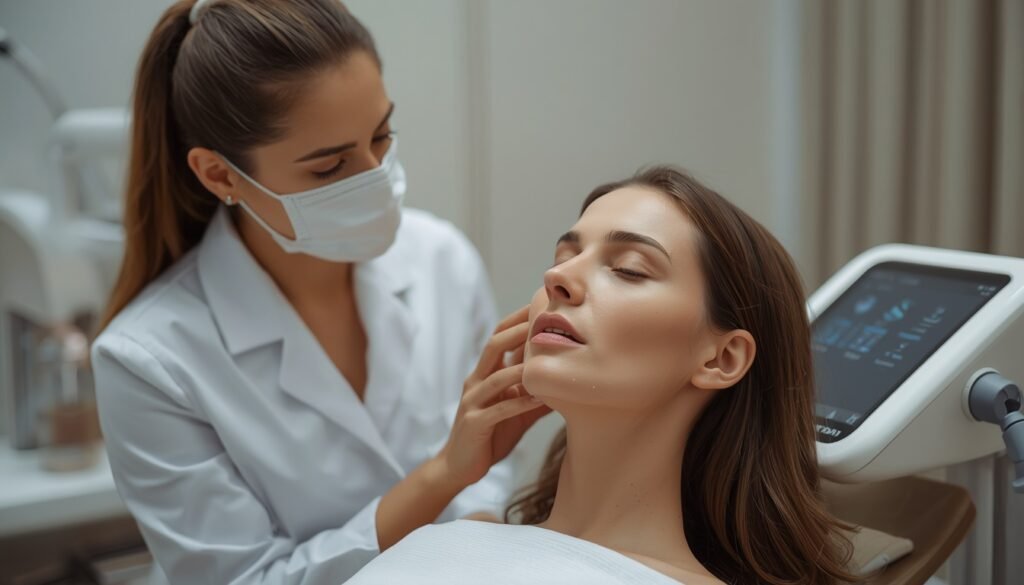
Age alone does not determine whether HIFU is safe or appropriate. The condition of your skin, medical history, treatment area, device and operator’s experience all matter.
Temporary redness, tenderness, swelling, bruising or discomfort can occur. Less common complications reported with focused ultrasound treatments include altered sensation, burns and unwanted changes in the treated tissue.
A qualified practitioner should explain the potential benefits, limitations, alternatives and risks before obtaining your consent.
Tell your clinician about any relevant medical conditions, previous cosmetic procedures, implants, fillers or medicines. Pregnancy, active skin problems and certain medical circumstances may affect whether treatment should proceed. Device-specific instructions and individual medical assessment are essential.
Never choose a provider based solely on a low price or promises of a guaranteed facelift.
HIFU vs Skincare: Which Is Better for Early Sagging?
HIFU and skincare serve different purposes. A suitable skincare routine supports skin health and helps prevent or manage certain visible signs of ageing. HIFU is a procedure intended to address selected tissue laxity.
Skincare May Be a Sensible First Step If:
- You have only very subtle changes in firmness.
- Your main concerns are dryness, dullness or fine lines.
- You have not yet established a consistent sun-protection routine.
- You prefer to start with less invasive options.
Daily broad-spectrum sunscreen, a gentle cleanser and a moisturiser are useful foundations. A dermatologist may recommend a topical retinoid when appropriate, taking irritation risks and individual circumstances into account.
HIFU May Be Worth Discussing If:
- Mild laxity remains a concern despite good skincare habits.
- You want to explore a non-surgical procedure.
- A dermatologist confirms that your concern is appropriate for the device.
- You accept that the improvement may be modest rather than dramatic.
Neither approach is automatically better for everyone. Your treatment should address the actual cause of the concern rather than your age alone.
HIFU Treatment in South Delhi: What Should You Consider?
If you are exploring HIFU treatment in South Delhi, choose a clinic that prioritises medical assessment, safe technique and realistic expectations.
Before proceeding, ask:
- Who will assess and perform the treatment?
- Which device will be used, and is it appropriate for my concern?
- Which facial areas will be treated, and why?
- What level of improvement is realistic for my skin?
- What side effects should I watch for?
- What is included in the quoted price?
- When should I return for a follow-up assessment?
At Dermedico Clinic in Defence Colony, South Delhi, patients can explore available aesthetic treatment options and discuss their skin concerns with the clinical team.
Learn more about HIFU treatment in Delhi or explore skin and cosmetic treatments at Dermedico Clinic.
The appropriate treatment plan should be based on an individual consultation rather than a standard package for everyone in their 30s.
Can HIFU Prevent Future Skin Sagging?
HIFU is not a guaranteed prevention treatment for future ageing. Although it may improve the appearance of selected skin-laxity concerns, it cannot stop the natural changes that occur with time.
You can support long-term skin health by:
- Applying broad-spectrum SPF 30 or higher sunscreen daily.
- Avoiding tanning and excessive unprotected sun exposure.
- Not smoking.
- Maintaining a balanced diet and stable, healthy lifestyle habits.
- Following a skincare routine appropriate for your skin type.
- Seeking professional advice before adding cosmetic procedures.
These measures support skin health but cannot completely prevent wrinkles or sagging.
Frequently Asked Questions About HIFU in Your 30s
1. Is HIFU worth it for mild skin sagging in your 30s?
It may be worthwhile for selected people with mild skin laxity who want a non-surgical option. A dermatologist can help determine whether the likely benefit justifies the cost and potential risks.
2. Can HIFU tighten skin at age 30?
Yes, some people aged 30 and above may benefit from HIFU if they have an appropriate treatment concern. Being 30 is not, by itself, an indication for treatment.
3. Does HIFU make you look younger?
It may create a firmer or more lifted appearance in suitable candidates. The outcome is usually subtle to moderate and varies from person to person.
4. Is HIFU better than a facelift?
HIFU is a non-surgical procedure for selected cases of mild to moderate laxity. A surgical facelift can address more significant tissue descent and excess skin. They are not equivalent treatments.
5. Can HIFU improve a sagging jawline?
It may improve the appearance of mild laxity around the jawline in suitable patients. It cannot guarantee a sharply defined contour.
6. Is HIFU painful?
Discomfort varies. Patients may experience warmth, tingling or brief pain during treatment. Ask the practitioner what to expect with the specific device being used.
7. Is there downtime after HIFU?
Downtime is generally limited compared with surgery, but redness, swelling, tenderness or bruising can occur. Recovery depends on the treatment and individual response.
8. How many HIFU sessions are needed?
The number of sessions depends on the device, treatment area, skin laxity and clinical assessment. Some protocols use a single treatment, while others may differ. Follow professional guidance rather than assuming more sessions produce better results.
9. Can HIFU replace a skincare routine?
No. HIFU does not replace sunscreen, moisturising or other appropriate skincare measures.
10. Where can I enquire about HIFU treatment in South Delhi?
You can visit Dermedico Clinic’s HIFU treatment page to learn more and arrange a consultation to discuss suitability.
Final Thoughts
HIFU can be an option for people in their 30s who have mild skin sagging and want to explore non-surgical skin tightening. Clinical evidence supports potential improvement in selected patients, but results are variable and should not be presented as guaranteed.
The best starting point is to identify what is causing the change in your skin, understand the alternatives and seek an individual assessment from a qualified dermatologist.
If you are considering HIFU treatment in South Delhi, Dermedico Clinic can be a starting point for learning about available options and discussing whether a procedure is appropriate for your skin.
Book a consultation to discuss your skin concerns, realistic treatment outcomes and a personalised approach to skin health.
Medical disclaimer: This article is for general educational purposes and is not a substitute for personalised medical advice, diagnosis or treatment.