Table of Contents
Pigmentation Treatment Near Lajpat Nagar
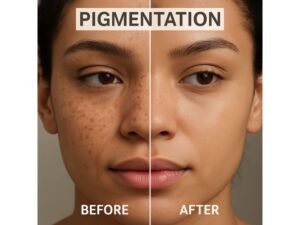
Uneven skin tone, dark patches, brown spots, and facial pigmentation are common skin concerns that can become more noticeable with sun exposure, hormonal changes, acne, inflammation, and certain medications. While some pigmentation may gradually fade with appropriate skincare, persistent or worsening pigmentation may require professional evaluation.
If you are searching for pigmentation treatment near Lajpat Nagar, one of the most important questions to ask is: When should you see a dermatologist?
The answer depends on the type, duration, location, and cause of your pigmentation. A dermatologist can examine your skin, determine the likely cause, and recommend a treatment plan suited to your skin type and concerns.
Dermedico Clinic, located in Defence Colony, South Delhi, provides dermatology and cosmetic skin treatments, including treatments for pigmentation and other skin concerns. The clinic’s dermatologist, Dr. Pallavi Chandna Rohatgi, has experience with lasers and dermatological treatments for conditions including melasma and pigmentation.
What Is Skin Pigmentation?
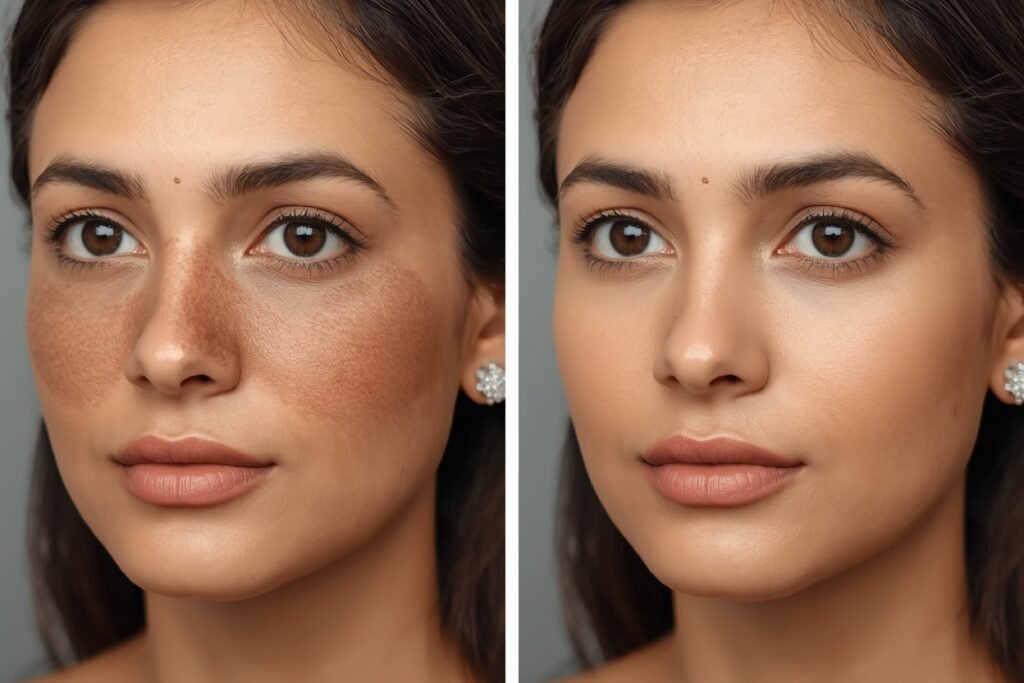
Skin pigmentation refers to the colour of your skin, which is largely determined by melanin produced by specialised cells called melanocytes.
When these cells produce more pigment than usual in certain areas, the skin may develop darker patches or spots. This is commonly referred to as hyperpigmentation.
Pigmentation can appear on:
- Face and forehead
- Cheeks
- Upper lip
- Nose
- Around the mouth
- Neck
- Hands
- Areas affected by acne or inflammation
Pigmentation is not always the same condition. Dark spots left after acne, melasma, sun-induced pigmentation, and other forms of hyperpigmentation can have different causes and may require different approaches.
That is why identifying the underlying cause is an important first step before starting treatment.
What Causes Facial Pigmentation?
Several factors can contribute to pigmentation. Common causes include:
1. Sun Exposure
UV radiation can stimulate melanin production and make existing dark spots more noticeable. Visible light can also worsen pigmentation, particularly in people with darker skin tones. The American Academy of Dermatology recommends broad-spectrum sunscreen with SPF 30 or higher as part of pigmentation and melasma care.
For people concerned about melasma or dark spots, dermatologists may also recommend tinted sunscreen containing iron oxide because visible light can contribute to pigmentation.
2. Melasma
Melasma often appears as brown or greyish patches, particularly on the cheeks, forehead, nose, and upper lip.
It can be influenced by factors such as sunlight, hormonal changes, pregnancy, certain medications, and other triggers. Melasma can persist for years in some people and may require long-term management.
3. Acne and Inflammation
A pimple may disappear, but the dark mark it leaves behind can remain for weeks or months. This is commonly called post-inflammatory hyperpigmentation.
Repeated inflammation, picking, or irritation can make these marks more noticeable.
4. Skin Irritation
Harsh skincare products, excessive exfoliation, or products that cause burning or stinging may irritate the skin. Irritation can sometimes make dark patches more noticeable, particularly in pigmentation-prone skin.
5. Hormonal Changes
Hormonal changes can play a role in melasma and other pigmentation concerns. Pregnancy and some medications, including certain hormonal contraceptives, can be associated with melasma.
When Should You See a Dermatologist for Pigmentation?
You may want to consult a dermatologist if your pigmentation is:
Persistent
If dark spots or patches are not improving despite a consistent and gentle skincare routine, professional evaluation may help identify the cause.
Getting Darker
Pigmentation that continues to become darker despite sun protection and skincare deserves attention.
Spreading to Other Areas
If pigmentation is gradually appearing on new areas of your face, neck, or body, a dermatologist can help determine what may be contributing to it.
Affecting Your Confidence
Pigmentation does not have to be medically dangerous to deserve treatment. If uneven skin tone is affecting your confidence or making you uncomfortable, a dermatologist can discuss available treatment options.
Repeatedly Coming Back
Some pigmentation conditions, particularly melasma, can improve and then return. Long-term sun protection and an appropriate maintenance plan can therefore be important. The AAD notes that melasma can be persistent and that treatment often combines sun protection with topical medication and, in selected cases, procedures.
Not Responding to Home Remedies
Trying multiple home remedies without understanding the cause can sometimes irritate the skin.
If your pigmentation continues despite your skincare efforts, a dermatologist can determine whether you actually have melasma, post-inflammatory pigmentation, sun-induced pigmentation, or another condition.
Why Is a Dermatologist’s Diagnosis Important?
Not every dark patch is caused by the same problem.
For example, melasma, post-acne pigmentation, freckles, and other pigmentation disorders can look similar to an untrained eye but may require different treatment approaches.
Dermatologists can assess the appearance and distribution of pigmentation and, when appropriate, use tools such as a Wood’s lamp or dermatoscope to understand the pigmentation more closely.
A personalised evaluation can help answer questions such as:
- What type of pigmentation do I have?
- What may be triggering it?
- How deep is the pigmentation?
- Could my skincare routine be irritating my skin?
- Would topical treatment be appropriate?
- Could a chemical peel or another procedure help?
- Is laser or light-based treatment appropriate for my skin?
- How can I prevent pigmentation from returning?
Pigmentation Treatment Options
The appropriate treatment depends on the cause and characteristics of your pigmentation. A dermatologist may consider one or more approaches.
Topical Treatments
Depending on the condition, dermatologists may recommend prescription or non-prescription ingredients that help reduce excess pigmentation and even skin tone.
The AAD lists ingredients such as hydroquinone, tretinoin, azelaic acid, kojic acid, and vitamin C among options that may be used depending on the individual situation. Prescription treatments should be used under appropriate medical guidance.
Chemical Peels
Chemical peels use a chemical solution to exfoliate controlled layers of the skin. Depending on the formulation and indication, they may help improve certain types of pigmentation, dark patches, acne-related marks, and uneven skin texture.
Dermedico Clinic’s existing chemical peel information notes that chemical peels may be used for certain dark patches, age spots, freckles, and melasma.
However, peels are not automatically suitable for everyone. People with darker skin tones may have a greater risk of uneven pigmentation after some procedures, making professional assessment particularly important.
Laser and Light-Based Treatments
Certain laser and light-based procedures may be considered for pigmentation and skin rejuvenation. However, treatment selection should depend on the diagnosis, skin type, pigmentation depth, and risk of post-inflammatory pigmentation.
Dermedico Clinic states that Dr. Pallavi Chandna Rohatgi has experience with lasers for conditions including pigmentation and melasma.
Laser treatment should therefore not be selected simply because it is advertised as a quick solution. A dermatologist should first determine whether it is appropriate for your particular pigmentation.
Microneedling and Other Procedures
Depending on the condition, dermatologists may sometimes incorporate procedures such as microneedling into a broader treatment plan. The AAD notes that procedures can sometimes be used alongside medication and sun protection for melasma, although results vary between patients.
Why Sunscreen Is Essential During Pigmentation Treatment
One of the biggest mistakes people make while treating pigmentation is focusing entirely on a cream or procedure while ignoring sun protection.
Sun exposure can stimulate pigment production and make existing pigmentation darker. Dermatologists commonly recommend broad-spectrum SPF 30 or higher and regular reapplication when outdoors.
If you are prone to pigmentation, your dermatologist may recommend:
- Broad-spectrum SPF 30 or higher
- Tinted sunscreen containing iron oxide
- Reapplication of sunscreen during prolonged outdoor exposure
- Hats or other sun-protective clothing
- Seeking shade when possible
- A gentle skincare routine
The AAD recommends reapplying sunscreen at least every two hours and after swimming or sweating.
Pigmentation Treatment Near Lajpat Nagar: Why Choose a Dermatologist?
People searching for pigmentation treatment near Lajpat Nagar may find numerous skincare clinics and treatment options online. However, pigmentation treatment is not simply about removing a dark spot.
The underlying cause needs to be considered.
For example, using an aggressive treatment on pigmentation-prone skin without proper assessment may cause irritation, and irritation itself can contribute to further discoloration.
A dermatologist can evaluate your skin and create a treatment approach based on:
- Your pigmentation pattern
- Skin type
- Duration of the pigmentation
- Previous treatments
- Sun exposure
- Acne or inflammation history
- Current skincare products
- Your treatment goals
Dermedico Clinic is located at D-95, Defence Colony, New Delhi, making it accessible to people looking for dermatology care in South Delhi and nearby areas.
How Long Does Pigmentation Treatment Take?
There is no single timeline for pigmentation treatment.
Some superficial dark marks may gradually fade, while deeper pigmentation can take considerably longer. Melasma in particular can be persistent and may require ongoing management.
According to the American Academy of Dermatology, melasma treatment may take approximately 3 to 12 months to show results, and some cases can take longer.
The timeline depends on:
- Type of pigmentation
- Depth of pigment
- Skin type
- Cause of pigmentation
- Sun exposure
- Treatment selected
- Consistency with prescribed skincare
- Whether the triggering factor continues
Therefore, be cautious of claims promising permanent removal of pigmentation in just a few days.
Can Pigmentation Come Back After Treatment?
Yes.
Treating the visible pigmentation does not necessarily eliminate the factors that caused it.
For example, continued sun exposure can encourage new pigmentation or darken existing patches. Melasma may also return after improvement.
This is why pigmentation management often includes prevention as well as treatment.
A long-term routine may include:
- Daily sun protection
- Appropriate skincare
- Treatment of underlying acne or inflammation
- Following your dermatologist’s instructions
- Maintenance treatment when recommended
The AAD specifically notes that preventing recurrence is an important part of managing melasma and recommends ongoing sun protection.
What Should You Avoid When You Have Pigmentation?
If you have persistent pigmentation, avoid experimenting with harsh or unverified treatments.
Avoid:
- Applying bleach to dark spots
- Excessive scrubbing
- Overusing exfoliating acids
- Using prescription creams without medical advice
- Picking acne or scabs
- Frequently changing skincare products
- Skipping sunscreen
- Expecting instant results
The AAD specifically warns against using liquid bleach on the skin because it can be harmful.
Frequently Asked Questions
1. What is the best pigmentation treatment near Lajpat Nagar?
There is no single treatment that is best for every type of pigmentation. The appropriate option depends on whether the pigmentation is caused by melasma, acne, sun exposure, inflammation, or another condition. A dermatologist can assess the skin and recommend an appropriate treatment plan.
2. When should I see a dermatologist for dark spots?
Consider seeing a dermatologist if your dark spots persist, become darker, spread, repeatedly return, or do not improve with appropriate skincare and sun protection.
3. Can pigmentation be permanently removed?
Some pigmentation can fade significantly with appropriate treatment, but pigmentation can return if triggers such as sun exposure or hormonal factors continue. Melasma, in particular, may require long-term management.
4. Is sunscreen necessary during pigmentation treatment?
Yes. Sun protection is an important component of pigmentation management because sunlight can worsen existing pigmentation and contribute to new dark spots.
5. Is chemical peel useful for pigmentation?
Certain chemical peels may help improve some forms of pigmentation. However, the type and strength of the peel should be selected according to the patient’s skin and condition. Dermedico Clinic provides chemical peel treatment information for pigmentation-related concerns.
6. Can laser treatment help pigmentation?
Certain laser and light-based treatments may help selected pigmentation concerns. However, they are not suitable for every patient or every type of pigmentation. A dermatologist should determine whether the procedure is appropriate.
7. How long does pigmentation treatment take?
The timeline varies considerably. Some pigmentation can improve within weeks or months, while conditions such as melasma may require several months of treatment and maintenance. The AAD reports that melasma treatment commonly takes 3–12 months to show results.
8. Should I visit a dermatologist if pigmentation does not hurt?
Yes. Pain is not necessary for a pigmentation concern to require evaluation. Persistent, spreading, or changing pigmentation can be assessed by a dermatologist even when there are no other symptoms.
When Should You Book a Pigmentation Consultation?
If you have been dealing with dark patches, uneven skin tone, melasma, or stubborn post-acne marks for months, it may be time to stop experimenting with random products and get a professional skin assessment.
A dermatologist can help identify why your pigmentation is occurring and whether topical treatment, chemical peels, laser/light-based treatment, or another approach is appropriate for your skin.
If you are looking for pigmentation treatment near Lajpat Nagar or in South Delhi, Dermedico Clinic in Defence Colony provides dermatology and cosmetic skin treatments under the care of qualified doctors.
Takeaway
Pigmentation is common, but its treatment should not be one-size-fits-all.
If your pigmentation is persistent, worsening, spreading, repeatedly returning, or affecting your confidence, consider consulting a dermatologist rather than relying solely on home remedies.
With the right diagnosis, appropriate treatment, consistent sun protection, and realistic expectations, pigmentation can often be managed more effectively.
Looking for pigmentation treatment near Lajpat Nagar?
Book a consultation with Dermedico Clinic to discuss your pigmentation concerns and find out which treatment approach may be suitable for your skin.