Table of Contents
Pigmentation Treatment in Defence Colony
Dark spots, uneven skin tone, melasma and stubborn pigmentation are common skin concerns, particularly in a city like Delhi where the skin is regularly exposed to sunlight, pollution and environmental stress. If you are considering pigmentation treatment in Defence Colony, it is important to understand that pigmentation is not one single condition and the right treatment depends on its underlying cause.
Before starting any pigmentation treatment, a dermatologist should ideally evaluate your skin, identify the type of pigmentation and determine whether topical skincare, chemical peels, laser-based procedures or a combination approach may be appropriate.
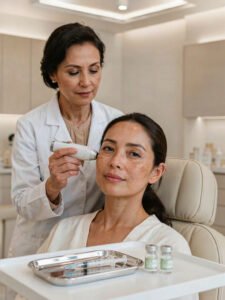
At Dermedico Clinic in Defence Colony, New Delhi, pigmentation concerns can be assessed as part of a personalised dermatology consultation.
What Is Skin Pigmentation?
Skin pigmentation refers to the colour of your skin, which is largely influenced by melanin. When the skin produces excess melanin or pigment becomes unevenly distributed, darker patches or spots can develop.
Common pigmentation concerns include:
- Dark spots
- Sun spots
- Melasma
- Post-inflammatory hyperpigmentation
- Acne marks
- Uneven skin tone
- Pigmentation around the mouth
- Pigmentation on the forehead and cheeks
The appearance of pigmentation can vary depending on whether excess pigment is primarily located in the epidermis or deeper layers of the skin.
According to DermNet, post-inflammatory hyperpigmentation can develop after inflammation or injury to the skin and may become more noticeable with sun exposure.
This is why simply choosing a “pigmentation cream” without understanding the cause may not provide the expected results.
What Causes Pigmentation?
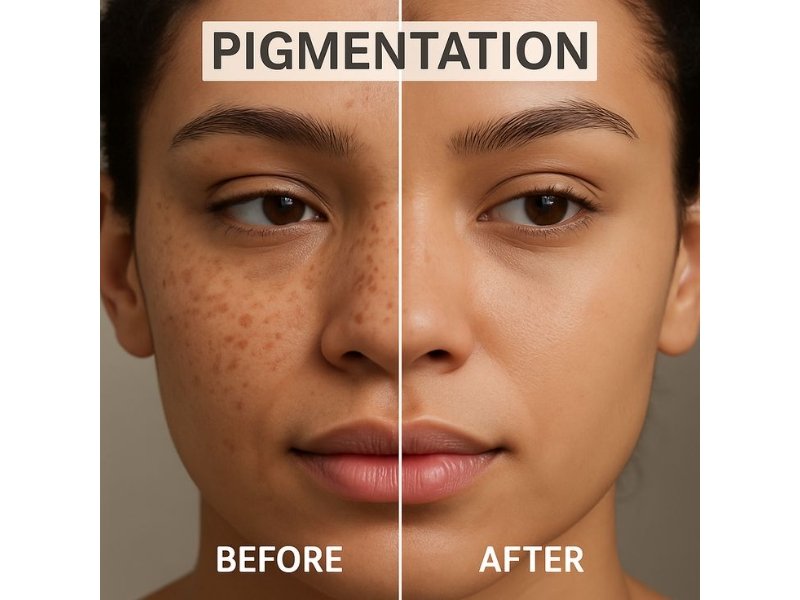
There are several possible triggers for pigmentation.
1. Sun Exposure
UV radiation can stimulate melanin production and make existing pigmentation darker. Regular sun exposure can also contribute to the development and persistence of melasma and other forms of hyperpigmentation.
The American Academy of Dermatology recommends broad-spectrum sunscreen as an important part of managing dark spots and melasma.
2. Acne and Skin Inflammation
Dark marks often remain after acne or other inflammatory skin conditions have healed.
This is known as post-inflammatory hyperpigmentation (PIH). It can be particularly persistent in darker skin tones.
If you have acne along with pigmentation, treating the acne and preventing new inflammation can be an important part of your overall treatment plan.
3. Melasma
Melasma Melasma typically appears as brown or grey-brown patches, commonly on areas such as the cheeks, forehead, nose and upper lip.
Sun exposure can worsen melasma, and hormonal factors can also play a role. The American Academy of Dermatology notes that melasma treatment is generally personalised according to factors including skin tone, depth of pigmentation and triggers.
4. Irritating Skincare Products
Over-exfoliation, unsuitable products and aggressive home treatments can irritate the skin. In some people, inflammation caused by irritation may contribute to additional pigmentation.
5. Certain Medications or Medical Conditions
Some medications and medical conditions can also cause changes in skin pigmentation. Persistent or unusual pigmentation therefore deserves a proper dermatological assessment rather than self-treatment alone.
Why Should You Consult a Dermatologist Before Pigmentation Treatment?
One of the most important things to understand before starting pigmentation treatment in Defence Colony is that the same treatment does not work for every type of pigmentation.
For example:
| Skin Concern | Treatment May Be Discussed |
|---|---|
| Melasma | Medical skincare, sun protection and selected procedures |
| Post-acne pigmentation | Medical skincare, peels or selected procedures |
| Sun-induced pigmentation | Sun protection and selected pigment treatments |
| Uneven skin tone | Topical treatments, peels or other procedures |
| Deeper pigmentation | Individualised dermatological management |
| Pigmentation caused by inflammation | Treating the underlying condition first |
The treatment should be selected after assessing the skin rather than simply choosing the most popular procedure.
What Are the Treatment Options for Pigmentation?
Depending on the cause and depth of pigmentation, a dermatologist may consider one or more approaches.
1. Medical Skincare
Topical treatments may be recommended to reduce excess pigmentation and support more even-looking skin.
Depending on the diagnosis, dermatologists may consider ingredients such as:
- Azelaic acid
- Vitamin C
- Retinoids
- Kojic acid
- Hydroquinone when medically appropriate
- Other pigment-modulating ingredients
Not every ingredient is suitable for every person, and some prescription treatments should only be used under medical supervision.
DermNet lists several topical options that may be used for selected forms of epidermal hyperpigmentation.
2. Chemical Peels
Chemical peels may be considered for certain superficial pigmentation concerns.
Depending on the peel and skin condition, controlled exfoliation may help improve the appearance of uneven pigmentation and skin texture.
However, stronger does not automatically mean better.
An overly aggressive peel can irritate the skin and potentially worsen pigmentation, particularly in people who are prone to post-inflammatory hyperpigmentation.
Therefore, the type, concentration and frequency of a peel should be selected by a qualified professional.
3. Laser-Based Pigmentation Treatments
Certain laser or light-based procedures may be considered for selected pigmentation concerns.
However, laser treatment needs careful assessment, particularly for Indian and other darker skin types.
DermNet notes that chemical peels, lasers and IPL may help selected forms of epidermal pigmentation but can also aggravate pigmentation by causing additional inflammation.
This is why the technology, settings and diagnosis matter.
A dermatologist should determine whether a laser-based treatment is appropriate for your particular pigmentation rather than treating every dark spot in the same way.
Is Pigmentation Treatment Safe for Indian Skin?
Pigmentation treatment can be performed safely when the treatment is appropriately selected and individualised.
However, Indian skin can be more prone to pigmentation following inflammation or irritation. This makes professional assessment particularly important.
For example, aggressive procedures may sometimes trigger post-inflammatory hyperpigmentation.
The goal should therefore not simply be to remove pigment as quickly as possible. The treatment should also minimise unnecessary inflammation and address the factors contributing to pigmentation.
What Should You Do Before Starting Pigmentation Treatment in Defence Colony?
If you are planning to visit a dermatologist for pigmentation treatment, consider the following steps.
1. Stop Experimenting With Multiple Strong Products
Using several acids, retinoids, bleaching products or exfoliating products at the same time may irritate your skin.
Bring your current skincare products or a list of the products you use to your consultation.
2. Take Sun Protection Seriously
Sun protection is one of the most important parts of pigmentation management.
The AAD recommends broad-spectrum SPF 30 or higher for people dealing with melasma and dark spots. For some pigmentation concerns, dermatologists may recommend tinted sunscreen containing iron oxides because visible light can also contribute to pigmentation.
3. Don’t Expect Overnight Results
Pigmentation usually does not disappear after one application or one treatment session.
The time required depends on:
- Type of pigmentation
- Depth of pigment
- Skin type
- Duration of the pigmentation
- Treatment selected
- Sun exposure
- Individual response
- Consistency with aftercare
Deep pigmentation can take significantly longer to fade.
4. Tell Your Dermatologist About Your Medical History
Mention:
- Current medications
- Previous pigmentation treatments
- Allergies or sensitivities
- Pregnancy or plans for pregnancy, where relevant
- Previous chemical peels or laser procedures
- Skincare products you currently use
This helps the dermatologist develop a safer and more appropriate treatment plan.
What Happens During a Pigmentation Consultation?
A pigmentation consultation generally begins with an assessment of the skin and your medical and skincare history.
Your dermatologist may want to understand:
- When the pigmentation started
- Whether it appeared after acne or irritation
- Whether it becomes darker in summer
- What skincare products you use
- Whether you have previously undergone peels or laser treatment
- Whether there are hormonal or medication-related factors
- What result you are hoping to achieve
The dermatologist can then determine whether the pigmentation appears consistent with melasma, post-inflammatory pigmentation, sun-related pigmentation or another condition.
This diagnostic step is important because different pigmentation disorders can look similar but require different approaches.
Pigmentation Treatment in Defence Colony: Why Personalisation Matters
If you search online for pigmentation treatment in Defence Colony, you may find many different treatment options, packages and procedures.
But the right question is not simply:
“Which pigmentation treatment is the best?”
A more useful question is:
“What type of pigmentation do I have, and which treatment is appropriate for my skin?”
For example, someone with post-acne pigmentation may require a different approach from someone with melasma.
Similarly, someone with mild superficial pigmentation may not need the same treatment as someone with deeper or recurrent pigmentation.
At Dermedico Clinic, D-95, Defence Colony, New Delhi, the clinic provides dermatology and aesthetic treatments and lists pigmentation among its skin-related concerns.
How Can You Maintain Results After Pigmentation Treatment?
Treatment does not necessarily mean pigmentation can never return.
Maintenance is particularly important for conditions such as melasma, which can be influenced by sun and visible-light exposure.
A dermatologist may recommend:
- Consistent sunscreen use
- Limiting unnecessary sun exposure
- Gentle skincare
- Avoiding unnecessary skin irritation
- Following prescribed topical treatment
- Attending follow-up appointments when recommended
DermNet describes year-round sun protection as an important part of melasma management, while the AAD also emphasises sun protection for preventing worsening and recurrence.
Common Mistakes to Avoid When Treating Pigmentation
Using Lemon or DIY Remedies
Natural does not automatically mean safe. DIY acidic ingredients can irritate the skin and potentially worsen pigmentation.
Buying Strong Bleaching Creams Without Advice
Some pigment treatments are prescription-based and should be used appropriately.
For example, hydroquinone can be effective for selected pigmentation concerns, but DermNet recommends appropriate monitoring and stopping treatment if significant irritation develops.
Skipping Sunscreen
Even an effective pigmentation treatment may produce disappointing results if ongoing UV and visible-light exposure continues to stimulate pigmentation.
Choosing a Laser Only Because Someone Else Got Good Results
A procedure that worked for one person may not be appropriate for another person’s pigmentation or skin type.
Expecting Permanent Results From One Session
Pigmentation can recur, especially when the underlying trigger remains.
Why Choose Dermedico Clinic for Pigmentation Concerns in Defence Colony?
If you are looking for pigmentation treatment in Defence Colony, Delhi, Dermedico Clinic is located at:
Dermedico Clinic
D-95, Defence Colony
New Delhi – 110024
The clinic’s website states that its dermatology services include personalised treatment planning for individual skin concerns.
Dermedico also provides several skin and aesthetic treatments, allowing your dermatologist to consider different approaches depending on the concern rather than assuming that every pigmentation problem requires the same procedure.
If pigmentation is affecting your confidence or has not improved with your existing skincare routine, a professional skin assessment can help identify the next appropriate step.
Frequently Asked Questions About Pigmentation Treatment in Defence Colony
1. What is the best treatment for pigmentation?
There is no single treatment that is appropriate for every pigmentation condition. The suitable approach depends on the diagnosis, depth of pigmentation, skin type and underlying triggers.
2. Can pigmentation be completely removed?
Some pigmentation can fade significantly with appropriate treatment, while other conditions such as melasma may require ongoing management and can recur.
3. How long does pigmentation treatment take to show results?
Results vary. Some superficial pigmentation may improve over weeks to months, while deeper or recurrent pigmentation can take longer. Consistent sun protection is important during treatment.
4. Is pigmentation treatment suitable for Indian skin?
Pigmentation treatments can be used for Indian skin, but treatment parameters should be selected carefully because darker skin types can be more susceptible to post-inflammatory pigmentation.
5. Can chemical peels treat pigmentation?
Chemical peels may help selected superficial pigmentation concerns. However, the type and strength of the peel should be chosen according to your skin condition.
6. Can laser treatment remove pigmentation?
Certain laser and light-based treatments may help selected pigmentation concerns. However, they are not suitable for every type of pigmentation and can sometimes worsen pigmentation if used inappropriately.
7. Does sunscreen help pigmentation?
Yes. Sun protection is a key part of managing pigmentation because UV exposure can increase melanin production and darken existing pigmentation.
8. Can acne cause pigmentation?
Yes. Pigmentation can remain after inflammatory acne has healed. This is commonly referred to as post-inflammatory hyperpigmentation.
9. Should I stop my skincare before pigmentation treatment?
Do not stop prescription products without discussing them with your dermatologist. During consultation, tell your doctor about everything you currently apply to your skin.
10. Where can I get pigmentation treatment in Defence Colony?
Dermedico Clinic is located at D-95, Defence Colony, New Delhi. A consultation can help determine what type of pigmentation you have and which treatment options may be appropriate.
Final Thoughts
If you are considering pigmentation treatment in Defence Colony, don’t start with a treatment name—start with a diagnosis.
Pigmentation may be caused by melasma, acne-related inflammation, sun exposure, irritation, medications or other factors. Because these conditions can require different approaches, professional assessment is an important first step.
Treatments such as medical skincare, chemical peels and selected laser or light-based procedures may be considered depending on the individual case. Just as importantly, consistent sun protection and appropriate aftercare can help support treatment results.
If you are based in Defence Colony, South Delhi or nearby areas and are concerned about dark spots, melasma or uneven skin tone, you can consult Dermedico Clinic to discuss your pigmentation concerns and available treatment options.
Book a dermatology consultation at Dermedico Clinic, D-95, Defence Colony, New Delhi, to discuss your skin concerns.
Medical Disclaimer
This article is intended for general educational purposes only and does not replace an examination or diagnosis by a qualified dermatologist. Pigmentation treatments are not suitable for everyone, and the appropriate treatment should be determined after an individual skin assessment.