
Table of Contents
Pigmentation Treatment in South Delhi
Pigmentation is one of the most common skin concerns, but not every dark patch or uneven skin tone has the same cause. Melasma, post-inflammatory hyperpigmentation, sun-induced pigmentation, acne marks, and certain medication-related changes can all appear differently and may require different approaches.
If you are searching for pigmentation treatment in South Delhi, the first step should not simply be choosing a treatment based on the latest trend. The right approach is to identify the type, depth, trigger, and severity of pigmentation and then select a treatment plan accordingly.
At Dermedico Clinic, pigmentation management can be customized according to the individual’s skin condition, skin type, pigmentation pattern, and treatment goals.
What Is Skin Pigmentation?
Skin pigmentation refers to the colour of the skin, which is primarily influenced by melanin produced by melanocytes. When melanin production or distribution becomes uneven, darker patches or spots can appear.
Pigmentation may develop on the:
- Face
- Forehead
- Cheeks
- Upper lip
- Nose
- Chin
- Neck
- Areas affected by acne or inflammation
Some pigmentation is superficial, while other forms can involve deeper layers of the skin. This difference is important because the same treatment may not work equally well for every type of pigmentation.
According to DermNet, pigmentation disorders include several different conditions, including melasma, post-inflammatory pigmentation, solar lentigines and other pigmentary disorders.
Why Does Pigmentation Develop?
There can be several reasons behind pigmentation. Common triggers include:
1. Sun Exposure
Ultraviolet radiation can stimulate melanin production and make existing pigmentation appear darker. Sun exposure can also contribute to recurrence after treatment.
The American Academy of Dermatology recommends broad-spectrum sunscreen with SPF 30 or higher as an important part of managing melasma and dark spots.
2. Melasma
Melasma commonly appears as brown or greyish patches, particularly on the cheeks, forehead, nose and upper lip.
Hormonal changes, sunlight and other triggers may contribute to melasma. Importantly, melasma can be persistent and may require a combination of treatment approaches rather than a single procedure.
The AAD notes that there is no single best treatment for melasma and that treatment is generally customized according to factors such as skin tone, depth of pigmentation and triggers.
3. Post-Inflammatory Hyperpigmentation
Dark marks can remain after acne, irritation, burns, dermatitis or other inflammatory skin conditions.
This is known as post-inflammatory hyperpigmentation (PIH). It can be particularly noticeable and persistent in darker skin tones.
DermNet explains that PIH develops following inflammation or injury to the skin and can become darker with sun exposure.
4. Acne and Skin Inflammation
Acne itself may disappear, but the marks left behind can remain for considerably longer. Treating active acne and preventing repeated inflammation can therefore be an important part of managing pigmentation.
5. Certain Medications or Skin Conditions
In some cases, pigmentation may be associated with medication or another underlying skin condition.
DermNet lists drug-induced pigmentation among the possible causes of skin discoloration and notes that identifying the cause is an important part of management.
How Is the Right Pigmentation Treatment Selected?
Choosing a pigmentation treatment should ideally begin with a professional skin assessment.
A dermatologist may consider several factors before recommending treatment.
1. What Type of Pigmentation Do You Have?
The first question is often: What is causing the pigmentation?
For example:
| Type of pigmentation | Common appearance | Treatment consideration |
|---|---|---|
| Melasma | Brown/grey patches, often symmetrical | Combination approach may be required |
| Post-inflammatory pigmentation | Dark marks following acne or inflammation | Treat the underlying trigger + pigmentation |
| Sun-related pigmentation | Localised brown spots | Depends on the type and depth |
| Acne marks | Brown or dark spots after acne | Acne control + pigmentation management |
| Deeper pigmentation | Grey-brown or slate-like appearance | May require a different treatment strategy |
This is why choosing a procedure simply because it worked for someone else may not produce the same result.
2. How Deep Is the Pigmentation?
Pigmentation can be located at different depths within the skin.
Superficial pigmentation may respond differently to topical treatments or selected procedures than deeper pigmentation.
The AAD notes that darker discoloration located deeper in the skin can take considerably longer to fade.
This is one reason why a dermatologist may recommend a gradual treatment plan rather than aggressive treatment from the beginning.
3. What Is Your Skin Type and Skin Tone?
Skin type and tone are particularly important when selecting procedures for pigmentation.
Some treatments can cause irritation or inflammation. In people who are prone to post-inflammatory hyperpigmentation, excessive irritation can potentially make discoloration more noticeable.
DermNet notes that procedures such as chemical peels, lasers and intense pulsed light may sometimes help epidermal pigmentation but can also aggravate pigmentation in certain situations.
Therefore, treatment settings and procedure selection should be individualized rather than using the same protocol for everyone.
4. Are There Any Active Triggers?
A successful pigmentation plan should address the factors that may be contributing to the pigmentation.
For example:
- Ongoing sun exposure
- Hormonal triggers
- Active acne
- Skin irritation
- Inappropriate skincare products
- Excessive exfoliation
- Certain medications
If the underlying trigger continues, pigmentation may return even after it improves.
Which Treatments May Be Used for Pigmentation?
Depending on the diagnosis, a dermatologist may consider topical skincare, prescription medications, chemical peels, laser-based procedures, or combinations of approaches.
The exact treatment should be selected after evaluating the skin rather than assuming that one procedure is appropriate for everyone.
Topical Treatments
Depending on the condition, dermatologists may recommend ingredients such as:
- Azelaic acid
- Retinoids
- Vitamin C
- Hydroquinone where medically appropriate
- Kojic acid
- Other pigment-modulating ingredients
Some prescription treatments should only be used under medical supervision.
The AAD lists several prescription and non-prescription approaches that may be incorporated into a personalized melasma treatment plan.
Chemical Peels
Selected chemical peels can help improve certain forms of superficial pigmentation by promoting controlled exfoliation.
However, peels are not automatically suitable for every pigmentation concern. The type, concentration and frequency should be selected according to the patient’s skin condition and tolerance.
Laser and Light-Based Treatments
Certain laser or light-based procedures may be considered for selected pigmentation concerns.
However, pigmentation treatment with energy-based devices requires careful patient selection. Excessive or inappropriate treatment may cause inflammation and potentially worsen pigmentation in susceptible individuals.
For this reason, a dermatologist should determine whether a laser or light-based procedure is appropriate for the particular type of pigmentation.
Combination Treatment
Pigmentation often requires more than one strategy.
A treatment plan may combine:
Diagnosis → Trigger control → Skincare/medication → Procedure where appropriate → Sun protection → Follow-up
For conditions such as melasma, the AAD specifically states that treatment often combines sun protection, topical medications and sometimes procedures.
Why Is Sunscreen Important During Pigmentation Treatment?
Sunscreen is not simply an optional addition to pigmentation treatment.
UV exposure can stimulate pigmentation and may make existing dark spots more noticeable. Visible light can also contribute to melasma, particularly in darker skin tones.
The AAD recommends broad-spectrum SPF 30 or higher and notes that tinted sunscreens containing iron oxide may provide additional protection against visible light for people with melasma.
A pigmentation-focused routine may therefore include:
- Broad-spectrum sunscreen
- Appropriate reapplication
- Sun-protective clothing
- Avoiding unnecessary prolonged sun exposure
- Gentle skincare
- Avoiding products that cause burning or irritation
Pigmentation Treatment in South Delhi: What Should You Look For?
If you are looking for pigmentation treatment in South Delhi, consider choosing a clinic where treatment starts with diagnosis rather than a one-size-fits-all procedure.
A proper consultation may help determine:
The type of pigmentation
Is it melasma, PIH, sun-related pigmentation or another condition?
The depth of pigmentation
Is the pigment primarily superficial or deeper?
Your skin characteristics
How does your skin respond to inflammation or procedures?
Possible triggers
Could sunlight, acne, hormones, skincare irritation or another factor be contributing?
Your treatment history
Have you previously used creams, peels, lasers or other procedures?
Your expectations
How much improvement are you looking for and over what timeframe?
At Dermedico Clinic, patients seeking pigmentation care in South Delhi can discuss their concerns and receive a treatment plan based on their individual skin condition.
Pigmentation Treatment in Lajpat Nagar and South Delhi
People searching for pigmentation treatment in Lajpat Nagar, pigmentation treatment in Defence Colony, or pigmentation treatment elsewhere in South Delhi may come across multiple treatment options online.
Instead of choosing a procedure based solely on price or popularity, it is useful to understand that pigmentation is not one single condition.
For example, the approach used for post-acne pigmentation may differ from the approach used for melasma. Similarly, deeper pigmentation may require a different strategy from superficial brown spots.
This makes professional assessment particularly important before starting treatment.
How Long Does Pigmentation Treatment Take?
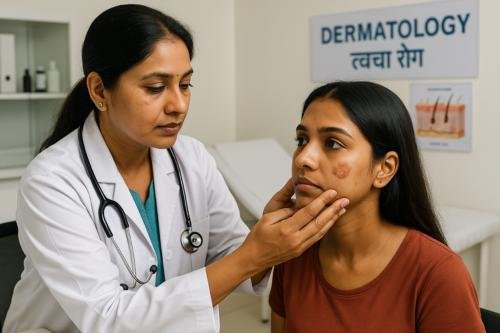
There is no universal timeline for pigmentation improvement.
It depends on:
- Type of pigmentation
- Duration of the condition
- Depth of pigment
- Skin tone
- Trigger control
- Treatment selected
- Consistency with prescribed skincare
- Sun protection
The AAD notes that melasma treatment can take several months, with improvement commonly requiring around 3–12 months and sometimes longer depending on the condition.
Therefore, realistic expectations are important. Pigmentation usually does not disappear overnight.
How Can You Prevent Pigmentation From Coming Back?
Treatment does not always mean pigmentation can never return.
Long-term management can be particularly important for conditions such as melasma.
Helpful habits may include:
- Use sunscreen consistently.
- Reapply sunscreen as recommended.
- Avoid unnecessary prolonged sun exposure.
- Use gentle skincare products.
- Avoid picking acne or inflamed skin.
- Follow the dermatologist’s prescribed maintenance routine.
- Avoid experimenting with strong bleaching or exfoliating products.
- Address recurring acne or inflammation.
If a skincare product causes significant burning or irritation, discuss it with a dermatologist rather than continuing to use it.
Why Professional Diagnosis Matters
One of the biggest mistakes people make when treating pigmentation is assuming that every dark spot is the same.
A dark patch could represent melasma, post-inflammatory pigmentation, a sun-related lesion, medication-related pigmentation or another skin condition.
Treatment should therefore begin with identifying the problem.
The goal is not simply to make the skin lighter. The goal is to identify the cause, reduce excess pigmentation appropriately, protect the skin barrier and minimize the likelihood of recurrence.
When Should You See a Dermatologist for Pigmentation?
Consider consulting a dermatologist if:
- Pigmentation keeps returning.
- Dark patches are spreading.
- Pigmentation appeared without an obvious reason.
- Over-the-counter products have not helped.
- Your skin becomes irritated after using pigmentation products.
- You are considering a peel or laser treatment.
- You have pigmentation along with active acne or inflammation.
- You are unsure whether the pigmentation is melasma or another condition.
A dermatologist can assess the pigmentation and determine whether topical treatment, procedures, combination therapy or simply trigger control is appropriate.
Pigmentation Treatment in South Delhi: A Personalized Approach
There is no universal pigmentation treatment that works identically for everyone.
The right treatment depends on what type of pigmentation you have, why it developed, how deeply the pigment sits in the skin, your skin characteristics, previous treatments and your response to skincare.
If you are considering pigmentation treatment in South Delhi, a professional consultation can help you understand which options may be appropriate for your skin rather than choosing a treatment based solely on advertisements or online trends.
For pigmentation concerns in areas such as South Delhi, Defence Colony and Lajpat Nagar, Dermedico Clinic provides dermatology and aesthetic skin-care consultations focused on individualized treatment planning.
Book a consultation with Dermedico Clinic to discuss your pigmentation concerns and understand which treatment approach may be suitable for your skin.
Frequently Asked Questions
1. What is the best pigmentation treatment in South Delhi?
There is no single treatment that is best for every pigmentation condition. The appropriate option depends on the type, depth, cause and skin characteristics of the individual.
2. Can pigmentation be completely removed?
Pigmentation can often be improved, but the outcome depends on the underlying condition. Some forms, particularly melasma, may require long-term maintenance and trigger control.
3. Is laser treatment suitable for all pigmentation?
No. Laser and light-based procedures are not appropriate for every pigmentation concern. A dermatologist should assess the condition and skin type before recommending an energy-based procedure.
4. Does sunscreen help with pigmentation?
Yes. Sun protection is an important part of managing many pigmentation disorders. UV and visible light can worsen some forms of pigmentation, including melasma.
5. How long does pigmentation treatment take?
The timeline varies according to the cause and depth of pigmentation and the treatment plan. Some conditions may require several months of consistent treatment.
6. Can acne cause pigmentation?
Yes. Inflammation caused by acne can leave behind post-inflammatory hyperpigmentation, particularly after inflammatory lesions.
7. Is pigmentation treatment safe for darker skin tones?
Many pigmentation treatments can be used safely when appropriately selected and performed, but darker skin can have a higher risk of post-inflammatory pigmentation after certain procedures. Individual assessment and appropriate treatment settings are important.
8. Can pigmentation return after treatment?
Yes. Some conditions, especially melasma, can recur when triggers such as sun exposure continue. Long-term sun protection and maintenance treatment may therefore be necessary.