Table of Contents
Hair PRP Near Lajpat Nagar for Hair Loss: Is It Effective?
Hair loss can be frustrating, especially when you notice increased shedding, thinning around the crown, a widening hair part, or a receding hairline. If you are looking for Hair PRP Near Lajpat Nagar, PRP (Platelet-Rich Plasma) therapy is one treatment option that may help improve hair density and support hair growth in suitable candidates. But the important question is: Is Hair PRP effective for hair loss, and what results can you realistically expect?
But the important question is: Is PRP actually effective for hair loss?
Platelet-rich plasma (PRP) therapy has become a popular dermatological treatment for certain types of hair thinning, particularly androgenetic alopecia or pattern hair loss. Research suggests that PRP may improve hair density and reduce hair shedding in appropriately selected patients, although results can vary and it is not a permanent cure for every type of hair loss.
If you are considering hair PRP treatment near Lajpat Nagar, understanding how PRP works, who may benefit from it, how many sessions may be required, and what results you can realistically expect is important before making a decision.
What Is Hair PRP Treatment?
PRP stands for Platelet-Rich Plasma. It is a treatment that uses a concentrated portion of your own blood.
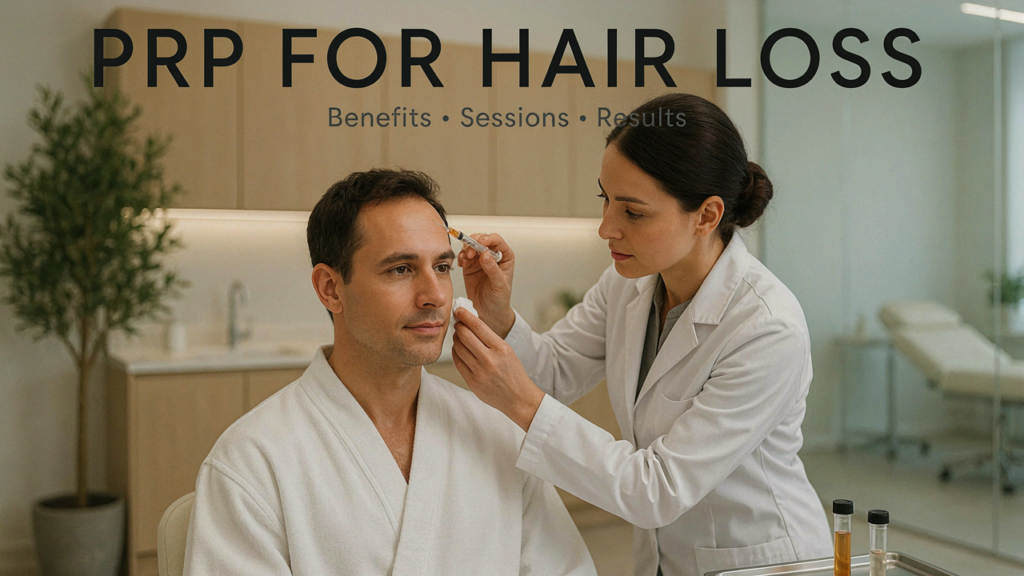
During a typical PRP procedure, a small amount of blood is collected and processed in a centrifuge to separate the platelet-rich plasma. The concentrated plasma is then injected into areas of the scalp affected by hair thinning.
Platelets contain growth factors and other proteins involved in tissue repair and cellular signalling. The idea behind scalp PRP is that these growth factors may help support the hair follicles and promote a healthier hair-growth environment.
At Dermedico Clinic, PRP therapy is offered for hair-related concerns, with treatment planning based on the individual’s hair-loss pattern and clinical assessment.
Is PRP Effective for Hair Loss?
Yes, PRP can be effective for some types of hair loss, but it does not work equally well for everyone.
Several systematic reviews and meta-analyses have found evidence that PRP can improve hair density in people with androgenetic alopecia. One meta-analysis of randomized controlled trials found that PRP significantly increased hair density at three and six months compared with placebo.
Another systematic review found that multiple studies reported improvements in hair density and hair count following PRP treatment, although the researchers also highlighted limitations such as differences between treatment protocols and study quality.
More recent evidence remains encouraging but also shows why patients should have realistic expectations. A 2024 meta-analysis found an increase in hair density with PRP but rated the evidence as low quality because of substantial differences between studies and potential publication bias.
Therefore, PRP should not be marketed as a guaranteed hair-regrowth solution. The effectiveness depends on the cause of hair loss, the condition of the follicles, the treatment protocol and individual factors.
Which Type of Hair Loss Can PRP Help?
PRP is most commonly discussed for androgenetic alopecia, also known as male-pattern or female-pattern hair loss.
It may be considered when you have:
- Gradual thinning of scalp hair
- Early-stage pattern hair loss
- Reduced hair density
- A widening hair part
- Thinning around the crown
- Early receding hairline
- Diffuse thinning associated with pattern hair loss
The American Academy of Dermatology notes that PRP can be used as a treatment for certain forms of hair loss and that patients may need multiple sessions before seeing improvement.
However, not every cause of hair fall should automatically be treated with PRP.
Hair shedding can also be related to nutritional deficiencies, thyroid problems, hormonal changes, certain medications, stress, illness, scalp disorders and other medical conditions. Correctly identifying the cause is therefore an important first step.
Why Choose Hair PRP Near Lajpat Nagar?
For people living in Lajpat Nagar, Defence Colony, South Extension, Greater Kailash, Jangpura, Kalkaji and nearby South Delhi areas, choosing a conveniently located dermatology clinic can make regular follow-up appointments easier.
Dermedico Clinic is located in Defence Colony and is close to Lajpat Nagar, making it a convenient option for people searching for hair PRP near Lajpat Nagar.
The clinic’s published treatment information lists Hair PRP among its services and states that PRP is performed under the supervision of Dr. Pallavi Chandna Rohatgi, MD Dermatologist.
For a treatment that may require multiple sessions and follow-ups, accessibility can be an important practical consideration.
How Does Hair PRP Work?
The exact protocol can vary depending on the patient’s condition and the clinic’s treatment approach, but a typical PRP procedure involves several steps.
1. Consultation and Scalp Assessment
Before starting treatment, your dermatologist should evaluate the pattern and severity of your hair loss.
The doctor may look for:
- Hair density
- Hair shaft thickness
- Pattern of thinning
- Scalp condition
- Family history
- Duration of hair loss
- Previous hair-loss treatments
- Possible medical or nutritional causes
This assessment helps determine whether PRP is appropriate for you.
2. Blood Collection
A small amount of blood is collected from your arm.
3. PRP Preparation
The blood is processed using a centrifuge to separate the components and concentrate the platelet-rich plasma.
4. Scalp Injections
The prepared PRP is injected into selected areas of the scalp where hair thinning is present.
5. Follow-Up
PRP generally requires more than one session. Treatment schedules differ between patients and protocols.
The American Academy of Dermatology notes that PRP treatment commonly involves repeated sessions, followed by maintenance treatments depending on the patient’s response.
How Many PRP Sessions Are Needed for Hair Loss?
There is no single number of sessions that is suitable for every patient.
Many PRP protocols use an initial series of sessions followed by maintenance treatments. Dermedico’s current PRP information states that 3–4 monthly sessions may be recommended initially, followed by maintenance depending on the individual’s condition and treatment response.
It is important not to compare your treatment schedule with someone else’s.
Your dermatologist may recommend a different frequency depending on:
- Severity of hair loss
- Hair-loss diagnosis
- Age
- Hair density
- Scalp condition
- Response to previous sessions
- Other treatments being used
When Can You See Results From Hair PRP?
PRP does not provide instant hair growth.
Hair follicles follow a natural growth cycle, so visible changes generally take time.
Some patients may notice reduced shedding before they notice obvious new growth. Improvements in hair density and thickness can develop gradually over several months.
The American Academy of Dermatology explains that it can take months to see results from hair-loss treatments, including PRP.
Dermedico’s PRP information similarly explains that results build progressively after treatment rather than appearing immediately.
This is why before-and-after photographs taken under consistent lighting and conditions can be more useful than judging results from day-to-day changes.
Does PRP Permanently Cure Hair Loss?
No. PRP should not be considered a permanent cure for pattern hair loss.
Androgenetic alopecia is a chronic condition. Even when treatment improves hair density or reduces shedding, ongoing management may be necessary.
The American Academy of Dermatology specifically notes that PRP is not a permanent solution and that maintenance treatments may help maintain results.
For this reason, a dermatologist may recommend PRP as part of a broader hair-loss management plan rather than treating it as a one-time procedure.
PRP vs Minoxidil for Hair Loss
Minoxidil and PRP work differently.
Minoxidil is a medication commonly used for pattern hair loss, while PRP is a procedure involving injections of concentrated components from the patient’s own blood.
Recent research comparing PRP and topical minoxidil suggests that PRP may provide promising outcomes, but there is not enough evidence to conclude that PRP is universally superior to minoxidil for important outcomes such as hair density or terminal hair count.
Some patients may benefit from a combination of treatments.
Cleveland Clinic also notes that PRP may be used alongside medical treatments such as minoxidil or finasteride when clinically appropriate.
The correct combination should be decided by a qualified dermatologist after evaluating the cause of your hair loss.
Is Hair PRP Painful?
PRP involves multiple small injections into the scalp, so some patients may experience temporary discomfort, pressure, tenderness or mild redness.
The amount of discomfort can vary according to individual sensitivity and the technique used.
Cleveland Clinic describes PRP injections as generally involving minimal pain or pressure for many patients, although temporary injection-site effects can occur.
Your dermatologist can explain what you should expect before treatment and what aftercare may be appropriate.
Is Hair PRP Safe?
Because PRP uses material derived from your own blood, it is an autologous treatment.
However, “natural” does not mean “risk-free.”
Possible temporary effects can include:
- Mild scalp tenderness
- Redness
- Swelling
- Pinpoint bleeding
- Temporary discomfort
- Bruising around injection sites
As with any medical procedure, patient selection, sterile technique and appropriate clinical supervision are important.
The available evidence generally describes PRP as having a favourable safety profile, but studies have varied considerably in their treatment protocols and quality.
Who May Not Be an Ideal Candidate for PRP?
PRP may not be appropriate for every person experiencing hair loss.
A dermatologist should investigate the underlying cause before recommending treatment.
You may need a different approach if your hair loss is associated with:
- An untreated medical condition
- Certain hormonal disorders
- Nutritional deficiencies
- Active scalp disease
- Some forms of scarring alopecia
- Advanced follicle destruction
- Certain medications or systemic conditions
For example, scarring alopecia can permanently destroy hair follicles, making early diagnosis particularly important.
This is one reason why searching only for the cheapest hair PRP near Lajpat Nagar may not be the best way to choose treatment. The quality of diagnosis and medical supervision matters just as much.
What Should You Ask Before Getting Hair PRP Near Lajpat Nagar?
Before booking PRP for hair loss, consider asking the dermatologist:
- What is causing my hair loss?
- Am I a suitable candidate for PRP?
- How many sessions might I need?
- What kind of improvement is realistic for my condition?
- Should I use PRP alone or combine it with another treatment?
- Will I need maintenance sessions?
- What are the possible side effects?
- How long should I wait before evaluating the results?
- What should I do before and after treatment?
- Who will perform the procedure?
A proper consultation should focus on your diagnosis rather than simply selling a package of PRP sessions.
Hair PRP at Dermedico Clinic Near Lajpat Nagar
Dermedico Clinic in Defence Colony provides dermatology and cosmetic treatments for patients from Lajpat Nagar and surrounding areas.
The clinic lists Hair PRP for androgenetic alopecia, diffuse hair thinning and early pattern baldness in men and women.
According to the clinic’s published information, PRP treatment is performed by Dr. Pallavi Chandna Rohatgi, MD Dermatologist, with treatment plans tailored according to individual concerns.
The clinic is located at D-95, Defence Colony, New Delhi, and its website states that it is approximately five minutes from Lajpat Nagar Metro.
If you are experiencing persistent hair fall or progressive thinning, a dermatology consultation can help determine whether PRP is appropriate or whether another treatment approach may be more suitable.
Frequently Asked Questions About Hair PRP Near Lajpat Nagar
Is PRP good for hair loss?
PRP may help improve hair density and reduce hair loss in selected patients, particularly those with androgenetic alopecia. Research is promising, but results vary and more high-quality studies are still needed.
How much does hair PRP cost near Lajpat Nagar?
The cost depends on the clinic, treatment protocol and number of sessions. Dermedico’s published information currently lists Hair PRP from ₹6,000 per session, although exact pricing should be confirmed with the clinic during consultation.
How many PRP sessions are needed for hair growth?
Many protocols use an initial series of multiple sessions followed by maintenance. Dermedico currently states that 3–4 monthly sessions may be recommended initially, but your dermatologist may adjust the plan according to your condition.
Does PRP regrow completely bald areas?
PRP is generally more useful when viable hair follicles are still present. It should not be presented as a guaranteed way to regrow hair in areas where follicles have been permanently destroyed.
Is PRP better than minoxidil?
Not necessarily. Research suggests both can help selected patients, and recent evidence has not established PRP as universally superior to minoxidil for key hair-growth outcomes.
Can men and women get Hair PRP?
Yes. PRP has been studied for both male and female pattern hair loss, although the appropriate treatment depends on the diagnosis.
How long do PRP results last?
Results are not considered permanent. Maintenance treatment may be required, particularly for chronic pattern hair loss.
Is there downtime after Hair PRP?
PRP is generally an outpatient procedure. Temporary redness, tenderness or swelling can occur, but many patients can return to routine activities relatively quickly. Your dermatologist will provide individual aftercare instructions.
Can PRP be combined with other hair-loss treatments?
It can be considered as part of a broader treatment plan. Depending on the diagnosis, a dermatologist may discuss medications or other therapies alongside PRP.
Should I get PRP without consulting a dermatologist?
It is better to get a proper diagnosis first. Hair loss has many possible causes, and treating the wrong cause can delay appropriate care.
Final Takeaway: Is Hair PRP Near Lajpat Nagar Worth Considering?
If you are experiencing hair thinning or pattern hair loss, PRP can be a treatment worth discussing with a dermatologist.
Current research suggests that PRP can improve hair density in some patients, particularly those with androgenetic alopecia. However, it is not a guaranteed or permanent cure, and results can differ significantly from one person to another.
The most important step is to identify why your hair is falling out before choosing a treatment.
If you are searching for Hair PRP near Lajpat Nagar, Dermedico Clinic in Defence Colony offers PRP therapy for hair loss and is located close to Lajpat Nagar Metro. A consultation can help determine whether PRP is appropriate for your hair-loss pattern and what treatment plan may be suitable for you.
Book a consultation with a qualified dermatologist before starting PRP or any other hair-loss treatment.
Medical References
- American Academy of Dermatology — Hair Loss: Diagnosis and Treatment
- American Academy of Dermatology — Male Pattern Hair Loss Treatment
- PubMed — Systematic Review of PRP in Androgenetic Alopecia
- PubMed — PRP for Androgenetic Alopecia: Systematic Review and Meta-analysis
- Cleveland Clinic — PRP Therapy for Hair Loss