Table of Contents
Hair Shedding vs Hair Loss
Seeing more hair than usual on your pillow, comb, shower drain, or clothes can be worrying. But increased hair fall does not always mean that you are developing permanent hair loss.
There is an important difference between hair shedding and hair loss. Hair shedding can sometimes be temporary and may occur after stress, illness, nutritional changes, childbirth, or other triggers. Hair loss, on the other hand, can involve reduced hair growth, progressive thinning, or follicle miniaturisation and may require medical treatment.
This distinction matters when considering PRP for hair loss.
Platelet-rich plasma (PRP) has been studied as a treatment option for certain forms of hair thinning, particularly androgenetic alopecia, commonly known as male or female pattern hair loss. Research suggests PRP may improve hair density in appropriately selected patients, although studies differ in how PRP is prepared and administered.
So, when should you consider Hair PRP, and when should you first investigate another cause of shedding?
Let’s understand the difference.
Hair Shedding vs Hair Loss: What Is the Difference?
Hair shedding and hair loss are related but are not necessarily the same condition.
According to the American Academy of Dermatology, it is normal to shed approximately 50–100 hairs a day. Excessive shedding may occur when a larger-than-usual number of hairs enter the shedding phase. This is sometimes referred to as telogen effluvium.
Hair loss is different because something interferes with the normal growth of hair. Depending on the cause, it may result in thinning, a widening part, a receding hairline, bald patches, or reduced density.
Signs that may suggest increased hair shedding
You may notice:
- More hair on your pillow in the morning
- Increased hair in the shower
- Hair collecting in your hairbrush
- Noticeably more strands falling while washing
- Diffuse shedding across the scalp
- A sudden increase in hair fall after illness or significant stress
Temporary excessive shedding can sometimes improve once the underlying trigger is addressed. The AAD notes that many cases of stress-related shedding eventually resolve as the body returns to its normal cycle.
Signs that may suggest hair loss
Progressive hair loss may look different.
You may notice:
- Gradual thinning at the crown
- A widening centre part
- Receding temples or hairline
- Reduced overall hair density
- A progressively thinner ponytail
- Increasing scalp visibility
- Small or enlarging bald areas
- Hair becoming finer in particular regions
If thinning continues over time, it is worth getting the cause evaluated rather than assuming that the problem is simply seasonal hair shedding.
Why Does Hair Shedding Happen?
Temporary excessive shedding can have several triggers.
Common examples include:
1. Physical or emotional stress
Significant stress can disrupt the normal hair-growth cycle. Some people notice increased shedding several weeks or months after a stressful event.
2. Illness or high fever
Hair shedding may occur after certain illnesses, particularly those accompanied by significant fever.
3. Major weight loss
Rapid or substantial weight loss can affect the hair-growth cycle, particularly when nutritional intake becomes inadequate.
4. Hormonal changes
Pregnancy, childbirth and other hormonal changes may be associated with noticeable changes in hair shedding.
5. Nutritional problems
Low levels of certain nutrients can contribute to hair problems. However, supplements should not automatically be started without identifying whether a deficiency is actually present.
6. Certain medications or medical conditions
Some medications and health conditions can contribute to hair shedding or hair loss.
The key point is that PRP is not automatically the answer to every type of hair shedding.
The first step is identifying what is happening to the hair and why.
When Does Hair Shedding Become a Reason to See a Dermatologist?
Consider a dermatology consultation if:
- Excessive shedding persists
- You can see increasing scalp visibility
- Your hair density is decreasing
- Your part is becoming wider
- You are developing a receding hairline
- You notice bald patches
- Your scalp is itchy, painful, inflamed or unusually scaly
- Hair loss began suddenly without an obvious reason
- Hair loss is affecting your confidence or daily life
A dermatologist can distinguish between excessive shedding and different forms of hair loss and investigate potential contributing factors.
This evaluation is particularly important before starting an injectable treatment such as PRP.
What Is PRP for Hair Loss?
Platelet-rich plasma (PRP) is prepared from a patient’s own blood.
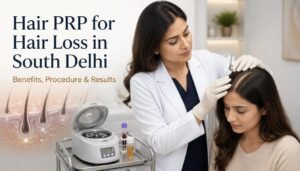
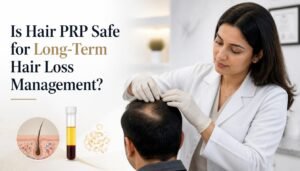
During a PRP procedure, a small blood sample is collected and processed to concentrate platelets. The resulting platelet-rich plasma is then administered into selected areas of the scalp.
PRP has been investigated particularly for androgenetic alopecia, or pattern hair loss.
At Dermedico Clinic, Hair PRP is offered as part of a dermatologist-guided approach to hair thinning and selected hair-loss concerns. The clinic’s dedicated PRP page describes Hair PRP for androgenetic alopecia, diffuse hair thinning and early pattern baldness in men and women.
How Can PRP Potentially Help Hair Thinning?
Platelets contain various growth-related substances that may influence tissue repair and the local environment around hair follicles.
Clinical studies have investigated whether PRP can improve parameters such as hair density and hair count.
A systematic review published in 2024 included eight randomized controlled trials and one prospective cohort study involving 291 participants with androgenetic alopecia. Several studies reported improvements in hair density or hair count with PRP, although the review also noted limitations such as moderate risk of bias and considerable variation between studies.
More recent research has also compared PRP with topical minoxidil in androgenetic alopecia, reflecting continued interest in PRP as a treatment option.
This means PRP may have a role in selected patients, but it should not be presented as a guaranteed cure or a universal treatment for every form of hair loss.
When Should You Consider PRP?
PRP may be considered when a dermatologist determines that it is appropriate for your particular pattern and cause of hair thinning.
It may be discussed when you have:
Early or moderate pattern hair thinning
PRP has been studied particularly in androgenetic alopecia. If follicles are still producing hair but the hairs are becoming progressively finer, a dermatologist may consider PRP as part of a treatment plan.
Diffuse hair thinning
Some people experience reduced density over a larger area rather than one clearly defined bald spot. The underlying cause needs to be established before deciding whether PRP is appropriate.
Progressive thinning despite basic hair-care changes
Changing shampoos or reducing heat styling may help minimise hair damage, but these measures do not necessarily address medical causes of progressive hair loss.
A desire for a non-surgical treatment option
PRP is a minimally invasive procedure rather than a surgical hair-restoration procedure. It may therefore be considered by suitable patients who are looking for a non-surgical approach.
However, the decision should follow diagnosis rather than simply the desire to try PRP.
When Should You NOT Assume PRP Is the First Step?
Increased shedding does not automatically mean you need PRP.
For example, if your shedding started after a major illness, significant stress, rapid weight loss or another identifiable trigger, your dermatologist may first investigate and address the underlying cause.
Similarly, if you have signs of scalp inflammation, infection, autoimmune hair loss, nutritional deficiency or another medical condition, treatment should be directed toward the underlying diagnosis.
The AAD specifically recommends seeing a dermatologist when you are concerned about excessive shedding or hair loss because different causes require different approaches.
Hair Shedding vs Hair Loss: A Simple Comparison
| Feature | Hair Shedding | Hair Loss |
|---|---|---|
| Main concern | Increased number of hairs falling | Reduced hair density or growth |
| Pattern | Often diffuse | Can be patterned or localised |
| Possible trigger | Stress, illness, weight loss, hormonal changes | Genetics, autoimmune conditions, medications and other causes |
| Scalp visibility | May remain unchanged initially | Can progressively increase |
| Hairline | Usually unchanged | May recede or become thinner |
| Duration | Can be temporary | May become progressive |
| Treatment | Depends on the underlying trigger | Depends on the diagnosis |
| PRP | Not automatically required | May be considered for selected conditions |
How Do You Know If You Are a Good Candidate for Hair PRP?
There is no single checklist that makes someone automatically suitable for PRP.
A dermatologist may consider:
- The type of hair loss
- Duration of thinning
- Current hair density
- Pattern of hair loss
- Scalp health
- Age
- Medical history
- Previous treatments
- Current medications
- Individual expectations
At Dermedico Clinic, the published approach emphasises personalised assessment rather than treating every patient with the same PRP schedule.
This is important because two people with similar-looking hair fall may have completely different underlying causes.
How Many PRP Sessions Are Needed for Hair Loss?
There is no universally applicable PRP schedule for every patient.
Treatment frequency can depend on the diagnosis, degree of thinning, treatment response and overall treatment plan.
Dermedico’s current PRP information describes an initial multi-session approach for suitable hair-loss patients, with maintenance potentially considered depending on individual requirements.
Instead of selecting a package simply because it contains a particular number of sessions, ask your dermatologist:
- Why is this schedule appropriate for my diagnosis?
- What changes should we monitor?
- When should progress be assessed?
- Will PRP be combined with another treatment?
- What happens if my shedding has another underlying cause?
When Can You Expect to See PRP Results?
Hair growth is a gradual biological process, so PRP should not be viewed as an instant solution.
Clinical studies have assessed outcomes at different time points, including around three and six months. A systematic review found increased hair density at these time points compared with placebo in the studies it evaluated, but differences in treatment protocols make it difficult to promise one universal timeline.
Your dermatologist may monitor:
- Hair shedding
- Hair density
- Hair shaft thickness
- Scalp visibility
- Hairline or parting changes
- Photographic progress
Taking standardized photographs can be useful because gradual changes are difficult to judge from memory alone.
Is PRP a Permanent Cure for Hair Loss?
No hair-loss treatment should be described as a guaranteed permanent cure.
For conditions such as androgenetic alopecia, the underlying tendency toward hair thinning can remain even when a treatment produces improvement.
PRP may form one component of a broader hair-loss management plan. Depending on the diagnosis, your dermatologist may discuss other evidence-based options alongside or instead of PRP.
This is why the diagnosis matters more than choosing a treatment simply because it is popular.
PRP vs Hair Fall Treatment: Why Diagnosis Comes First
Imagine two patients.
Patient A suddenly starts shedding large amounts of hair several months after a major illness.
Patient B has gradually developed a widening part and reduced hair density over several years.
Both may describe their problem as “hair fall,” but their situations may be completely different.
Patient A may need evaluation for a shedding disorder and its trigger.
Patient B may have pattern hair loss and could potentially be evaluated for treatments such as PRP.
This is why searching for “best hair fall treatment” and immediately choosing a procedure may not be the right approach.
The better question is:
“What is causing my hair loss, and which treatment is appropriate for my diagnosis?”
What Happens During a Hair PRP Consultation?
A dermatologist-guided consultation may include:
1. Medical history
Your doctor may ask about the timing of your hair fall, recent illness, stress, medications, family history and previous treatments.
2. Scalp examination
The scalp and pattern of thinning can provide important clues about the underlying condition.
3. Hair-loss pattern assessment
The distribution of thinning can help differentiate between different types of hair loss.
4. Treatment discussion
If PRP is appropriate, your dermatologist can explain the expected benefits, limitations, number of sessions and follow-up.
5. Personalised treatment plan
Depending on the diagnosis, PRP may be used alone or considered alongside other hair-loss treatments.
Hair PRP in Defence Colony and South Delhi
If you are searching for Hair PRP in Defence Colony or Hair PRP in South Delhi, Dermedico Clinic provides dermatologist-guided PRP treatment at its Defence Colony location.
The clinic is located at D-95, Defence Colony, New Delhi, and its website states that Dr. Pallavi Chandna Rohatgi is an M.D. Dermatologist with experience in dermatology, dermatosurgery and cosmetic dermatology.
Dermedico’s current PRP service page also describes Hair PRP for selected cases of androgenetic alopecia, diffuse hair thinning and early pattern baldness.
Frequently Asked Questions About Hair Shedding and PRP
Is hair shedding the same as hair loss?
No. Hair shedding refers to hairs entering the shedding phase and falling out, while hair loss can involve impaired growth or progressive reduction in hair density. Some people can experience both.
How much hair shedding is normal?
The American Academy of Dermatology states that shedding around 50–100 hairs per day can be normal, although the actual amount varies between individuals.
Can PRP stop hair shedding immediately?
PRP should not be considered an instant solution. The appropriate treatment depends on the cause of shedding, and hair-growth changes take time to assess.
Is PRP useful for genetic hair loss?
PRP has been studied in androgenetic alopecia and may improve hair-density measures in some patients. However, evidence quality and treatment protocols vary between studies.
Should I get PRP if my hair suddenly starts falling?
Not necessarily. Sudden shedding can have many causes. It is better to identify the trigger and diagnosis before choosing PRP.
Can women have Hair PRP?
Yes. PRP has been studied for hair thinning in both men and women, although suitability depends on the individual’s diagnosis.
Is PRP suitable for advanced baldness?
Suitability depends on the cause and extent of hair loss. A dermatologist should assess the scalp and remaining follicular activity before recommending treatment.
How long does Hair PRP take to show results?
Hair growth is gradual. Research commonly evaluates outcomes over several months rather than days or weeks, and individual responses vary.
Can PRP be combined with other hair treatments?
Depending on the diagnosis, PRP may be incorporated into a broader hair-loss treatment plan. Your dermatologist should determine whether combination treatment is appropriate.
Final Takeaway: Shedding Does Not Always Mean Hair Loss
The most important distinction is simple:
More hair falling out does not automatically mean that you need PRP.
If your shedding is temporary and related to an identifiable trigger, treating the underlying issue may be more important.
If you have progressive thinning, widening of the hair part, a receding hairline or pattern hair loss, a dermatologist can determine whether PRP is an appropriate treatment option.
PRP has promising evidence for selected forms of hair loss, particularly androgenetic alopecia, but results vary and research protocols are not completely standardised.
If you are experiencing persistent hair shedding or progressive thinning, consider getting the cause evaluated before choosing a treatment.
At Dermedico Clinic, a dermatologist-led assessment can help determine whether Hair PRP or another hair-loss treatment is appropriate for your individual condition.
Don’t treat the hair fall you can see before understanding the cause you cannot see.