Table of Contents
HIFU and a Surgical Facelift
If you are noticing sagging skin, early jowls, a softer jawline or loose skin around your neck, you may be wondering: What is the difference between HIFU and a surgical facelift?
Both treatments can be used to address signs of facial ageing, but they work in very different ways.
HIFU (High-Intensity Focused Ultrasound) is a non-surgical treatment that uses focused ultrasound energy to target selected tissue depths and encourage a gradual tightening and collagen-remodelling response. A surgical facelift, in contrast, is an operation that can reposition facial tissues and remove excess skin.
This means HIFU should not be viewed as a surgical facelift performed without surgery. It is better understood as a non-surgical option for appropriately selected people with skin laxity.
Research on microfocused ultrasound has found evidence of improvement in selected patients with mild-to-moderate facial skin laxity, while more recent reviews note that treatment protocols and results can vary. PubMed research on microfocused ultrasound
If you are considering HIFU treatment in South Delhi, understanding these differences can help you have a more informed conversation with a qualified dermatologist.
HIFU vs Surgical Facelift: Quick Comparison
| Feature | HIFU | Surgical Facelift |
|---|---|---|
| Type of treatment | Non-surgical | Surgical |
| Incisions | No | Yes |
| Removal of excess skin | No | Can be performed |
| Surgical tissue repositioning | No | Yes |
| Recovery | Usually minimal | Longer recovery |
| Results | Gradual | More substantial structural correction |
| Best suited to | Selected mild-to-moderate laxity | More significant sagging and excess skin |
| Anaesthesia | Depends on treatment protocol | Surgical anaesthesia |
| Maintenance | May be required | Ageing continues over time |
The most important difference is how the two treatments change facial tissues.
What Is HIFU Treatment?
HIFU stands for High-Intensity Focused Ultrasound.
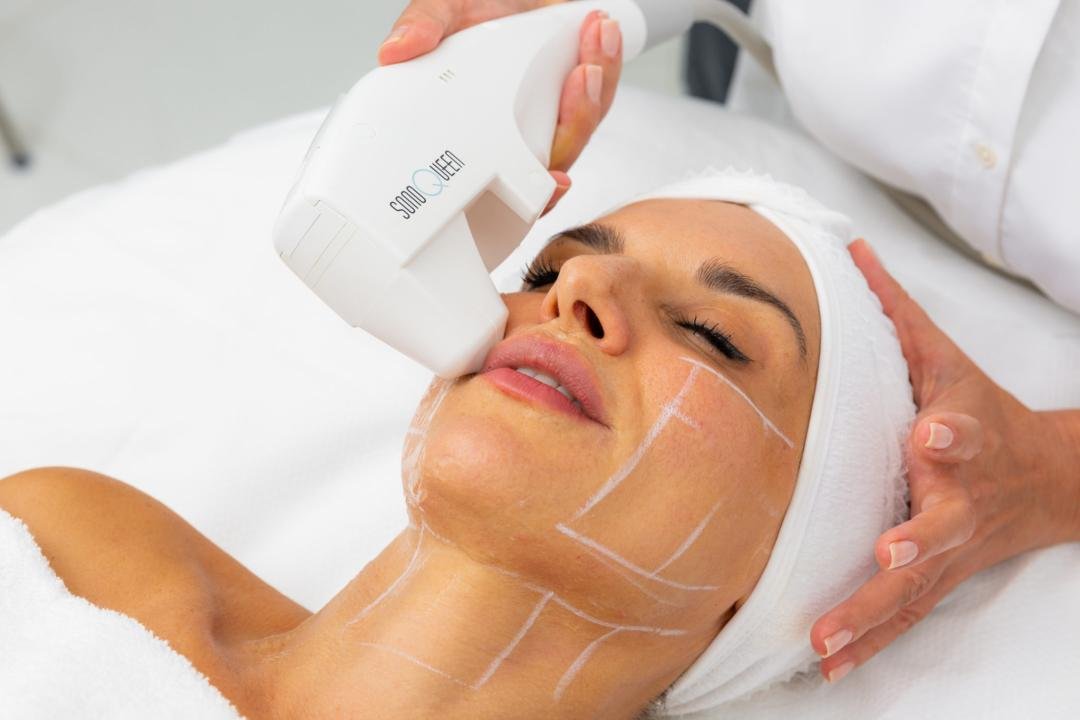
During treatment, focused ultrasound energy is delivered to selected tissue depths beneath the skin. The controlled thermal effect can stimulate a wound-healing response and collagen remodelling.
Over time, this may improve the appearance of skin firmness and facial definition.
HIFU is commonly considered for concerns such as:
- Mild to moderate skin laxity
- Early jowling
- Less-defined jawline
- Loose-looking neck skin
- Selected brow-area concerns
- Loss of facial firmness
- Early signs of facial ageing
The American Academy of Dermatology notes that ultrasound-based non-invasive skin-tightening procedures can heat tissue beneath the skin and that results generally develop gradually rather than immediately.
You can also read our detailed guide to HIFU Treatment in Delhi to understand how HIFU is approached at Dermedico Clinic.
What Is a Surgical Facelift?
A surgical facelift, also known as rhytidectomy, is a cosmetic surgical procedure designed to address more significant signs of facial ageing.
Depending on the procedure and the patient’s anatomy, a surgeon may reposition deeper facial tissues and remove excess skin to improve facial contour.
A surgical facelift is therefore fundamentally different from a non-surgical skin-tightening treatment.
The American Academy of Dermatology explains that a surgical lift such as a facelift generally produces more dramatic results than non-invasive skin-tightening procedures.
This does not mean that surgery is appropriate for everyone. The correct approach depends on the degree of laxity, facial anatomy, expectations, health considerations and the assessment of an appropriately qualified medical professional.
What Is the Main Difference Between HIFU and a Surgical Facelift?
The biggest difference is tissue correction.
HIFU works by delivering focused ultrasound energy to selected tissue layers. It does not surgically remove excess skin or physically reposition facial tissues.
A surgical facelift can involve actual repositioning of tissues and removal of excess skin.
In simple terms:
HIFU = non-surgical tightening and gradual lifting
Surgical facelift = surgical repositioning and correction of excess tissue
That distinction is important because someone with mild skin laxity may have very different treatment needs from someone with substantial skin excess and advanced sagging.
HIFU vs Facelift: Which Gives More Significant Lifting?
The amount of correction possible depends heavily on the underlying problem.
For people with mild or moderate skin laxity, HIFU may provide a gradual improvement in firmness and facial definition.
However, when there is substantial excess skin or advanced sagging, a non-surgical treatment cannot physically remove that excess skin.
This is one reason HIFU should not be advertised as an identical replacement for a facelift.
The American Academy of Dermatology describes non-invasive skin tightening as providing more modest tightening compared with surgical lifting procedures.
Does HIFU Have Downtime Compared With a Facelift?
One of the reasons people consider HIFU is the absence of surgical incisions.
HIFU does not require the type of surgical recovery associated with a facelift. Depending on the device and treatment protocol, patients may experience temporary redness, swelling, tenderness, warmth or sensitivity.
A surgical facelift requires a significantly greater recovery period because it involves an operation and surgical healing.
Your recovery can depend on the specific surgical technique, the extent of treatment and individual healing.
Therefore, when comparing HIFU and a surgical facelift, downtime is an important practical difference.
How Long Does HIFU Take to Show Results?
HIFU results are not usually instantaneous.
Because the treatment relies partly on the body’s tissue response and collagen remodelling, improvements generally develop gradually.
The American Academy of Dermatology notes that ultrasound-based non-invasive skin tightening can produce lifting and tightening over approximately 2–6 months. Individual results can differ.
At Dermedico Clinic, the HIFU treatment information explains that visible improvement may develop over approximately 3–6 months.
This gradual process is one reason HIFU can appeal to people who want a more subtle change rather than a surgical transformation.
How Long Do HIFU Results Last?
HIFU does not stop the natural ageing process.
How long results remain visible can vary according to factors such as:
- Age
- Skin quality
- Degree of laxity
- Facial anatomy
- Lifestyle
- Treatment area
- Device and treatment settings
- Individual collagen response
Dermedico’s information on how long HIFU results last explains that results may remain visible for approximately 12–18 months in some patients, although individual outcomes vary.
A dermatologist should determine whether and when maintenance treatment is appropriate.
Is HIFU Suitable for Severe Sagging Skin?
HIFU is generally more suitable when mild-to-moderate skin laxity is the primary concern.
If someone has substantial excess skin or advanced facial sagging, HIFU may not provide the degree of correction they expect.
A systematic review found that microfocused ultrasound can tighten mildly to moderately lax facial skin, while greater laxity was associated with less favourable outcomes.
This is why an assessment should come before choosing a treatment.
For example, a less-defined jawline can result from different factors, including:
- Skin laxity
- Submental fat
- Facial volume changes
- Muscle activity
- Bone structure
- Natural facial anatomy
- Age-related changes
HIFU may address some skin-laxity concerns, but it cannot correct every cause of facial ageing.
Is HIFU a Non-Surgical Facelift?
You may often see HIFU described online as a “non-surgical facelift.”
This phrase can be useful for explaining the treatment category, but it should not be interpreted literally.
HIFU does not reproduce all of the steps involved in a surgical facelift.
A surgical facelift can reposition deeper tissues and remove excess skin. HIFU does neither.
Instead, HIFU uses focused ultrasound energy to create controlled effects in targeted tissue and encourage collagen remodelling.
Therefore, the phrase “non-surgical facelift” should be understood as a description of the intended cosmetic effect—not as evidence that HIFU and facelift surgery are the same procedure.
Is HIFU Painful?
Comfort varies between individuals.
Some patients may experience:
- Warmth
- Tingling
- Pressure
- Brief pulses of discomfort
- Tenderness after treatment
The sensation can depend on the treatment area, device, energy settings and individual sensitivity.
Dermedico’s HIFU treatment information states that topical numbing cream may be used to improve comfort where appropriate.
Your dermatologist should explain what you are likely to feel before treatment begins.
Are There Risks With HIFU?
HIFU is a non-invasive treatment, but “non-invasive” does not mean “risk-free.”
Clinical literature has reported temporary effects such as redness, swelling, pain or tenderness. A systematic review also identified uncommon adverse effects, including sensory changes, bruising, stinging and other complications. PubMed systematic review
A 2025 systematic review examining microfocused ultrasound with visualization found that transient swelling, redness and post-treatment pain were among the commonly reported treatment-related effects, while the available literature did not establish evidence that the treatment compromises future facelift surgery. PubMed – MFU-V safety review
This is why treatment should be performed using an appropriate device and by a qualified professional who understands facial anatomy, treatment depth and energy settings.
HIFU or Surgical Facelift: Which One Should You Consider?
There is no single treatment that is appropriate for everyone.
HIFU may be considered when:
- You have mild or moderate skin laxity
- You want a non-surgical treatment
- You prefer little or no surgical downtime
- You want gradual improvement
- Your expectations are realistic
- Your dermatologist considers you an appropriate candidate
A surgical facelift may be discussed when:
- There is substantial skin sagging
- There is significant excess skin
- More structural correction is desired
- Non-surgical tightening is unlikely to provide the desired degree of improvement
The important question is therefore not simply “Is HIFU better than a facelift?”
A more useful question is:
“What is causing my facial ageing, and which treatment is appropriate for my degree of laxity and goals?”
HIFU Treatment in South Delhi
If you are researching HIFU treatment in South Delhi, Dermedico Clinic is located in Defence Colony and provides HIFU treatment under dermatological supervision.
The clinic’s HIFU Treatment in Delhi page provides information about the treatment, areas addressed and consultation process.
Dermedico Clinic is also accessible from Lajpat Nagar and nearby South Delhi areas.
You can learn more about HIFU treatment near Lajpat Nagar if you are comparing treatment options in the area.
Why a Consultation Matters Before HIFU
Facial ageing is rarely caused by just one factor.
Two people of the same age may have completely different reasons for facial sagging.
One person may have mild skin laxity.
Another may have volume loss.
Another may have excess skin.
Someone else may have submental fullness or a combination of several changes.
That is why an individual assessment is important before deciding between HIFU and surgery.
A qualified dermatologist can assess:
- Skin laxity
- Facial anatomy
- Treatment area
- Skin quality
- Degree of ageing
- Treatment goals
- Previous cosmetic procedures
- Suitability for HIFU
This helps create realistic expectations and reduces the risk of choosing a treatment simply because it is currently popular.
Frequently Asked Questions
What is the difference between HIFU and a surgical facelift?
HIFU is a non-surgical treatment that uses focused ultrasound energy to encourage tightening and collagen remodelling. A surgical facelift involves an operation that may reposition facial tissues and remove excess skin.
Is HIFU as effective as a surgical facelift?
HIFU and facelift surgery should not be considered equivalent. HIFU is generally used for selected skin-laxity concerns, while surgery can address more substantial sagging and excess skin.
Can HIFU replace a facelift?
HIFU cannot reproduce the tissue repositioning and excess-skin removal performed during facelift surgery. It may be an option for selected people who have mild-to-moderate laxity and prefer a non-surgical approach.
How long does HIFU take to show results?
HIFU results generally develop gradually. The American Academy of Dermatology reports that ultrasound-based skin tightening may show lifting and tightening over approximately 2–6 months, although individual results vary.
Is HIFU good for sagging skin?
HIFU may help selected patients with mild-to-moderate skin laxity. The extent of improvement depends on factors such as skin laxity, facial anatomy, treatment protocol and individual response.
Does HIFU remove excess skin?
No. HIFU does not surgically remove excess skin. This is an important distinction between HIFU and a surgical facelift.
Is HIFU painful?
Some people experience warmth, tingling, pressure or brief discomfort during treatment. Comfort varies according to the treatment area, device, settings and individual sensitivity.
How long do HIFU results last?
Results vary between individuals. Some patients may see effects for many months, but HIFU does not stop natural ageing. Your dermatologist can advise whether maintenance treatment may be appropriate.
Can HIFU be done on the neck?
HIFU may be used for selected cases of neck skin laxity. Suitability depends on the individual’s anatomy, skin condition and treatment goals.
Can HIFU treat a double chin?
HIFU may be considered when loose skin contributes to the appearance beneath the chin. However, a double chin can have multiple causes, including fat and anatomy, so professional assessment is important.
Final Thoughts
The difference between HIFU and a surgical facelift comes down to how the treatment works and how much structural correction is possible.
HIFU is a non-surgical approach that uses focused ultrasound energy to support tightening and collagen remodelling. It may be appropriate for selected people with mild-to-moderate skin laxity who want gradual improvement without surgery.
A surgical facelift is a surgical procedure capable of repositioning tissues and removing excess skin, making it fundamentally different from HIFU.
If you are considering HIFU in Defence Colony, Lajpat Nagar or South Delhi, a consultation with a qualified dermatologist can help determine whether HIFU is appropriate for your particular concern.
Medical Disclaimer: This article is intended for general educational purposes and should not be considered a substitute for an individual medical consultation or diagnosis. Treatment suitability, expected results and risks vary from person to person.