Table of Contents
HIFU Help Improve Sagging Skin
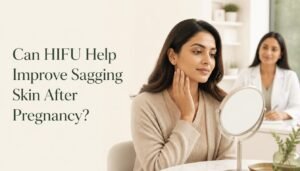
Pregnancy brings many beautiful changes, but it can also change the way your skin looks and feels. After childbirth, some women notice loose skin, reduced firmness, stretch marks or changes in skin elasticity. These changes are normal, and many new mothers wonder whether there is a safe, non-surgical way to improve their skin’s appearance.
One treatment that may come up during your research is HIFU, or High-Intensity Focused Ultrasound. Known for its skin-tightening applications, HIFU uses focused ultrasound energy to target selected tissue layers beneath the skin and stimulate collagen remodelling.
But can HIFU help improve sagging skin after pregnancy? The answer depends on where the loose skin is located, how much skin laxity is present, your stage of postpartum recovery and whether HIFU is appropriate for your particular concern.
In this guide, we explain how HIFU works, its potential benefits and limitations, important safety considerations after pregnancy, and when to consult a qualified dermatologist.
What Causes Sagging Skin After Pregnancy?
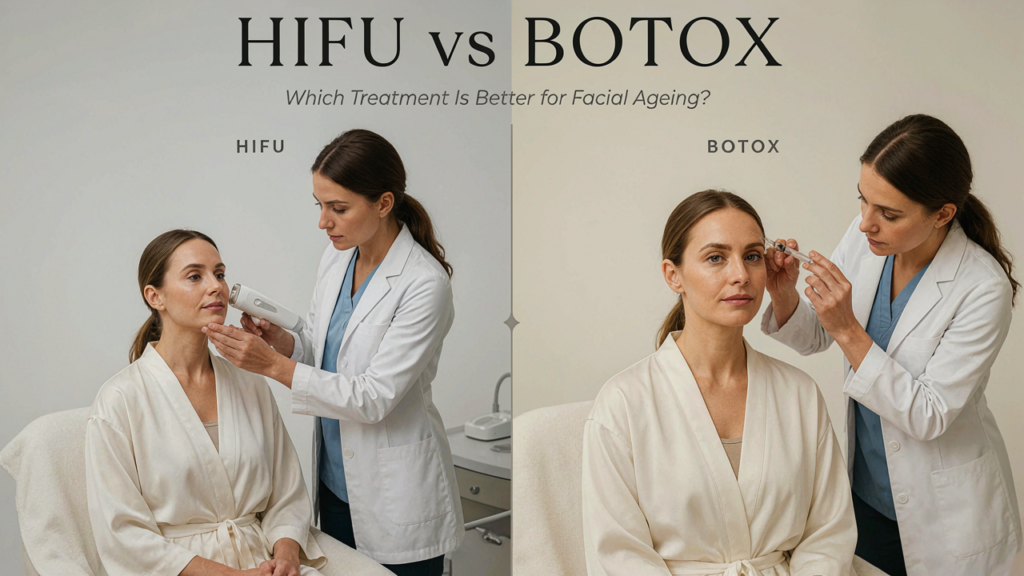
During pregnancy, the skin stretches to accommodate the body’s changing shape. Hormonal changes also affect skin structure, while changes in body weight can influence elasticity.
After childbirth, the skin gradually adapts to these changes. However, it may not return completely to its previous firmness.
Several factors can contribute to loose skin after pregnancy:
- Skin stretching: The skin expands as the abdomen and other areas change during pregnancy.
- Changes in collagen and elastin: These proteins help support the skin’s structure, firmness and elasticity.
- Postpartum weight changes: Changes in body volume can affect how loose or firm the skin appears.
- Age and genetics: These influence the skin’s natural ability to recover its elasticity.
- Number of pregnancies: Repeated stretching may affect how the skin responds after childbirth.
- Time since delivery: Skin appearance can continue to change during postpartum recovery.
It is important to understand that loose abdominal skin, facial sagging and excess fat are different concerns. Each may require a different approach, so identifying the underlying issue is the first step towards choosing an appropriate treatment.
What Is HIFU Skin Tightening?
HIFU stands for High-Intensity Focused Ultrasound. It is a non-surgical aesthetic procedure that delivers focused ultrasound energy to selected depths beneath the skin.
The energy produces a controlled thermal effect in the targeted tissue, stimulating a healing response and supporting collagen remodelling. Collagen is an important structural protein that helps maintain skin firmness.
Over time, this process may improve the appearance of mild to moderate skin laxity in appropriately selected patients.
Unlike surgical procedures, HIFU does not involve incisions or the surgical removal of excess skin. However, it is not a replacement for surgery when significant loose skin is present.
The results also depend on the device used, its authorised treatment indications, the treatment area and the individual’s skin condition.
Can HIFU Help Improve Sagging Skin After Pregnancy?
Yes, HIFU may help improve selected cases of mild skin laxity after pregnancy, but it is not suitable for every type of postpartum sagging.
The treatment is generally discussed for certain facial and neck skin-tightening concerns. Evidence for these applications should not automatically be interpreted as proof that HIFU will tighten loose abdominal skin after pregnancy.
If you are concerned about facial skin that looks less firm after childbirth, a dermatologist may assess whether HIFU is appropriate.
However, if your primary concern is loose skin around your abdomen, hips or thighs, you should not assume that a facial HIFU protocol will produce the same results in those areas. The suitability of treatment depends on the particular device and its intended use.
HIFU also cannot reliably remove large amounts of excess skin or correct every cause of postpartum body changes.
A personalised assessment is therefore essential before deciding whether to undergo skin-tightening treatment.
How Does HIFU Work for Skin Tightening?
HIFU uses focused ultrasound energy to target specific tissue depths without intentionally treating the entire skin surface.
The process can be understood in three stages.
1. Focused Ultrasound Energy
A treatment handpiece delivers ultrasound energy to the selected treatment area. The device and its settings determine the depth and distribution of the energy.
2. Collagen Remodelling
The controlled thermal effect stimulates a tissue response that can encourage collagen remodelling. Collagen contributes to the skin’s structure and firmness.
3. Gradual Changes in Skin Appearance
Any improvement develops gradually rather than appearing like an immediate surgical lift. Results vary depending on the individual’s anatomy, degree of skin laxity, treatment settings and response to treatment.
HIFU should therefore be viewed as a potential option for carefully selected concerns, rather than a guaranteed solution for loose skin after childbirth.
Which Areas May Benefit From HIFU After Pregnancy?
The appropriate treatment area depends on the device, its intended use and the patient’s individual needs.
Facial Skin
Some women notice changes in facial firmness following pregnancy. Depending on the cause and degree of skin laxity, a dermatologist may consider non-surgical treatments such as HIFU for suitable facial areas.
Jawline and Under-Chin Area
If mild skin laxity affects the jawline or under-chin area, HIFU may be an option following professional assessment. It is important to distinguish loose skin from excess fat or changes in facial volume.
Neck Skin
Selected cases of mild neck skin laxity may also be considered for focused ultrasound treatment, depending on the device’s indications and the patient’s suitability.
Abdomen and Other Body Areas
Loose abdominal skin is a common postpartum concern, but it requires a different assessment from facial skin sagging.
Not all HIFU devices are designed or authorised for every body area. Ask your dermatologist whether the specific device is appropriate for your concern and what evidence supports the expected results.
For significant abdominal skin laxity, other medical or surgical options may be more appropriate.
When Is It Appropriate to Consider HIFU After Childbirth?
There is no single postpartum timeline that makes HIFU appropriate for every woman.
Your body needs time to recover after childbirth, and skin changes may continue during this period. Recovery can differ depending on delivery, breastfeeding, hormonal changes, weight fluctuations and general health.
Before considering HIFU, discuss the following with your healthcare professional:
- How long it has been since delivery.
- Whether you are breastfeeding.
- Whether your weight is still changing.
- Whether you have abdominal discomfort, a hernia or another postpartum concern.
- Whether you have any skin conditions or medical factors that could affect treatment.
- Which body area you want to treat.
Avoid elective HIFU treatment during pregnancy. Safety data for cosmetic focused-ultrasound procedures during pregnancy are insufficient. If you are breastfeeding, discuss the treatment with your dermatologist and treating healthcare professional before proceeding; evidence is limited, and an individual risk assessment is important.
Do not rush into a cosmetic procedure because of pressure to regain your pre-pregnancy appearance. Your recovery and wellbeing should come first.
What Are the Potential Benefits of HIFU?
For suitable patients, HIFU may offer several practical advantages.
Non-Surgical Approach
HIFU does not require surgical incisions or stitches. This may appeal to people seeking a non-surgical option for selected skin-laxity concerns.
Gradual Improvement
Any improvement generally develops over time as the skin responds to treatment. Results are variable and may be subtle rather than dramatic.
Limited Downtime for Many Patients
Many patients can return to routine activities relatively quickly, depending on the device and treatment performed. Temporary redness, tenderness, swelling or discomfort can still occur.
Targeted Treatment
The treatment is designed to deliver focused energy to selected tissue depths. Correct treatment planning is important to avoid unnecessary exposure of surrounding tissues.
These benefits should be balanced against the limitations of HIFU. It cannot guarantee complete skin tightening, eliminate stretch marks or remove substantial excess skin.
HIFU vs Other Options for Loose Skin After Pregnancy
Choosing the right treatment begins with understanding the concern you want to address.
| Concern | Options to discuss with a professional |
|---|---|
| Mild facial skin laxity | HIFU or other dermatologist-recommended treatments |
| Dryness or changes in skin texture | Appropriate skincare and treatment for the underlying cause |
| Stretch marks | Treatments that target stretch marks specifically |
| Loose abdominal skin | Assessment for non-surgical options or plastic surgery, depending on severity |
| Significant excess skin | Surgical consultation may be appropriate |
| Abdominal bulging or suspected muscle separation | Medical assessment and postpartum rehabilitation advice |
A treatment that improves facial firmness may not treat stretch marks, abdominal muscle separation or substantial excess skin. Choosing an option based on the actual cause of the concern can help prevent unrealistic expectations.
Is HIFU Safe After Pregnancy?
HIFU is a medical aesthetic procedure, so safety depends on appropriate patient selection, the device, treatment technique and professional expertise.
Possible side effects can include:
- Temporary redness or swelling.
- Tenderness or discomfort.
- Bruising in some cases.
- Burns or tissue injury if treatment is improperly performed.
- Nerve-related symptoms or other complications in certain circumstances.
The risks depend on the device and the treatment area. A qualified practitioner should explain the potential benefits, alternatives and complications before treatment.
If you are breastfeeding, have a medical condition, have undergone a recent procedure or are experiencing ongoing postpartum symptoms, disclose this information during your consultation.
For general information on aesthetic-device risks and the importance of understanding treatment suitability, refer to the U.S. Food and Drug Administration’s guidance on aesthetic and cosmetic devices.
How to Support Skin Health After Pregnancy
Professional treatment is only one possible part of a postpartum skincare plan. Simple habits can help support overall skin health.
Maintain a Balanced Diet
A balanced diet containing adequate protein, fruits, vegetables and essential nutrients supports general health and normal tissue repair.
Stay Hydrated
Adequate fluid intake supports normal bodily functions. Hydration alone, however, cannot remove excess skin or guarantee that stretched skin will return to its previous firmness.
Use Sun Protection
Sun exposure contributes to premature skin ageing. Use a broad-spectrum sunscreen on exposed skin and follow suitable sun-protection practices.
Allow Time for Recovery
Postpartum changes can take time. Avoid comparing your recovery with someone else’s, because genetics, age, pregnancy history and other factors influence the process.
Seek Individualised Advice
If loose skin is affecting your confidence, a dermatologist can help identify the cause and explain which options may be appropriate for your goals.
Why Consult a Dermatologist Before HIFU?
A professional assessment helps determine whether the concern is related to skin laxity, excess fat, volume changes or another issue.
A dermatologist can evaluate the treatment area, discuss the expected degree of improvement and explain the limitations of the chosen procedure.
If you are considering HIFU in South Delhi, Dermedico Clinic in Defence Colony offers HIFU treatment as part of its aesthetic dermatology services. The clinic’s treatment information identifies Dr. Pallavi Chandna Rohatgi as an MD dermatologist.
You can explore the clinic’s HIFU treatment in Delhi page to learn more about the procedure and arrange a consultation.
The clinic can assess whether the treatment is appropriate for your particular concern. This is especially important when your skin changes are related to pregnancy or recent childbirth.
Frequently Asked Questions
1. Can HIFU tighten loose skin after pregnancy?
HIFU may improve selected cases of mild skin laxity, particularly in appropriate facial treatment areas. Evidence for facial treatment should not be taken as proof that HIFU will effectively tighten loose abdominal skin after pregnancy.
2. How soon after delivery can I consider HIFU?
There is no universally suitable waiting period. Your postpartum recovery, breastfeeding status, medical history and treatment area should be assessed before you consider an elective procedure.
3. Can I get HIFU while breastfeeding?
Evidence about cosmetic HIFU during breastfeeding is limited. Discuss the procedure with your dermatologist and healthcare professional before treatment rather than assuming it is safe.
4. Can HIFU remove stretch marks after pregnancy?
HIFU is not primarily a stretch-mark treatment. Stretch marks involve changes in the skin’s structure and may require different treatment options.
5. Does HIFU work for loose belly skin?
Results depend on the device, treatment indication and degree of skin laxity. Significant excess abdominal skin may not respond adequately to non-surgical skin tightening, so professional assessment is important.
6. How long does it take to see HIFU results?
Changes generally develop gradually over several weeks to months, depending on the device, treatment area and individual response. Results are not guaranteed.
7. Is HIFU better than surgery for postpartum sagging?
HIFU and surgery serve different purposes. HIFU may be considered for selected mild skin-laxity concerns, while surgery may be more appropriate for significant excess skin. A qualified professional can explain the differences.
8. Where can I consult a dermatologist for HIFU in South Delhi?
Dermedico Clinic is located at D-95, Defence Colony, New Delhi. Visit the clinic’s HIFU treatment page to review the service and enquire about an assessment.
Final Thoughts
So, can HIFU help improve sagging skin after pregnancy? It may help selected patients with mild skin laxity, but its effectiveness depends on the treatment area, the cause of the sagging and the individual’s skin condition.
It is not a guaranteed solution for loose abdominal skin, stretch marks or substantial excess skin. Pregnancy recovery, breastfeeding and other health considerations should also be taken into account before scheduling an elective cosmetic procedure.
The most important step is to seek an individual assessment rather than choosing a treatment based on popularity alone.
If you are exploring HIFU treatment in Defence Colony, Lajpat Nagar or elsewhere in South Delhi, Dermedico Clinic can help you understand the available options and whether HIFU may be appropriate for your needs.
Medical disclaimer: This article is intended for general educational purposes and does not replace individual medical advice, diagnosis or treatment. Always consult a qualified healthcare professional before undergoing a cosmetic procedure, particularly after pregnancy or during breastfeeding.