
Table of Contents
During Pigmentation Treatment
Pigmentation treatment can help improve the appearance of dark spots, uneven skin tone, melasma, and post-inflammatory hyperpigmentation. However, what you do during pigmentation treatment can be just as important as the treatment itself.
Using too many active skincare products, skipping sunscreen, picking at the skin, over-exfoliating, or trying unverified home remedies may irritate the skin and potentially make pigmentation more noticeable.
So, what should you avoid during pigmentation treatment?
The most important things to avoid include excessive sun exposure, harsh scrubs, unnecessary exfoliation, unprescribed bleaching creams, picking or rubbing the skin, frequently changing products, and expecting overnight results.
If you are undergoing pigmentation treatment in South Delhi, Defence Colony, or near Lajpat Nagar, following your dermatologist’s instructions consistently can help support the treatment process.
What Is Pigmentation?
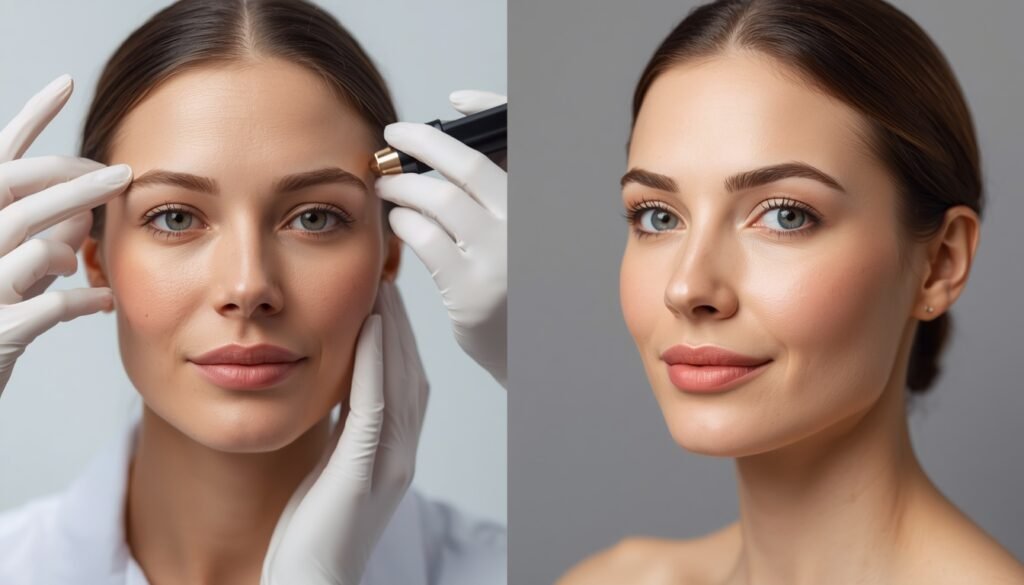
Pigmentation refers to changes in the colour of the skin. When the skin produces or accumulates excess melanin in certain areas, darker patches or spots can develop. This is commonly called hyperpigmentation.
Pigmentation can occur because of several factors, including:
- Sun exposure
- Melasma
- Acne and post-acne inflammation
- Skin irritation
- Injuries or burns
- Hormonal changes
- Certain medications
- Previous cosmetic procedures
- Other skin conditions
Importantly, pigmentation is not one single condition. The cause, depth, skin type, and pattern of pigmentation can influence which treatment is appropriate.
DermNet explains that post-inflammatory hyperpigmentation can develop after inflammation or injury and may become darker following sun exposure.
For a more detailed explanation, read our guide on What Dermatologists Consider Before Recommending Pigmentation Treatment?.
What Should You Avoid During Pigmentation Treatment?
1. Avoid Skipping Sunscreen
One of the biggest mistakes during pigmentation treatment is neglecting sun protection.
Ultraviolet exposure can stimulate melanin production and make existing pigmentation darker. Sun and visible light can also worsen conditions such as melasma.
The American Academy of Dermatology recommends broad-spectrum sunscreen with SPF 30 or higher, while tinted sunscreen containing iron oxide can provide additional protection against visible light that may contribute to dark spots.
What should you do instead?
Make sun protection a consistent part of your daily routine.
Depending on your dermatologist’s advice, this may include:
- Broad-spectrum SPF 30 or higher
- Tinted sunscreen containing iron oxide
- Reapplication when appropriate
- Wearing a hat when outdoors
- Seeking shade during prolonged outdoor exposure
- Limiting unnecessary direct sun exposure
For people with pigmentation-prone skin, sunscreen is not simply an optional skincare step—it can be an important part of pigmentation management.
2. Avoid Excessive Sun Exposure
Applying sunscreen does not mean you should intentionally spend long periods in direct sunlight.
Extended UV exposure may make pigmentation more noticeable and can interfere with your treatment goals.
Try to reduce unnecessary exposure, particularly during periods when your dermatologist has advised you to be extra careful after a procedure.
Sun protection can also include physical measures such as:
- Hats
- Umbrellas
- Sunglasses
- Protective clothing
- Shade
The AAD recommends combining sunscreen with shade and sun-protective clothing for better protection.
3. Avoid Harsh Scrubs
Scrubbing harder does not necessarily make pigmentation disappear faster.
Physical scrubs can irritate the skin, especially when used aggressively or too frequently. If your skin becomes inflamed or irritated, pigmentation may become more noticeable.
This is particularly relevant for people who are prone to post-inflammatory hyperpigmentation.
Instead of aggressively scrubbing dark areas, use a gentle cleansing routine recommended for your skin type.
If a product causes burning, stinging, redness, or persistent irritation, discuss it with your dermatologist.
The AAD recommends gentle skincare when managing dark spots because irritated skin can contribute to additional pigmentation.
4. Avoid Overusing Exfoliating Acids
Ingredients such as glycolic acid, salicylic acid and other exfoliating products can have a role in skincare, but using multiple exfoliating products at once may irritate the skin.
A common mistake is thinking:
“If one exfoliating product helps, using three will work faster.”
That is not necessarily true.
Over-exfoliation can compromise the skin barrier and cause redness, dryness, burning or irritation. In pigmentation-prone skin, unnecessary inflammation can potentially contribute to more pigmentation.
If you are already receiving professional pigmentation treatment, ask your dermatologist which active ingredients should be continued, reduced, paused, or avoided.
5. Avoid Starting Multiple New Skincare Products at Once
Changing your entire skincare routine during pigmentation treatment can make it difficult to understand what is helping and what is causing irritation.
For example, suddenly adding:
- Retinol
- Vitamin C
- AHA
- BHA
- Kojic acid
- Scrubs
- Strong spot treatments
- Prescription creams
all at the same time may be unnecessary.
A simpler routine can make it easier to identify irritation and follow your dermatologist’s treatment plan.
If you are preparing for a pigmentation consultation, take photographs or a list of your existing skincare products with you.
6. Avoid Unprescribed Bleaching or Fairness Creams
Be careful with products marketed as quick solutions for dark spots, fairness, or rapid skin lightening.
Some unregulated products may contain ingredients that are not clearly disclosed on the label.
The American Academy of Dermatology specifically advises people never to use liquid bleach on their skin to treat dark spots. It also warns that some skin-lightening products may contain undeclared steroids or mercury.
If you are considering a pigmentation cream, discuss the product and ingredients with a qualified dermatologist rather than choosing a strong product solely because it promises fast results.
7. Avoid Using Prescription Creams Without Medical Guidance
Some prescription ingredients can be useful for specific pigmentation conditions, but that does not mean every pigmentation concern requires the same medication.
For example, dermatologists may consider ingredients such as hydroquinone, tretinoin, azelaic acid, kojic acid, or vitamin C depending on the diagnosis and individual skin characteristics.
Prescription treatment should be used according to professional instructions.
Do not assume that a cream prescribed to a friend or recommended in a social-media video is appropriate for your skin.
8. Avoid Picking Pimples, Scabs or Dark Spots
Picking at acne, scabs or irritated areas can cause additional inflammation and injury.
Once the inflammation settles, a dark mark may remain.
This is one reason acne management can be an important part of managing post-acne pigmentation.
If you have active acne and pigmentation at the same time, treating only the pigmentation while ignoring the underlying acne may not address the complete problem.
For more information, you can also read our article about facial pigmentation and how it can differ between skin types.
9. Avoid Trying DIY Pigmentation Remedies
Social media is full of home remedies promising to lighten pigmentation quickly.
You may see recommendations involving:
- Lemon juice
- Baking soda
- Toothpaste
- Undiluted essential oils
- Strong household acids
- Bleaching substances
- Abrasive scrubs
These approaches can irritate the skin and potentially make pigmentation worse.
A product being described as “natural” does not automatically mean it is suitable for your skin.
When pigmentation is persistent, professional diagnosis is more useful than repeatedly experimenting with home remedies.
10. Avoid Aggressive Chemical Peels Without Professional Assessment
Chemical peels can be considered for selected pigmentation concerns, but the type, concentration, application method and frequency matter.
More aggressive treatment is not automatically better.
DermNet notes that chemical peels, laser treatments and IPL may help selected forms of epidermal pigmentation, but these procedures can also aggravate pigmentation by causing additional injury or inflammation.
This is particularly important for people who are prone to post-inflammatory pigmentation.
Before undergoing a peel, discuss:
- Your pigmentation type
- Your skin tone
- Previous reactions
- Current skincare products
- Previous procedures
- The proposed peel
- Expected recovery
- Aftercare requirements
11. Avoid Getting Laser Treatment Without Proper Assessment
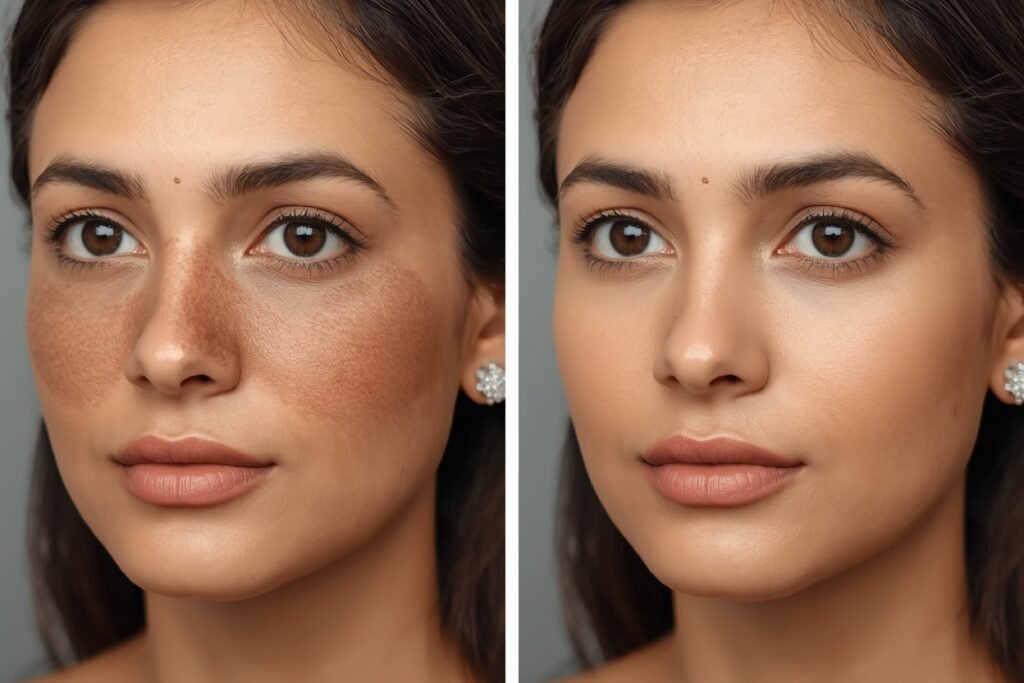
Laser and light-based treatments may be considered for selected pigmentation conditions, but they are not automatically suitable for every dark spot.
The correct procedure and settings depend on factors such as:
- Type of pigmentation
- Pigment depth
- Skin tone
- Previous treatments
- Risk of post-inflammatory pigmentation
- Current skin condition
DermNet notes that physical treatments such as lasers and IPL can sometimes aggravate pigmentation when they cause additional epidermal injury.
Therefore, avoid choosing a laser solely because someone else had good results with it.
For additional information, see our guide on Pigmentation Treatment in Defence Colony.
12. Avoid Ignoring Your Skin Barrier
Your skin may become dry, sensitive, or irritated during certain pigmentation treatments.
Ignoring these changes and continuing to use multiple harsh products can make the situation worse.
A dermatologist may recommend a simpler routine involving:
- Gentle cleansing
- Appropriate moisturisation
- Prescribed treatment
- Sun protection
The exact routine should depend on your skin condition and treatment plan.
If your skin is persistently burning, peeling, swollen, or becoming increasingly irritated, contact your treating dermatologist.
13. Avoid Expecting Overnight Results
Pigmentation often takes time to improve.
The timeline can vary depending on:
- Type of pigmentation
- Depth of pigment
- Cause
- Skin tone
- Duration of the pigmentation
- Treatment used
- Consistency with treatment
- Sun exposure
- Whether the underlying trigger has been controlled
The AAD notes that dark spots can take months to fade after the underlying cause is controlled, and deeper pigmentation may take considerably longer.
Therefore, avoid changing your treatment every few days simply because you cannot see an immediate difference.
Consistency is generally more useful than constantly switching products.
14. Avoid Comparing Your Results With Someone Else’s
Two people can have what appears to be the same pigmentation but have different causes, skin types, pigment depth and treatment requirements.
For example, post-acne pigmentation and melasma may both appear as dark areas but can require different management.
A treatment that worked for another person may not produce the same result for you.
This is why an individual assessment matters.
15. Avoid Ignoring the Cause of Pigmentation
Treating the visible dark spot without addressing the underlying trigger may not prevent new pigmentation.
Possible triggers can include:
- Acne
- Skin inflammation
- Sun exposure
- Irritating skincare products
- Hormonal influences
- Certain medications
- Previous procedures
The AAD explains that treating the underlying cause is an important part of managing hyperpigmentation.
For example, if pigmentation repeatedly appears after acne, controlling the acne may be an important part of the overall treatment plan.
16. Avoid Stopping Treatment Without Speaking to Your Dermatologist
If you experience irritation, dryness, or other unexpected changes, do not automatically continue or discontinue a prescribed treatment without professional guidance.
Instead, contact your dermatologist and explain:
- What you are experiencing
- When it started
- Which products you are using
- Whether the symptoms are getting better or worse
- Whether you recently had a procedure
Your dermatologist can decide whether your routine needs to be adjusted.
17. Avoid Tanning During Pigmentation Treatment
Intentional tanning can increase sun exposure and may make pigmentation more noticeable.
Indoor tanning devices and sunlamps are also not a substitute for healthy-looking skin.
The AAD advises people with melasma to avoid tanning beds and sunlamps because they can worsen melasma and interfere with treatment.
18. Avoid Neglecting Aftercare Following a Procedure
If your pigmentation treatment involves a chemical peel, laser, light-based treatment, or another procedure, follow the aftercare instructions provided by your dermatologist.
Depending on the treatment, you may be advised to temporarily avoid certain products, excessive heat, direct sunlight, vigorous rubbing, or other activities.
Do not copy another patient’s aftercare routine because their procedure and skin response may be different.
What Should You Do During Pigmentation Treatment?
Instead of focusing only on what to avoid, build a simple and consistent routine.
Do:
- Follow your dermatologist’s treatment instructions.
- Use sunscreen consistently.
- Use gentle skincare unless your dermatologist recommends otherwise.
- Keep your routine simple when your skin is irritated.
- Treat active acne or inflammation.
- Tell your dermatologist about previous procedures.
- Inform your dermatologist about prescription and non-prescription products.
- Be patient with the treatment timeline.
- Follow recommended post-procedure care.
- Attend follow-up appointments when advised.
The AAD recommends broad-spectrum SPF 30 or higher and notes that tinted sunscreen containing iron oxide can be useful for protecting against visible light associated with dark spots.
Does Sunscreen Really Matter During Pigmentation Treatment?
Yes.
Sunscreen is one of the most important supportive measures during pigmentation management.
According to the American Academy of Dermatology, sunscreen can help prevent new dark spots and support fading of existing spots. For people concerned about hyperpigmentation, tinted sunscreen containing iron oxide may also provide protection from visible light.
For melasma specifically, the AAD recommends daily sun protection and explains that sunlight can darken existing melasma and contribute to new patches.
If you spend significant time outdoors, also consider shade, protective clothing and a wide-brimmed hat.
When Should You See a Dermatologist for Pigmentation?
Consider professional evaluation if:
- Your pigmentation keeps returning.
- Dark patches are becoming darker.
- Pigmentation is spreading.
- You have persistent post-acne marks.
- Your skin becomes irritated by pigmentation products.
- Over-the-counter products have not helped.
- You are considering chemical peels or laser treatment.
- You are unsure whether the pigmentation is melasma.
- Pigmentation developed after a cosmetic procedure.
- You have unexplained or changing pigmentation.
A dermatologist can evaluate the pattern, likely cause and characteristics of the pigmentation before discussing appropriate treatment options.
If you are searching for pigmentation treatment in South Delhi, Dermedico Clinic is located in Defence Colony and provides dermatology and aesthetic skin treatments.
You can also read:
- Pigmentation Treatment in South Delhi: How Is the Right Treatment Selected?
- Pigmentation Treatment Near Lajpat Nagar: When Should You See a Dermatologist?
- Melasma vs Pigmentation: How to Identify the Difference
Frequently Asked Questions
What should I avoid during pigmentation treatment?
Avoid excessive sun exposure, harsh scrubs, unnecessary exfoliation, unverified bleaching products, picking at the skin, frequent product changes and treatments that have not been recommended for your specific pigmentation.
Can I exfoliate while treating pigmentation?
It depends on your treatment plan. Some exfoliating ingredients may be appropriate for selected patients, while excessive or inappropriate exfoliation can irritate the skin. Follow your dermatologist’s instructions.
Should I stop using all skincare products during pigmentation treatment?
Not necessarily. The goal is usually to use products that are appropriate for your skin and treatment. Your dermatologist can tell you which products to continue, pause or avoid.
Can sunscreen make pigmentation treatment more effective?
Sun protection can help prevent additional darkening and support pigmentation management. The AAD recommends broad-spectrum SPF 30 or higher, with tinted sunscreen containing iron oxide offering additional visible-light protection.
Can I use home remedies for pigmentation?
It is better to avoid unverified remedies that can irritate the skin. Some commonly promoted substances can cause irritation or injury. A dermatologist can recommend evidence-based options based on your pigmentation type.
Can I use lemon on pigmentation?
Lemon or other acidic household ingredients can irritate the skin and are not a reliable substitute for dermatologist-directed pigmentation treatment. Avoid applying potentially irritating DIY ingredients to pigmentation.
Should I use a fairness cream during pigmentation treatment?
Avoid unverified fairness or skin-lightening products. Some products can contain undeclared ingredients that may harm the skin. Discuss suitable pigmentation products with a dermatologist.
Can I use retinol during pigmentation treatment?
Retinoids may be used for selected pigmentation concerns, but whether you should use one depends on your skin and treatment plan. Do not add or change retinoid treatment without appropriate guidance.
Can laser treatment worsen pigmentation?
It can in some circumstances. DermNet notes that laser and other physical treatments can sometimes aggravate pigmentation through additional skin injury or inflammation.
How long does pigmentation treatment take?
There is no universal timeline. Some superficial dark spots may gradually improve over weeks or months, while deeper or recurrent pigmentation can take considerably longer.
Can pigmentation come back after treatment?
Yes. Some pigmentation conditions, including melasma, can recur. Sun exposure and other triggers may contribute to recurrence, which is why long-term management and sun protection can be important.
Is pigmentation treatment suitable for Indian skin?
Pigmentation treatments can be used for Indian skin, but treatment should be individualised. People with darker skin tones can be more prone to post-inflammatory hyperpigmentation, so appropriate treatment selection and settings are important.
Is every dark spot pigmentation?
No. Different skin conditions can produce changes in skin colour. Persistent, changing, unusual, or unexplained pigmentation should be evaluated by a qualified dermatologist rather than automatically treated as ordinary pigmentation.
Final Thoughts
Knowing what to avoid during pigmentation treatment can be an important part of protecting your skin while working toward a more even appearance.
Avoid aggressive scrubbing, excessive exfoliation, unverified bleaching products, unnecessary DIY remedies, picking at the skin, excessive sun exposure and unsupervised treatment changes.
Most importantly, remember that pigmentation is not one single condition. Melasma, post-inflammatory hyperpigmentation, sun-related pigmentation and other pigmentary concerns may require different approaches.
A personalised dermatological assessment can help identify the likely cause and determine whether medical skincare, chemical peels, laser-based procedures, or a combination approach is appropriate.
If you are considering pigmentation treatment in Defence Colony, South Delhi, or near Lajpat Nagar, speak with a qualified dermatologist before starting or changing treatment.
Medical Disclaimer: This article is intended for general educational purposes and does not replace an in-person medical examination, diagnosis, or personalised treatment plan. Pigmentation can have different causes, and treatment should be selected according to the individual’s skin condition and medical history.